With the year-end approaching and the pandemic showing little sign of abating any time soon, shrines and temples throughout the nation are trying to come up with ways to avoid "close contact" situations during the traditional New Year visits that draw large crowds.
The traditional rule of thumb is for families to visit a shrine or temple within the first three days of the new year. But the places of worship are urging some flexibility this year, given the circumstances, as they still want visitors to come and pray for a fortuitous year ahead. That is only part of a number of measures they are taking on their own to adapt to the dire situation.
Starting in December
The Sumiyoshi Taisha shrine in Osaka, which every year attracts about 2.3 million visitors over the first three days alone, will extend the period for New Year visits until Feb. 3, and call for visitors to come in a staggered manner. There will be none of the 300 or so street vendors who normally line the approach to the shrine from the night of Dec. 31.
Following a health expert's advice, each prayer service will be limited to 20 attendees instead of the usual maximum of 100. "We want to do what we can to prevent infections," a shrine official said.
The Fukuoka prefectural office of the Association of Shinto Shrine independently devised a plan to start "saisakimode" (auspicious worshipping) in December. The prefectural office also requested that shrines in the prefecture start selling New Year's lucky charms earlier than usual. "To have a truly auspicious beginning, we recommend people visit shrines from December to avoid crowded situations," a prefectural office official said.
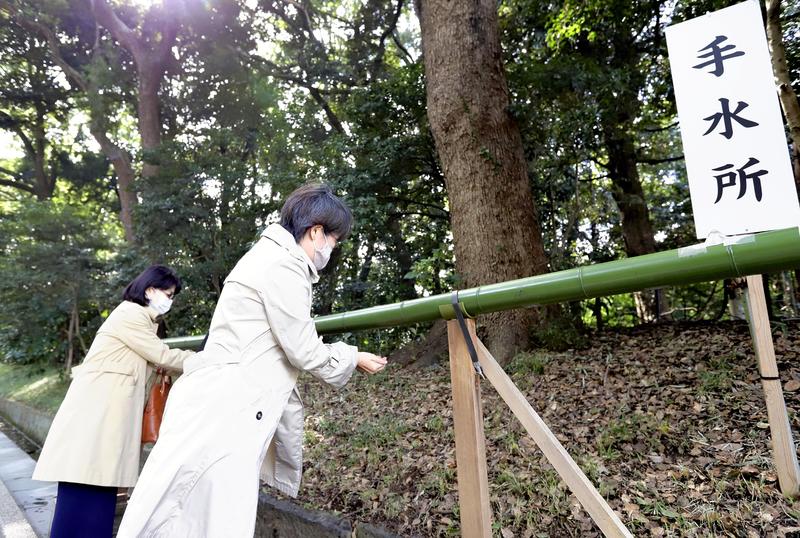
Also planning to call for staggered visits is Naritasan Shinshoji temple in Narita, Chiba Prefecture, which drew about 3.18 million visitors over the first three days of this year. At Tokyo's Meiji Jingu shrine, which attracted more than 3 million visitors over the same period, ladles have been removed from three temizuya (purification wells) located within the shrine's grounds. The shrine has instead installed makeshift stations with running water for the customary hand-washing and mouth-rinsing. It is considering continuing the measure after the New Year period.
Cashless donations
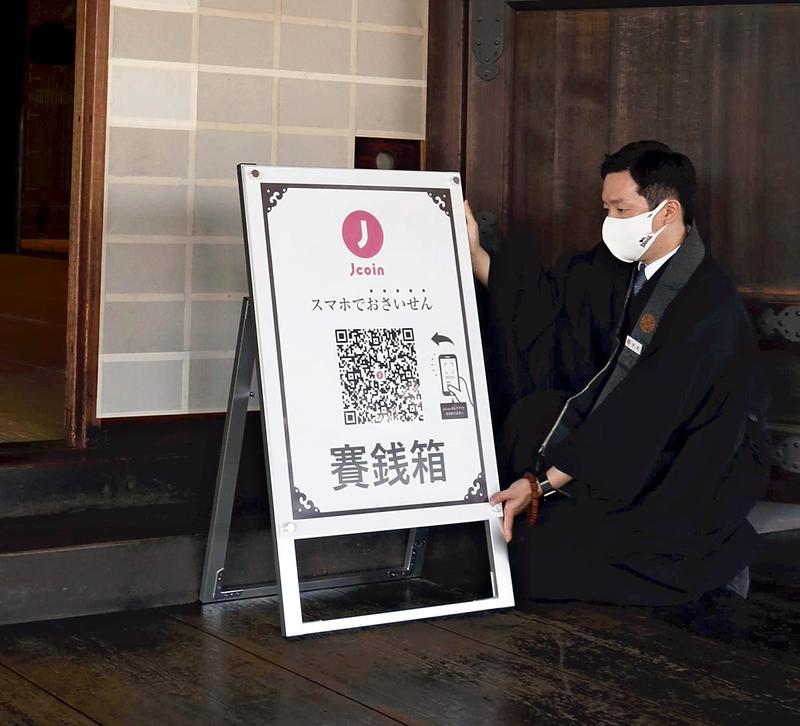
In October, Kyoto's Higashi Honganji temple began a cashless payment system for donations. The temple installed a panel with a QR code for electronic payments. There is also a terminal for credit card payments at a service counter for visitors. These measures are aimed at reducing contact with cash that has been handled by large numbers of unknown people, thus avoiding the risk of infection.
At Nagoya's Wakeoe Shrine, which is known for its popular, limited-edition ink stamps that are changed monthly, livestreams are shown on YouTube from cameras installed in its main hall and three other locations in response to prospective worshipers around the country. Ink stamps are sent to those who conduct "online worshiping." "We want the people to watch the videos and feel like they are visiting the shrine," said Reika Kaneko, 38, a senior priestess.
The Association of Shinto Shrine, which oversees about 80,000 Shinto shrines throughout the nation, has presented a list of measures via its prefectural offices, including removal of ladles from temizuya and banning the use of the bell cords that are suspended in front of donation boxes.
Bucking tradition
Takanori Shintani, a guest professor at the Graduate School of Kokugakuin University and a scholar on the history of New Year visits to shrines and temples, said the tradition is a relatively new one, having spread nationwide starting in the Meiji era (1868-1912).
During the Edo period (1603-1867), the main custom was for people to stay home on the first day of the new year and welcome the "toshigamisama" (deity of the incoming year). The custom of visiting shrines and temples located in an auspicious direction with a toshigamisama gradually began to gain traction. As the means of transportation developed, the custom changed into the current form of people visiting famous shrines and temples for their first prayers of the new year.
"The desire to receive good fortune as soon as possible led people to visit [shrines and temples] from predawn of the first day of the year," Shintani said. "But there is no need to be insistent on the first three days for visits. It is better to visit at your own convenience and avoid the three Cs [crowded places, closed spaces and close-contact settings]."
Read more from The Japan News at https://japannews.yomiuri.co.jp/