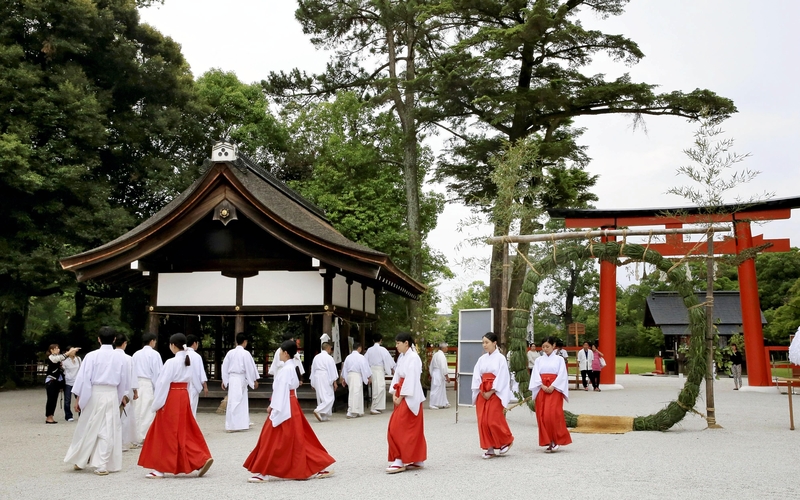
KYOTO -- In June, many shrines in Kyoto erect a tall ringlike structure made of grass in preparation for a summer purification ritual called Nagoshi-no-Harae, which takes place on the last day of the month and sometimes at the turn of the year.
Walking through the ring, or chi-no-wa, is believed to help rid people of their sins and any impurities that may have been amassed over the year. I visited Kamigamo Shrine in Kita Ward on June 10, when shrine officials performed a ceremony to walk through the ring for the first time.
Visitors to the shrine, which was established before the capital was moved to Kyoto in 794, can find the chi-no-wa behind the shrine's second torii gate. The 2.4-meter-wide ring is made by bundling chigaya Japanese blood grass, a beautiful green plant whose distinctive aroma is said to have the power to dispel malicious spirits. The chi-no-wa will remain in place through Saturday.
At 8:30 a.m., 18 priests and maidens walked through the ring four times following a route in the shape of a figure eight as they performed the ceremony. They were followed by visitors, including Keiko Kobayashi, who lives nearby and observes the ritual every year.
"I feel refreshed," said the 31-year-old university official with a smile. "I think I can spend the rest of the year free of troubles."
Offered near the ring are effigies made of washi paper, to which worshipers can "transfer" their impurities by wiping the paper figurines over their bodies. The effigies are then put in a stream that runs through the grounds of the shrine from 8 p.m. as part of the June 30 purification ritual.
"Today, we received these paper effigies sent from overseas," said shrine priest Mitsutaka Inui, 46. "Wishing for a healthy life is something universal, irrespective of generation or origin."
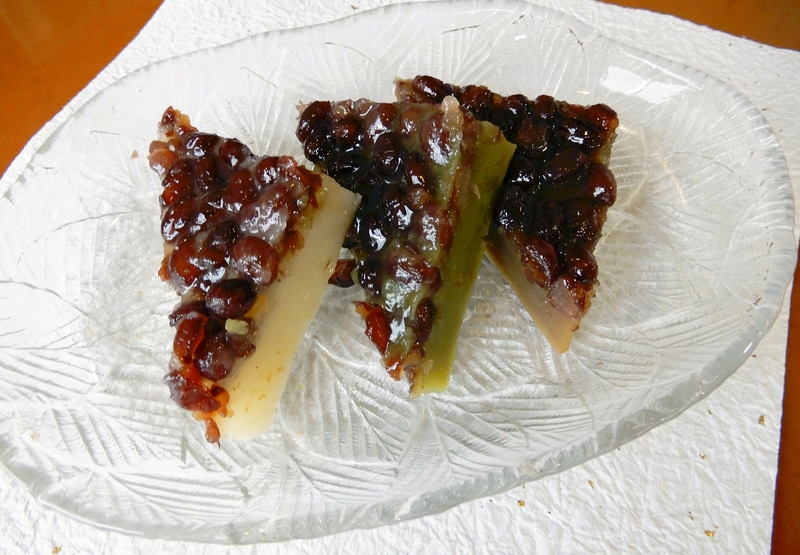
A special confectionery is sold in Kyoto to celebrate the Nagoshi-no-Harae ritual. The seasonal delicacy, a steamed rice cake with bean paste on top, is called Minazuki, another name for June. Its triangular shape is said to have been modeled after ice the ancient aristocracy used to survive the summer heat.
Narumi-mochi Honten, a confectionery shop in Kamigyo Ward that was established in 1875, sells 7,000 to 8,000 pieces of Minazuki on the peak day alone, which falls on June 30.
"This is part of Kyoto's unique food culture that values a sense of the season," said Rikinosuke Narumi, the 52-year-old fifth-generation head of the shop.
-- Access
Take the Kyoto City Bus from Kitayama Station on the Karasuma subway line and get off at the Kamigamo Jinja Mae bus stop. For more information, call the shrine at (075) 781-0011.
Read more from The Japan News at https://japannews.yomiuri.co.jp/