PASADENA, Calif. _ TV shows like "Mike & Molly," "Dietland" and "This is Us" have provided a little wiggle room for women who don't fit into the Hollywood corset.
But although the average American woman sports a robust size 16, TV never saw a double digit that it liked.
Now, all that is changing. The latest to slip into something more comfortable is "Shrill," premiering on Hulu Friday. The 30-minute sitcom stars Aidy Bryant ("Saturday Night Live") as a young woman trying to come to terms with her weight while remaining positive in the face of all the killjoys around her.
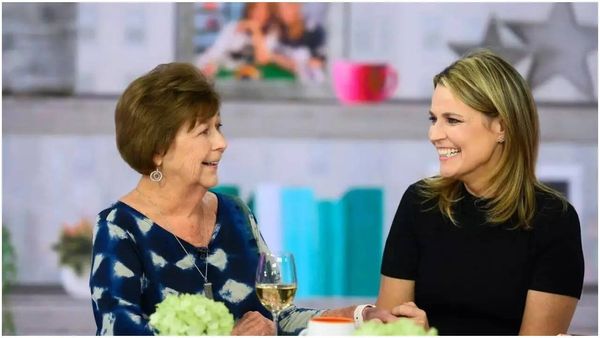
The show is based on Lindy West's memoir, "Shrill: Notes from a Loud Woman." Its comedic slant attracted producer Lorne Michaels and actress-producer Elizabeth Banks. "Lindy presents this really funny series of horrible characters that were all that she saw as representation for her, as a young woman," says Banks.
"And we were coming off of (producing) three 'Pitch Perfect' movies, where our co-lead, Rebel Wilson, had a love story and then became an action superhero. And we just felt like we could use more of that representation in the world. So I love that about the book," she says. "I felt like there could be a positive role model in this show for young women."
For Bryant, it was a match made in heaven. "I didn't see a lot of fat women on television when I was growing up, and I always craved that," she says.
"And so, when I read Lindy's book, there were so many things in there that I identified with, particularly the idea that the whole world is kind of telling you you're wrong for existing in the way that you are. Even if you don't feel that way and you feel like, 'I have something to offer this world, and why do I have to do it in a size 2 package?'
"And I think that part of the book resonated with me so deeply that when I heard Elizabeth optioned it, I was like, 'What are they making? I'll do anything to get in there!'"
Bryant, 31, doesn't think her character of Annie emulates any of those she creates on "Saturday Night Live." "But I certainly think, in just the nature of a writers' room, we all put ourselves into this character," she says.
"And I think some of Annie's apologetic nature is certainly maybe more my deal than Lindy's ... And some of those things that we put into the show I think are maybe some of my characterization. But I think she's not exactly me, she's not exactly Lindy. She's someone else. And I think that's healthy."
Rarely does a TV script seek a character described as a "fat" woman. "I think for a lot of my life, I was extremely afraid of being labeled with that word," says Bryant. "And then, honestly, through reading Lindy's book and also just through growing up a little bit, I started to be like, 'It can be a descriptor and not a pejorative. And I can sort of own it comfortably and not let it destroy me if I hear it.'
"And it's probably going to be hurled at me forever (now) that I'm on-screen. And that I can either let it cut me to my bone or kind of be like, 'Yeah. Guess what? I am f __ fat, and you have to deal with it.'"
The word fat itself carries no gravitas, insists West. "I mean it has power 'cause we give it power. And, really, it's no different than 'tall' or 'blonde' or whatever. And I just think reclaiming terms that have been used to hurt us is really powerful."
Banks, who's appeared in shows like "Modern Family" and four of "The Hunger Games" films, may be the requisite slender blonde, but she too has encountered Hollywood's arcane rules of engagement.
"I hope it doesn't surprise anyone that I'm not always super-comfortable in my own skin either. And, you know, I remember when I first came to Hollywood. I went to my very first meeting in Hollywood. It was with an agent who told me that I should get a boob job. And I left the meeting. I did not get a boob job."
In these days of fighting bigotry, one thing's for sure: It ain't over till the fat lady sings.
LUKE PERRY REMEMBERED
So very sad to hear about Luke Perry's death at 52 last week. He was a true professional and a man who clung to his principles. The last time we spoke he recalled when he first started out. "I was told I had lot of raw potential and needed to refine it, but everybody just wanted to make money. That's hard. You have one hand with money in it and the other that's empty. But you know what? I've been in that empty hand more times than not. I'm more comfortable with the empty hand than the full one. Most of my life has been the empty hand."
He said acting for him could be a technique or a "natural process." " ... It's not so much about building character, but about stripping things away and getting close to (myself), not so much about me making things up but having the guts to explore the bad things I felt inside," he said. "It's hard to do that. I wish could have a 'technique.' It'd be so much easier. I'd cry a lot less and sleep a lot more."
FANTASY TV FOR THE WHOLE FAMILY
It seems it's more difficult than ever to find a TV show that everybody in the family can enjoy. BYUtv's newest series, "Dwight in Shining Armor," premiering next Monday, does just that. It's the fantasy tale of an ordinary 21st century high schooler (Sloane Morgan Siegel) who falls into a pit and inadvertently awakens a warrior princess (Caitlin Carmichael) who's been pulling zzzz's for 1,000 years.
She and her court magician (Joel McCrary) are catapulted into modern times figuring that Dwight is the dashing swain who will slay her villainous enemies. Poor Dwight has no such plans.
If he could go back in time, Siegel says, "I would probably go back to the beginning of civilization. I love history. I love learning about history. I'd go all the way back to Mesopotamia or something and see how society started ... I'd be sort of a watcher of history."
Carmichael's transport would be much later. "I think if I could pick, any decade that I would live in, it would probably the 1970s. Growing up, 'Mamma Mia!' was my favorite movie and I fell in love with every song by ABBA," she says.
As for McCrary, he says, "I always like a good Western, so I like to think I could be in the Wild West. But I want to be a bad guy. I want to have a shootout, but I want to win. I'd like to say that, but I really like air conditioning so I don't think I would really go back that far. I grew up in Mississippi where you have to have air conditioning ... So I would go back a little bit, but not before they had AC."
DOCUMENTARY DELINEATES MASSIVE FRAUD
It was a stop-the-presses scandal when it was revealed that the "revolutionary" blood testing technology purported by the company Theranos turned out to be a fraud. Millions had been invested in the technology which was hawked by young, good-looking blonde Elizabeth Holmes.
The tale of its collapse is the subject of a new Alex Gibney documentary, "The Inventor: Out for Blood in Silicon Valley," which premieres next Monday on HBO.
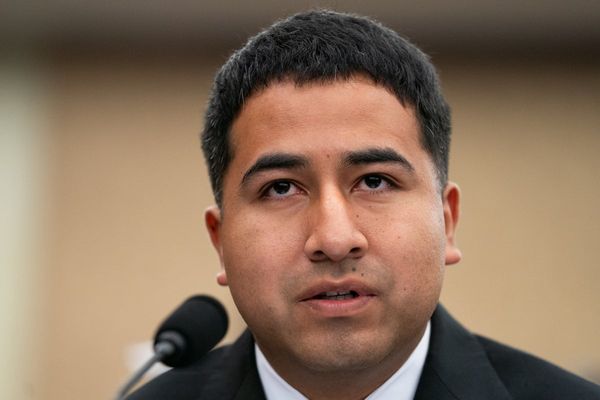
People began to be aware of the inconsistencies early on, but it was a couple of whistleblowers who really brought the house of cards down. One of them was lab technician Erika Cheung.
"I think about a month in, I realized when I was running one of the patient samples that we were having issues running these things called 'quality controls,'" she says. "And what they are, are these samples that you know the concentration of what they are, and you run it through the machine, and then it's supposed to give you the same result as the non-concentration. And these just kept failing over and over and over again.
"And you're supposed to run these before you run a patient. And it kept failing, and just the way it was handled ... I had talked to all the upper-level management, 'Hey, our quality controls are failing. I can't process this patient.' And, basically, their insistence was: 'Get the patient sample processed.' Like, 'It works.' Like, 'There's something you're doing wrong.' And they essentially took out data points and generated, essentially, a fake result to send off to the patient," she recalls.
"And from that instance, it kind of just went all downhill from there of just pressure to crank out patient results."
Later, various regulators would visit the lab. It meant, says Cheung, "just lying to them, not showing them actually who the staff was that was processing the patient samples _ even the actual lab where we process the patients., lying on other regulatory tests and procedures. So it just kept going the different ways in which they were not reporting proper results for patients, and the internal structure was messed up on so many different levels."