The entertainment industry is facing the challenge of gaining commercial profit while meeting the government's target of limiting an audience size to 50% or less of an indoor venue's capacity, which is part of ongoing efforts to curb the spread of coronavirus.
A month after the government lifted the state of emergency, movie theaters, music halls and theaters have resumed operation -- with film screening, concerts and drama performances returning to people's lives.
The "50% or less" target, however, is forcing people in the industry to try and quickly find other ways to make up for the inevitable loss caused by the target -- although, Yasutoshi Nishimura, economic revitalization minister, has stated that the target may be reviewed.
Still, some theaters have already begun taking countermeasures.
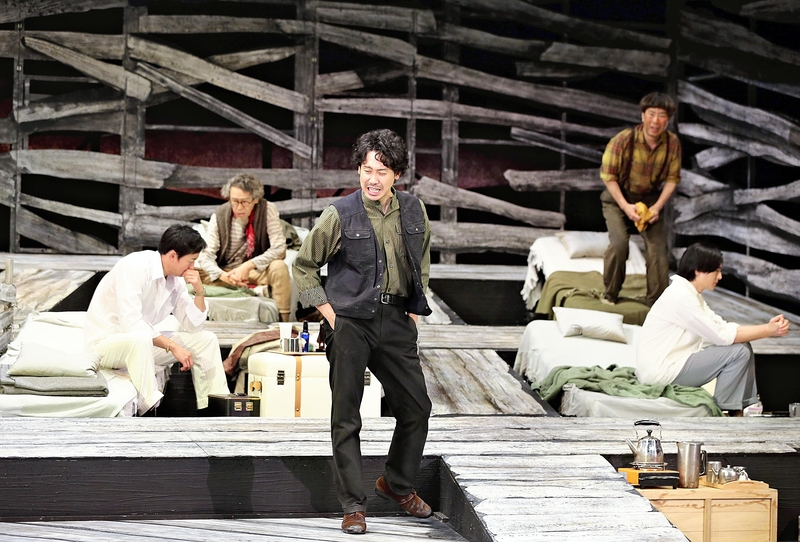
Parco Theater in Shibuya Ward, Tokyo, has introduced a new ticket sales method for a play that opened on July 1 called "Daichi" (The mother earth), written and directed by Koki Mitani.
The theater divided the play's performance period, which is through Aug. 8, into three subperiods for putting tickets on sale. This is done in three stages, with the number of tickets provided for each subperiod adjusted based on the level of coronavirus infections at that time.
For the first subperiod, 318 tickets were sold for the seating capacity of about 636.
"If this situation with the vacant 50% seating continues, it won't pay off and we'll end up giving performances while losing money," said Misaki Mouri, producer of the theater, showing anxiety.
The Takarazuka Revue all-female troupe will resume performances at the Takarazuka Grand Theater in Hyogo Prefecture on July 17 and the Tokyo Takarazuka Theater in Tokyo on July 31, while filling only 50% or less of their seating capacities.
To make up for the reduced seats, both theaters will only give one performance per day for the first two weeks and extend their respective performance periods by about two weeks from the original plans.
Some performances of "Haikara-san ga Toru" (Haikara-San: Here Comes Miss Modern) by the Hanagumi (Flower troupe) at the Takarazuka Grand Theater will be provided in the form of charged livestreaming, too.
In response to Tokyo's business suspension requests being eased to "phrase 3" from "phase 2," the New National Theatre in Tokyo's Hatsudai district started to increase the number of tickets from 100 to 165, which is about half of the seating capacity, for the production "Negai ga kanau gutsugutsu cocktail" (The Night of Wishes: Or the Satanarchaeolidealcohellish Notion Potion). This play will be performed from July 9-26.
"We won't further increase the number of seats as long as no major changes occur. If phase 2 comes back, we won't be able to use 65 of the 165 seats," said a theater worker in charge.
--Resumption of orchestra concerts
The Tokyo Philharmonic Orchestra resumed performances on June 21 by giving a concert with Dvorak's Symphony No. 9 and other pieces. Held at the Orchard Hall in Tokyo's Shibuya district, this was the first orchestra concert with an audience in Tokyo after the lifting of the state of emergency.
"The audience gave us a very warm applause. I was so moved and almost cried." said Conductor Kazumasa Watanabe.
To ensure adequate person-to-person distance at the hall with its seating capacity of about 2,000, the audience size had been limited to 1,000 persons. However, only 400 people attended the concert. Even if the concert had filled the 1,000 seats, a profit would not have been made, the orchestra says.
Kyoichi Ishimaru, chief executive officer of the orchestra, expresses his sense of crisis, saying: "Despite this fact, we still need to show that we can perform. Otherwise, we'll have no offers for performances and that would result in us going under."
Koichi Iriyama, chairman of the Japan Association of Classical Music Presenters, said: "Audiences at classical music concerts usually keep silent and even refrain from clearing their throats during performances. I doubt people really need to maintain social distance for enjoying music this way."
The Classical Music Concerts Organizing and Promoting Council, which is set up mainly by organizers of concerts, and the Japan Academic Society of Wind Music will jointly hold an experiment this month in the presence of specialists to measure droplets from a person's mouth and nose on stage and in audience seating areas.
"We want to get scientific grounds that will contribute to easing the '50% or less' limit," Iriyama said.
--Regain a sense of safety
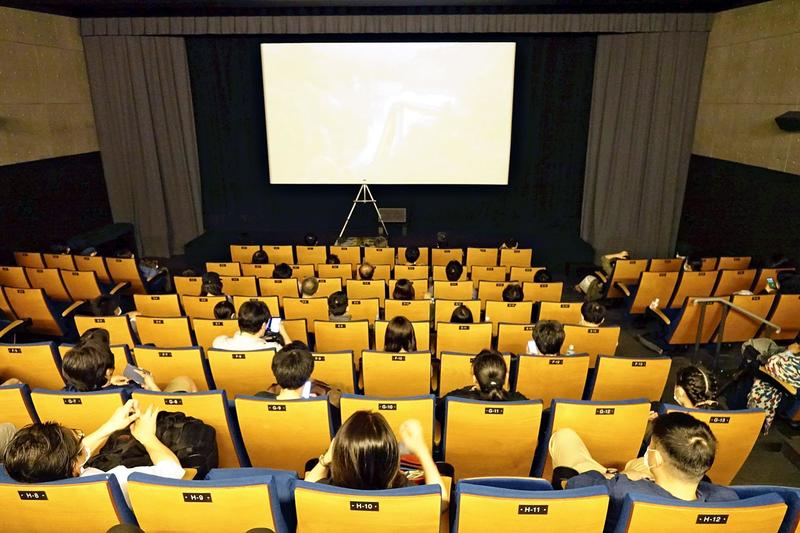
Small movie theaters have been hit hard by the "50% or less" limit due to them being small-scale businesses.
The Ginrei Hall, which screens famous films, in Tokyo's Iidabashi district resumed operation on June 6 by admitting persons up to half of its seating capacity of 198. Since that time, unfortunately, its actual occupancy has remained at only about 30% of its regular amount.
To collect operating funds, the hall started a crowdfunding drive on June 19.
Yoshimi Kubota, manager of the hall, said: "We've been severely hit by the coronavirus. I want to have more seats used but I can't when considering the feelings of the audience who are concerned about infections. I do hope the limit will be eased by the government."
Yuko Iwasaki, secretary general of the Japan Community Cinema Center in Tokyo that supports regional cinema screening activities, said, "People who work for movie theaters are trying hard to convince their audiences that they can watch movies without anxiety."
Film director Kazuhiro Soda organized an online study session on the theme "Safety and security at movie theaters in the age of the coronavirus." In this recorded session, Soda asks a virologist about such matters as important points of taking safety measures. This session can provide useful information to both moviegoers and those who screen films.
Koyo Yamashita of the Theater Image Forum in Tokyo's Shibuya district, who was involved in this session, says that the top priority is to build an environment where moviegoers can feel safe and inclined to go to watch movies again.
Yamashita also stated that it is important for the film industry, including major film companies, as well as the entire society to think about the future of movie theaters based on the understanding that watching a film at a movie theater is a very important cultural experience.
"Today, online streaming versus movie theaters is a subject of discussion, too. I feel we should also think hard about this matter," Yamashita said.
Read more from The Japan News at https://japannews.yomiuri.co.jp/