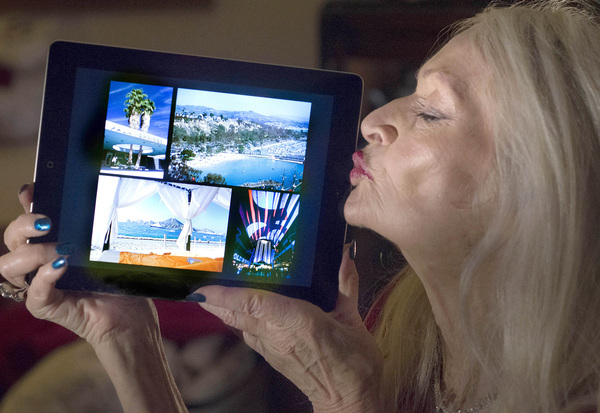
John and JoAnn Belczak vacation in Hawaii every year.
That's in addition to trips the Yorba Linda, Calif., couple have taken to Tahoe, Boston and the Carolinas. They've strolled the scenic beaches of Aruba and St. Kitts and been on a cruise to Alaska. Every three years, they spend a week in a 2,000-square-foot penthouse in Nuevo Vallarta on Mexico's west coast.
Timeshares make all that travel possible for the peripatetic Belczaks and their three now-grown children. After buying their first timeshare in Kauai 10 years ago, they upped their points a few years later, then bought a second timeshare in Mexico.

"Never regretted it," said JoAnn Belczak, 59. "It's not cheap. We know that. But so long as you know how to work the system and you use it, it's great."
William Dorman has a different take on the Las Vegas timeshare he got talked into buying at a sales presentation 15 years ago. Yes, he has exchanged his parcel for trips to places such as Palm Springs and Arizona, but nothing exotic. Those were always booked. He had to pay out of pocket for accommodations in New York because the timeshare there also was booked.
Now he wants to get rid of it.

"Nothing's available, and you have to book two years ahead of time," said Dorman, 56, of Dana Point, Calif. "People are giving them away ... or they're listed for $5 or $100 because people want to get out of them."
Some people are happy with their timeshares, saying they give them a chance to see the world in homey, spacious accommodations that cost less than an equivalent hotel. Others deeply regret them, saying maintenance fees keep rising, they can never book the times they want and they're stuck paying for something they can't use.
Regardless of whether timeshares are good or bad, the industry is booming.
Sales revenue by timeshare developers and operators rose 32 percent _ to $8.6 billion a year _ in the five years ending in 2015, according to the most recent estimate by the American Resort Development Association, or ARDA. Association figures show there were 411,880 transactions in 2015, with prices averaging $22,240, up 21 percent in five years.
But secondary market sales by private owners have been flat and represent a tiny fraction of the timeshare market, said Bob Schmidt, data officer for Sharket.com, a timeshare resale data firm. The resale market averages 25,000 to 26,000 transactions per year, with an average price of $5,000, a fourth the value of a typical retail unit.
"There certainly are a lot of people who are interested in selling their timeshares," Schmidt said.