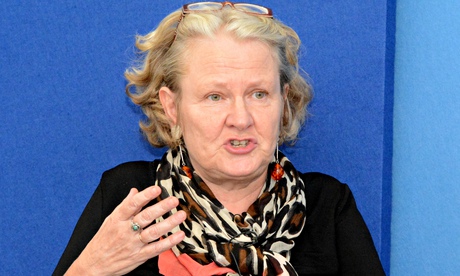
BBC governance is in crisis, not due to opaque management or a lack of leadership, but because of a growing “distance” between the corporation and its viewers, according to the shadow culture minister Helen Goodman. Speaking at a Guardian fringe session at the Labour party conference in Manchester this week, the MP for Bishop Auckland said that the real governance of the BBC is “what the general public think” about the service it provides.
Her comments came as the BBC faces criticism for being run by a metropolitan elite, remote from the people it services. James Heath, BBC director of policy and charter, admitted that the corporation would have to make more effort to reflect its viewers and listeners. “It’s absolutely important the BBC is paid from everybody, that it reflects modern Britain today, both on-screen and its workforce. And we’ve got more to do there,” he said. “We’ve devolved quite a lot of decision making and resource out of London in this charter. I think 50% of production by 2016 will be outside the southeast.”
But the relationship between the two can clearly be repaired, as viewers are still willing to pay for the BBC: a Guardian poll carried out ahead of the party conference season found that 83% of respondents agreed that the licence fee was the best way to fund the corporation.
“I think the licence fee is great. I think it’s the simplest way of making sure that the BBC, whose mission is to the entire nation, is properly funded,” Goodman said. “I think the people who will be the strongest supporters of the licence fee in the end will be the other broadcasters because they don’t want a new kid on the block competing for subscription.”
Other panelists agreed with the poll. “I just don’t regard the licence fee as the least bad option like democracy, it’s the best option for the BBC and I think it’s sustainable for the long term future,” Heath said. John McVay, chief executive of PACT, said it was time for an increase in the licence fee to improve the quality of output, while RadioCentre chief executive Siobhan Kenny claimed new technologies would not mean viewers would be willing to migrate to another payment form.
“We’re at a very interesting moment in our development here,” she said. “I cannot see that any form of subscription or any other way you can manage this would produce the variety of radio that we currently have from the BBC, which I also think helps everybody in the commercial sector, keeps us on our toes, gives us competition, provides stuff that we cannot possibly ever do like Radio 4.”
But McVay added that while he was a supporter of a fee, he was “not necessarily a staunch defender of the people who spend it”, and the question of regulation split the panel.
Goodman said the BBC Trust was conflicted by its responsibilities. “Sometimes they’re the cheerleader and sometimes they’re checking out whether management have done what they ought to have done. That’s slightly uneasy,” she described. “In the BBC’s favour, maybe we’ve had too many inquiries. The trust has given evidence to parliamentary select committees 30 times or something in the past year, a sort of completely disproportionate focus on what’s going on. I think the real governance issue is not what people like me think, it’s what the general public think. That’s the thing that maybe we need to look at a little bit more.”
Adam Minns, executive director of the Commercial Broadcasters Association, suggested renaming the body as the Licence Fee Trust to reflect its responsibilities to those who pay for the BBC rather than those who work for it. “I couldn’t see why the trust is approving the director general’s appointment,” he added. “I think that creates conflict. I do worry there’s a cultural problem of management and the Trust being too close.”
But Kenny described the idea of scrapping the BBC Trust as a “red herring”. “Let’s give it better powers, more teeth,” she said. “I think even the trust found themselves frustrated there is nothing in between the all bells and whistles public value test, which is extremely costly and [an] extremely long process, and the desk research you do with Ofcom. So maybe a mini public value test.”
This conference fringe debate was designed and produced by the Guardian to a brief agreed by partners PACT, COBA and RadioCentre. All content is editorially independent.
Read more from the Guardian Big Ideas at the 2014 party conferences.