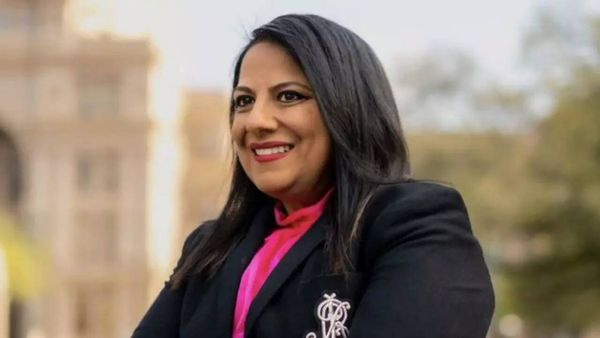
Double NZ representative Leah Lassche has lived through the often cruel realities of elite sport, and ponders whether she'd encourage her daughter to pursue a sporting career.
In the wake of the unspeakable tragedy of Kiwi Olympic cyclist Oliva Podmore’s death at the tender age of 24, I find myself, like many New Zealanders, wondering how it could have come to this.
How could such an accomplished woman, with so much ability, so much to offer, and so much yet to experience in the world, reach such a devastating impasse?
I didn’t have the pleasure of knowing Olivia, and I do not claim any superior knowledge of her life, her relationships or her experiences in sport. My heart aches for her family and loved ones. Their despair and pain are unfathomable, and there is nothing I, or anyone, can say or do that can abate it.
But I do know the world she lived in - the world of high performance sport. I was born, raised and fledged in it. I offer my experiences and observations in that world in the hope that we can all help to better it, for the sake of our athletes.
New Zealanders love sport. We are a sporting nation, with a sporting legacy built from the grassroots, tamed by number eight wire and a ‘she’ll be right’ attitude. No mountain is too high for the Kiwi dream, no foe unconquerable, no matter what the population and funding statistics might say.
Kiwis are high achievers, we punch well above our weight, and we’re proud of it. Kiwi kids are raised to aspire to following in the footsteps of the likes of Sir Edmund Hillary, Sir Peter Snell and Dame Yvette Williams, with thousands taking to the field, the water or the track in the hope of emulating their heroes.
We are proud of our team, the individuals for whom our flag has been raised before the world, and we have every right to be.

But peel back those glorious 20 medals in Tokyo, and we have an Olympic team of 212 athletes. Behind them we have the innumerable left at home, the athletes who’ve toyed with success, who’ve prompted and tested their competitors, sometimes victoriously, but have ultimately fallen short of the dream.
Behind them we have the next generation, the youth snapping at the heels of those above them, hungry for their chance to prove themselves. Behind them are the junior champions, behind them the high school competitors, and finally our children.
High performance sport is at the top of a tall pillar of participation and competition that does not stand without the other pieces below. The ‘nearly made its’, the ‘also rans’ and the unceremoniously branded ‘losers’ included.
The top is only as high as what is forged below it, upon which a celebrated few achieve the ultimate. We know the top of the pillar. We know their names, the clubs and schools that have shaped them.
Elite sport is an all-in gamble. If there’s anything left on the shelf, it’s only holding you back. It’s utterly consuming.
Often we find out more about their story, their struggles, their setbacks, through the platforms afforded them through their successes.
These stories and insights are immensely valuable, and often take considerable bravery to share. We only need to look to Michael Phelps - a winner of 28 Olympic medals, who talks openly about his battle with depression - to know that medals do not necessarily equate to contentment. And that our heroes’ lives are much more complicated than their smiling faces on the podium may imply.
But these are not the only stories.
I’ve lived my life in the upper third of the pillar, and never made it to the top. My father was an Olympian, my husband too. I’ve seen both struggle with the burn of success not quite achieved.
Fourth and fifth at the Olympics may seem commendable (and they are tremendous achievements) but that quickly pales when one is expected to win gold. They were among the performances that ‘failed to fire’, the ‘disappointments’.
It is easy to put those words in quotation marks and blame the media for their spin, but that would be short-sighted. We all feel it when we watch sport, hoping for gold. And going home empty-handed is a let-down. We came for the goods and the glory, those who didn’t deliver are quickly forgotten.

I am a notch below these family members on the pillar. I look at my husband and father with the adoration of every other New Zealander who meets someone who’s competed at an Olympics. I wished, and still wish, that could have been me.
It’s not that I didn’t try; I actually made it quite far. I represented my country and split my time living and racing at home and overseas. I lived the dream, so to speak - a dream where hard work and sacrifice are the mantra.
I poured everything into it, with my family behind me, to give myself a shot at the top. That’s what it takes.
Elite sport is an all-in gamble. If there’s anything left on the shelf, it’s only holding you back. It’s utterly consuming.
There can be many reasons an athlete doesn’t reach the top of the exalted pillar, and to the individual, they are all disappointing. Some of these reasons are sadly avoidable, and others are simply the harsh reality of an enterprise which values ‘winners’ despite the necessity of comparable ‘losers’.
Athletes who pursue high performance sport do so against the odds at the expense of their social lives, their earning capacity, their ambitions for a family and future career. To sacrifice these things only to fall short is devastating and it is, by nature, the much more common outcome.
I cannot regret my decision to pursue sport. It has shaped who I am, taught me my own strengths and weaknesses
That’s why it’s vital that our aspiring athletes are surrounded by an environment that supports them and empowers them, including inspiring an outlook beyond sport.
I cannot comment on what that may have looked like for Olivia Podmore, and I desperately wish that she was here to tell us.
But I know that support is offered by well-meaning people in the psychology and Athlete Life pillars of High Performance Sport NZ, many of whom are former athletes themselves with an intimate knowledge of the pressures of sport.
Sports psychologists are on-hand to provide athletes a safe environment to discuss their mental health, both in the context of their sport and beyond it. Athlete Life advisors are tasked with helping athletes discover their strengths and interests beyond sport, and facilitate opportunities to build a career alongside their competition schedule with a vision for their eventual retirement.
Both my husband and I have both benefitted from working with these professionals, and I can only encourage other athletes to lean on them when they find themselves straining under these immense pressures.
I’m certain there is much room for review when we consider how best to support and equip all our athletes who continue to strive for gold. Olivia’s legacy demands that we do.
When I reflect on my own career, I cannot regret my decision to pursue sport. It has shaped who I am, taught me my own strengths and weaknesses, and afforded me opportunities that would not otherwise have been available to me.
I have travelled, represented my country, and met some amazing people along the way. If it weren’t for my sport, I would not have met my husband and we would not have our daughter.
So rather than weigh my regrets and disappointments against the many benefits, perhaps the most pertinent question I put to myself is this: Would I encourage my daughter to pursue a career in sport? My answer is yes, as long as she never forgets that she’s worth more as a person than any medal she could ever win.
That’s the sentiment I hope will be front of mind as we consider how best to support all our athletes.