AI’s thirst for water has sparked widespread environmental fears, with many concerned that the rapidly advancing technology is putting further strain on the world’s resources.
Each prompt or question a person feeds AI will require energy and water to cool the data centre containing the software. The estimates of how much water AI is using have been widely debated, and different AI companies report varying numbers.
Sam Altman, the chief executive of OpenAI, has said ChatGPT uses less than 1/15 teaspoon for an average query. A Google Gemini study claims an average AI prompt uses less than 0.3ml of water.
But other estimates suggest it uses far more. Research from the University of California in 2023 calculated that ChatGPT “drinks” roughly 500ml of water for every 10 to 50 medium-length responses.
A report by the UK government Digital Sustainability Alliance predicts that AI could drive global water usage up from 1.1 billion to 6.6 billion cubic metres by 2027, an amount equivalent to more than half of the UK’s total water usage.
Why does AI use water?
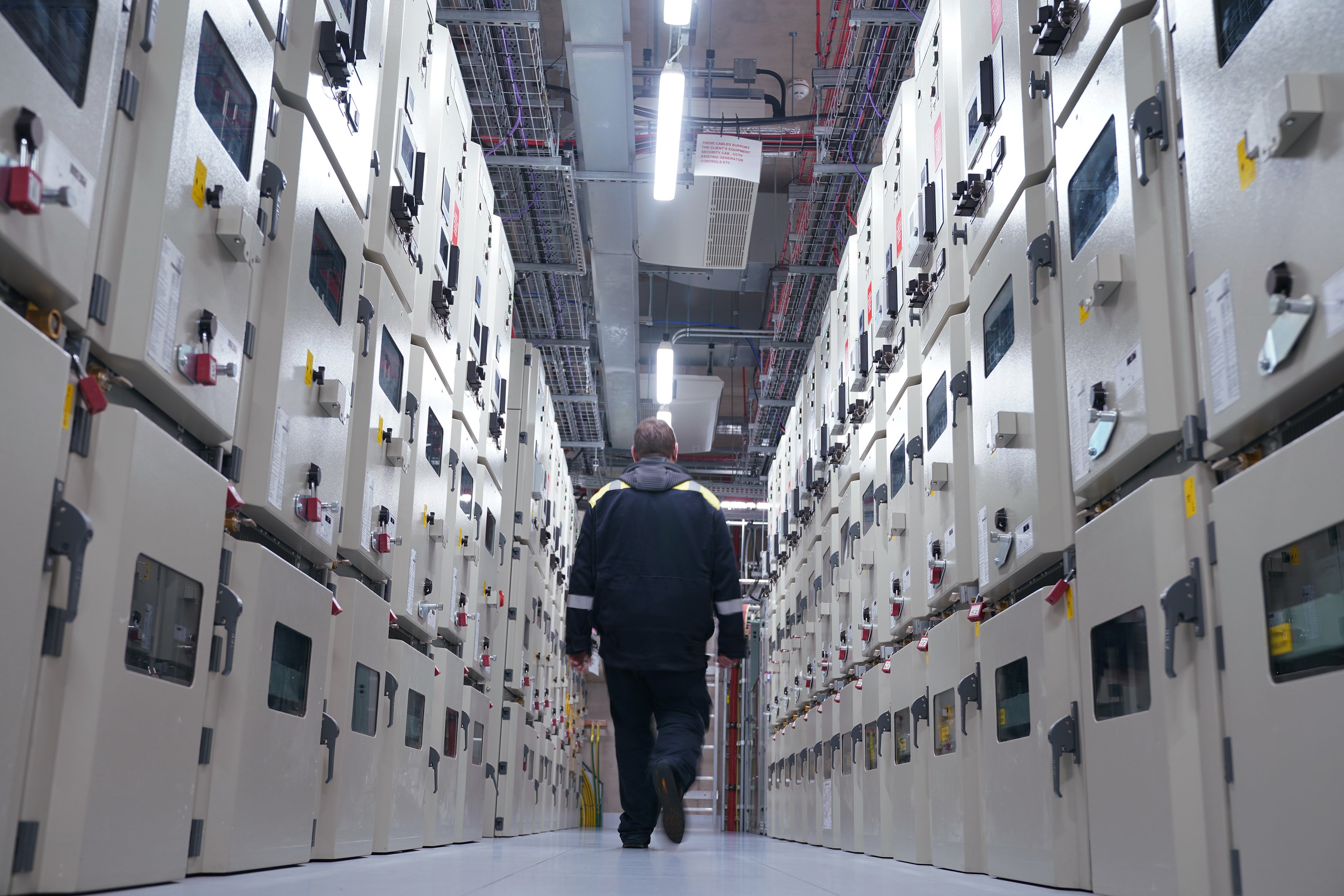
Data centres, which power software like ChatGPT or Google Gemini, rely on water to cool the systems and prevent them from overheating.
They also use water for electricity generation, and during the manufacturing of the hardware they run on.
The Lincoln Institute of Conventional Policy said a mid-sized data centre will consume as much water as a small town, and a larger one, which requires up to 5 million gallons of water every day, will use as much as a city of 50,000 people.
Why are people concerned about it?
People are concerned about AI’s water consumption as they fear it is putting growing demand on already limited supplies.
By using local water supplies, data centres are putting pressure on surrounding communities, which people fear will only worsen as AI expands, especially in areas where water is already scarce.
Members of the Government Digital Sustainability Alliance Planetary Impact working group said that almost 68 per cent of data centres were near protected or key biodiversity areas, where the ecosystems rely on clean water supplies, and whose communities depended on them.
As the demand for water increases, water scarcity and water stress are becoming more prevalent issues.
The group said: “Demand for fresh water is expected to exceed supply by 40 per cent by the end of the decade and 55 cent of global data centres are in river basins with high risk of water pollution, meaning much of the local water may be unsafe for use, increasing the pressure on clean water supplies and worsening the overall water scarcity in the regions.”
Is it a problem?
Many experts say the amount of water AI is consuming is a global crisis. However, others say that fears have been overstated.
Andy Masley, the director of Effective Altruism DC, a not-for-profit focused on improving the community through research, claims that the amount of water used by an individual is far smaller than most assume.
He said that hundreds of thousands of ChatGPT “prompts” would require less water than your pair of jeans, which the UN says takes around 7,500 litres of water to produce.
“That’s incredibly small by the standards of how most people use water in their day-to-day lives,” he told The Independent. “Almost all of our water footprint is actually invisible to us because it happens off-site and in other places.”
Mr Masley estimates a person would need to submit more than 1,000 prompts in a day to increase their daily water footprint by just 1 per cent.
Staying home and generating that many prompts could actually result in a smaller water footprint than going out and using electricity, he said.

A water footprint measures the total amount of fresh water used to produce a product. The European Union now requires data centres to report their annual fresh water consumption.
Sam Gilbert, a researcher at the University of Cambridge’s Bennett School of Public Policy, said the issue is not individual consumption but the impact that centres have on their immediate environment, and the demand they place on local water supplies.
He said there needs to be more transparency from companies that build and use these data centres around what the real environmental footprint of them is going to be.
Mr Gilbert said that the estimate that ChatGPT uses 500ml of water for every 10 to 50 responses is “probably overstated”.
“But even if it was correct, that’s just not very much water in the context of the amount of water that people use in their everyday lives,” he said.
However, Nick Couldry, a sociologist from the London School of Economics, said: “Whatever the rival calculations on water use, we have to consider the sustainability of the massively increased data processing that an economy and society largely dependent on AI will require.”
He said even if water usage can be reduced, technology companies “want and need us to use AI constantly for even more of our lives”.
“It is hard to see how this addictive business model won’t lead to unsustainable demands on the physical environment and rival versions of AI development will demand even more energy,” he added.
Shaolei Ren, an engineering professor at the University of California, said one of the main issues is that many data centres have a high peak water usage over the summer, which is putting immense pressure on the public water system.
Thames Water has previously warned that data centres could face restrictions on use during the hottest and driest times of the year.
Mr Ren said: “Water is a local and seasonal resource. There’s plenty of water in total, but just not everywhere or every time we need it. Only looking at the total volume without considering locational or timing contexts can miss the important nuances.
“The water infrastructure must be sized to support the peak demand. But expanding the water infrastructure capacity is extremely costly for public water systems.”

Can AI help save water from other processes?
Mr Ren said that AI can also help save water from other processes. Some of the ways in which it is already doing this is through technology that is able to detect leaks and improve energy-efficient water distribution.
In 2024, a water company in Surrey began using AI to reduce leaks across its network. The World Economic Forum reported that once AI-enabled water solutions in the United States are fully implemented, they will be able to reduce water use by 15 per cent.
Google’s data centre in Waltham Cross uses air-cooling to limit the amount of water it uses. A spokesperson told The Independent: "As a pioneer in computing infrastructure, Google’s data centres are some of the most efficient in the world.
“Beyond our operations, Google is committed to improving local watershed health where it operates office campuses and data centres and replenishing 120 per cent of the water it consumes, on average.”
OpenAI employees raised alarm about mass shooting suspect months ago: report
Villagers warned not to drink tap water after oil spills into river
Meta’s AI facial recognition smart glasses plan ‘will put women at risk’
Prince William pays tribute to TikToker army medic found dead at barracks
‘I’ll never pay off my student debt in full. Here’s why that doesn’t matter’
Three dead and four injured after three-vehicle crash in Northern Ireland