Hello and welcome to another edition of Free Agent! Happy St. Patrick's Day, have a Guinness or two (or 10).
Before we start, I want to make sure you know about our March Madness bracket groups. Click here for the men's bracket group, and click here for the women's one. Alas, there's no monetary prize for winning this year, but it'll be fun to see how your bracket compares to Reason staffers (several colleagues who don't like sports usually join in) and fellow subscribers.
This edition also marks Free Agent's first anniversary. No gifts necessary, you can just forward this newsletter to a friend who might enjoy it, or send them straight to our subscription page. It's been a really fun year—many thanks to all of you for reading and subscribing!
With that, let's get into the World Baseball Classic, sports betting, legendary sports moments, and, unfortunately, a debate about sexy sports.
Locker Room Links
- Days before March Madness, Alabama's Aden Holloway is suspended indefinitely after getting arrested for allegedly dealing marijuana.
- After Venezuela reached the World Baseball Classic final, President Donald Trump posted on social media, "STATEHOOD, #51, ANYONE?"
- Washington state is implementing an income tax on millionaires. "It's gonna sting" in free agency, the Seahawks general manager said. Maybe a flat tax is the way to go?
- Next week NBA owners will vote on exploring expansion—but only in Las Vegas and Seattle.
- How lobbyists for the Portland Trail Blazers pressured politicians into spending $400 million on the team's city-owned arena.
- Formula 1 canceled two races because of the Middle East war—the races had been planned for Bahrain and Saudi Arabia.
- The White House is posting more bombing videos from the war, now interspersed with footage from Wii Sports.
- J.C. Tretter resigned from the NFL Players Association in shame back in July—now he might get the union's top job anyway.
-
The Reason team was shocked and saddened last week by the death of our longtime colleague Brian Doherty. Brian's work with Reason spanned four decades, a long and unmatched journalism career: from interviewing Milton Friedman in the '90s, to chronicling the rise of libertarian Rep. Ron Paul in the 2000s, to countering antigun misinformation in the 2010s, to profiling Elon Musk's MAGA turn in the 2020s, and many more timeless pieces I don't have room to list. It's a terrible loss for Reason, and for everyone who believes in freedom for all.
A farewell to our colleague Brian Doherty, dead at 57 https://t.co/vNY3iVvTqf
— reason (@reason) March 14, 2026
For Every Sport, a World Cup?
If there's one thing most people seem to feel strongly about, it's geography. The place they're from? It's better than the place you're from. That goes whether it's players from who-knows-where playing on their local professional sports team, or their fellow citizens playing on a team representing their country, or whatever kind of pizza their city is famous for.
Those strong feelings are why every sport would be wise to have a World Cup of some kind.
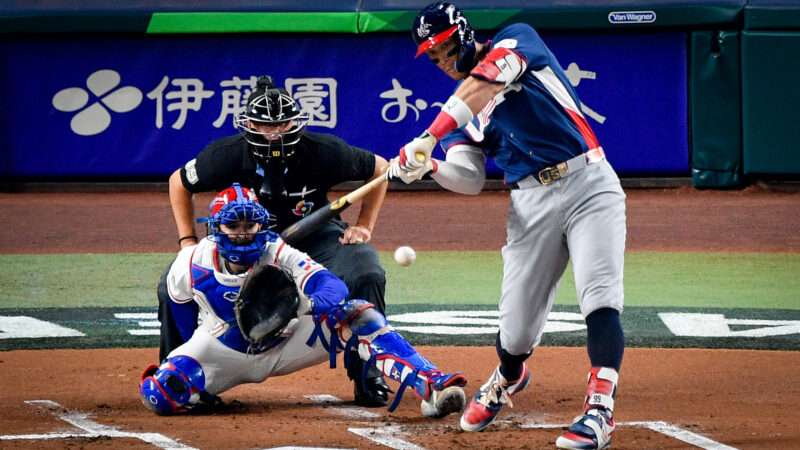
We're seeing it now with the World Baseball Classic. The Marlins can't give enough tickets away to fill their ballpark, but if you just pit the Dominican Republic against Venezuela there with some stakes on the line, you'll see a $300 get-in price. At some point, MLB started to realize it had a potential hit on its hands—games went from being hidden on MLB Network to shown on FOX, they added more teams and more games, and higher-quality players started opting in, too.
The NHL is ramping up its international involvement, too, with pros finally back in the Olympics and the NHL bringing back the World Cup of Hockey and taking it more seriously. Flag football at the 2028 Olympics has the NFL's blessing. (The NBA seems to be missing the boat—perhaps because the Basketball World Cup is organized by FIBA and not the league itself, so there's not much of a direct financial benefit.)
It's a great way to grow sports internationally. What's better? Staging a game abroad between two teams that foreigners have little attachment to, or staging a competitive game with a team of players from their country? Foreigners are obviously going to be more interested in following the latter long-term.
Even though these are competitions with a winner and many losers, they generally don't sow actual hatred between different countries. Maybe you skipped the Canadian maple syrup during the Olympics, but now you wouldn't think twice about it.
International competition gets players and fans excited—they care about the stakes, unlike in most All-Star Games. They give people something new to watch and care about, and are clearly a great avenue to deepen fandoms. Whatever sport it might be, leaders would be wise to figure out a way to get more of a focus on international team competitions.
Betting With Company Dollars
Lots of talk online last week about The Atlantic's new cover story, in which the magazine gave staff writer McKay Coppins $10,000 to gamble on sports during the most recent NFL season. The headline on the cover is "My Year as a Degenerate Gambler," in case you had any hopes of it being a fair and balanced piece (also, fact check: the NFL season was less than six months long, not a "year").
Coppins is a strong writer, and I can see why readers were drawn to his personal experience. He starts as a reluctant Mormon, begrudgingly participating in gambling for the sake of good journalism, before the betting devolves into an obsession that's a strain on his family life.
But as someone who's read every scolding "here's how this person ruined their life through sports betting" article out there, I was disappointed. Thirteen thousand words and I didn't see any new arguments I hadn't heard before, or learned anything new other than "Don't ask McKay Coppins for betting advice." (I learned much more from a better and shorter Atlantic piece published over the weekend, "The Cure for Snoring").
Coppins finishes the season having lost $9,891 of The Atlantic's money. While tempted to keep betting, he decides to fill out a self-exclusion form that bans himself from it instead. The takeaway for most readers, it seems, is that the pull of sports betting is too strong for mere mortals to deal with and must be stopped.
My takeaway is different. People should bet for fun. If they're not having fun, they're probably trying too hard to get rich quick (or make up for financial losses), which will probably make them poor and unhappy. The law should treat adults as capable of making choices that are best for them, even though a small fraction of the population will cause problems for themselves while everyone else is having fun. While the public narrative seems to think more and more people are getting consumed by sports betting's temptations, there's ample evidence that the number of people betting has plateaued.
Thankfully, defenders of betting got good news this week when a new poll found legalized sports betting has more supporters than opponents.
The best rebuttal to the piece, though, is all around you this week: tens of millions of people casually betting with their friends in March Madness bracket pools.
Legends Never Die
Is anything in sports truly legendary anymore?
There's an interesting case study to be had about nothing in sports feeling legendary anymore. I don't think it's a nostalgia thing at all, I think it's the rise of social media and accessibility so we move on from everything immediately.
— ⁸???????????????????? (@33643pts) March 11, 2026
It's a sentiment that I sympathize with at times, but I think is totally wrong. When you grow up hearing about legends of the distant past like Babe Ruth and Gordie Howe, it's easy to miss the fact that you've seen the legends of today's era like LeBron James and Tom Brady. It's also a weird sentiment to share after the whole country just celebrated a legendary moment thanks to the U.S. men's hockey team (it was no Miracle on Ice, sure, but it captured the country's attention for a week).
To be fair, some of this feeling is because of how quickly the news cycle moves. Before the last piece of confetti has been cleaned up, The Athletic and ESPN have "Way-Too-Early" power rankings ready for next season, and a free agency preview to keep your mind thinking forward instead of reveling in the champion's glory. Yet I'm more likely to click on those early rankings to see how my team stacks up for next year rather than read about the in-depth profile of how some team I don't care for finally won their title (or worse, did it again).
It's fine to feel nostalgic about sports (unless you're a politician thinking about subsidizing a stadium), but don't let nostalgia cloud your appreciation for the amazing sports moments surrounding you. It's easier than ever to enjoy all kinds of sports, and sports fans should be incredibly thankful for that.
Sports, Sexy? (Sorry.)
I regret to inform you that this post inspired a vigorous conversation at Reason on which sports are and aren't sexy, and that I've been told this list would make good content.
Skiing is sexy and bowling isn't https://t.co/lCwJcP42kc
— Josh Barro (@jbarro) March 11, 2026
Sexy sports: Skiing, swimming, billiards, tennis, basketball, soccer, curling(?), gymnastics, biathlon ("The guns make it sexy"), field hockey, speed skating, luge ("uncomfortably sexy")
Not sexy sports: Bowling, hiking, cross country, golf, football, table tennis, wrestling, cricket, competitive weightlifting, chess (unless it's chess boxing), squash, pickleball ("too many olds"), quidditch ("unsexy to consider it a sport").
In between: baseball ("only if you're into dadbods"), equestrian sports ("I don't want to call a sport with a horse sexy" vs. the outfits), ice hockey ("if you like no teeth"), rugby ("incredible thighs" vs. bleeding ears), water polo, fencing ("inherently sexy, but unsexy uniforms").
(Sports are not ranked by sexiness, just listed in the same order they came up in our bonkers conversation.)
If you have thoughts on which sports are sexy and which aren't, I beg you to email me about anything else at freeagent@reason.com.
In all seriousness, to answer the original question of why skiing gets more media coverage than bowling, I suspect it's because skiing happens in ski-specific resort towns and other centralized areas that have newsworthy stories connected to economics, politics, environmentalism, and travel. Bowling just happens down the street from everybody.
Replay of the Week
You're going to want to see this one from multiple angles.
WHAT DID WE JUST WITNESS? pic.twitter.com/EKguhwjeFA
— Sportsnet (@Sportsnet) March 13, 2026
That's all for this week. Don't forget to join the bracket groups! Click here for the men's bracket group, and click here for the women's one. Enjoy watching the real game of the week in an even older bracket competition, Detroit City F.C. against the Michigan Rangers on Tuesday night in soccer's U.S. Open Cup.
The post Should Every Sport Have Some Kind of World Cup? appeared first on Reason.com.