
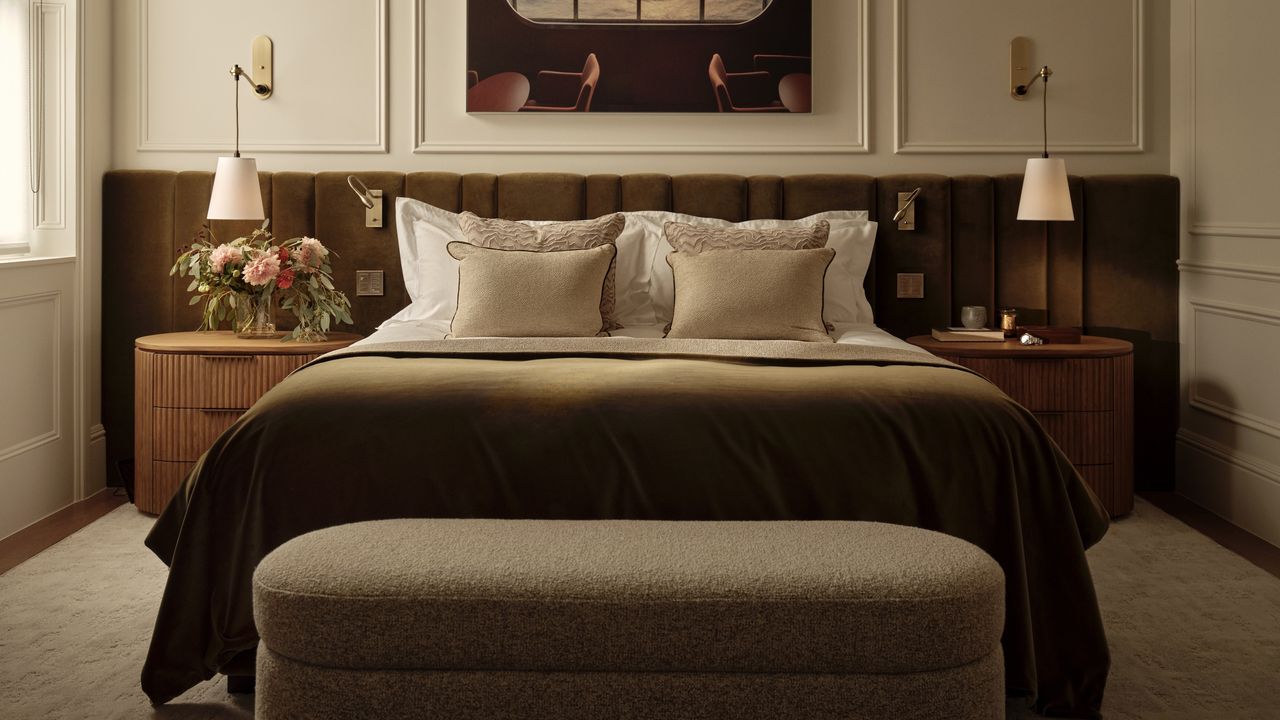
There’s no drumroll needed: your bed is the single most important piece of furniture in your bedroom. Arranging the rest of your layout so everything unfolds around it, as if in a mirror image, can feel like an instinctive decorating decision.
Symmetry in interior design balances how different pieces appear within a room. It reduces any sense of disruption and pieces seem evenly spread across a space, allowing it to feel calm and relaxed. There’s a beauty in keeping things simple, but this leaves something of a design risk — symmetrical bedrooms often end up looking a little predictable. “The most successful interiors tend to feel more considered, rather than purely formulaic,” explains Melissa Hutley.
Interior designers are endlessly perfecting floor plans and tweaking room layouts — so, what do they think? Should bedrooms be symmetrical, and is it ever okay to mix things up? Let's find out.
Why Do Symmetrical Bedrooms Work?
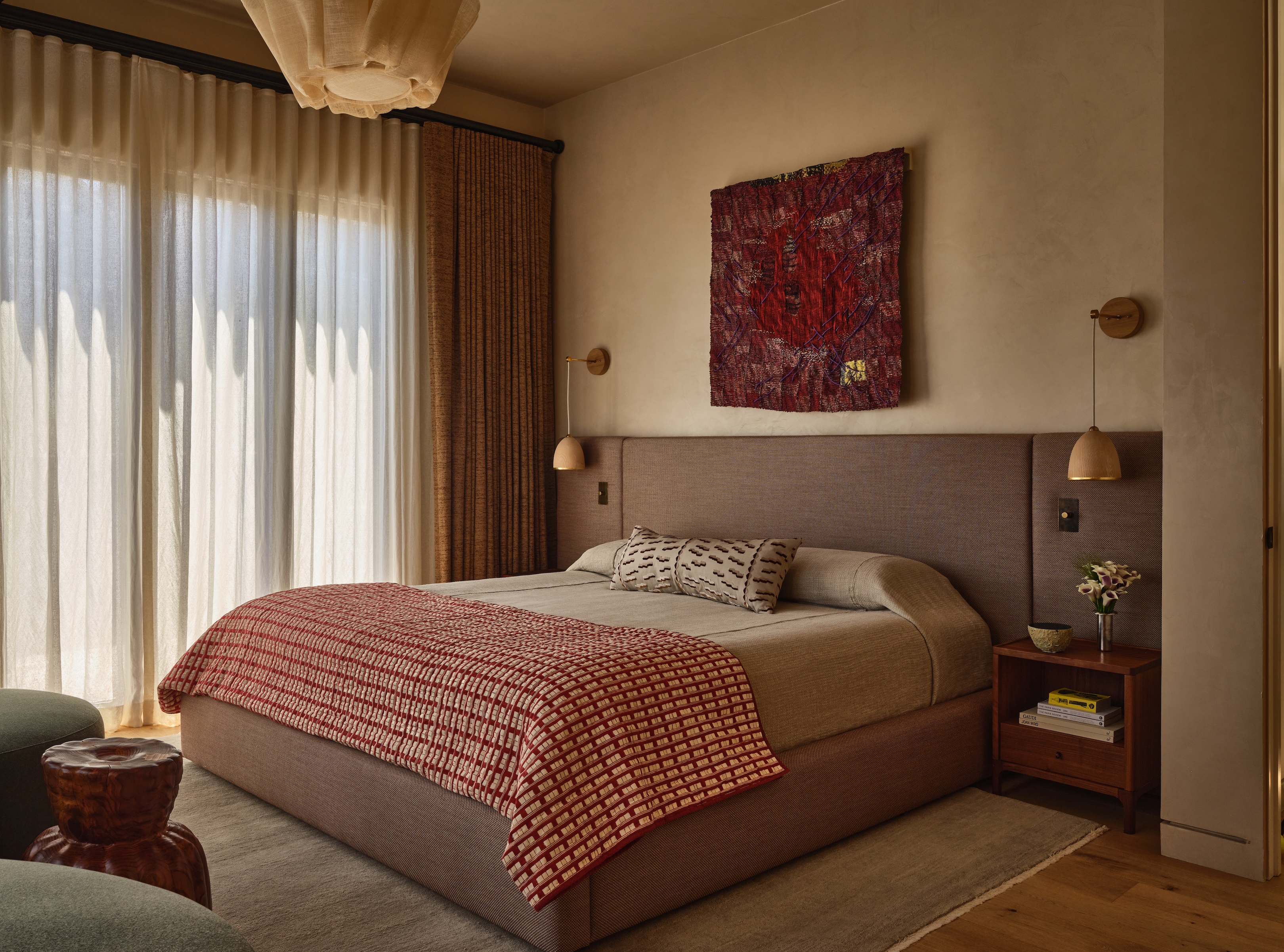
In a room dedicated to rest and relaxation, it’s perhaps no surprise that many of us are inclined to keep things simple. “Symmetry does feel like a very natural starting point for bedroom design,” explains A.LONDON’s Edward Bishop. “We don’t have to work quite so hard to process the space, which helps contribute to a calm atmosphere.”
“It just reads as safe to our brains, so a symmetrical layout is an easy win for a room built around rest,” agrees Riley Uggla, creative director and founder of The Condo. “It gives your eyes less work to do, which genuinely makes a room feel restful.” All in all, this sense of visual balance helps to create a more soothing bedroom.
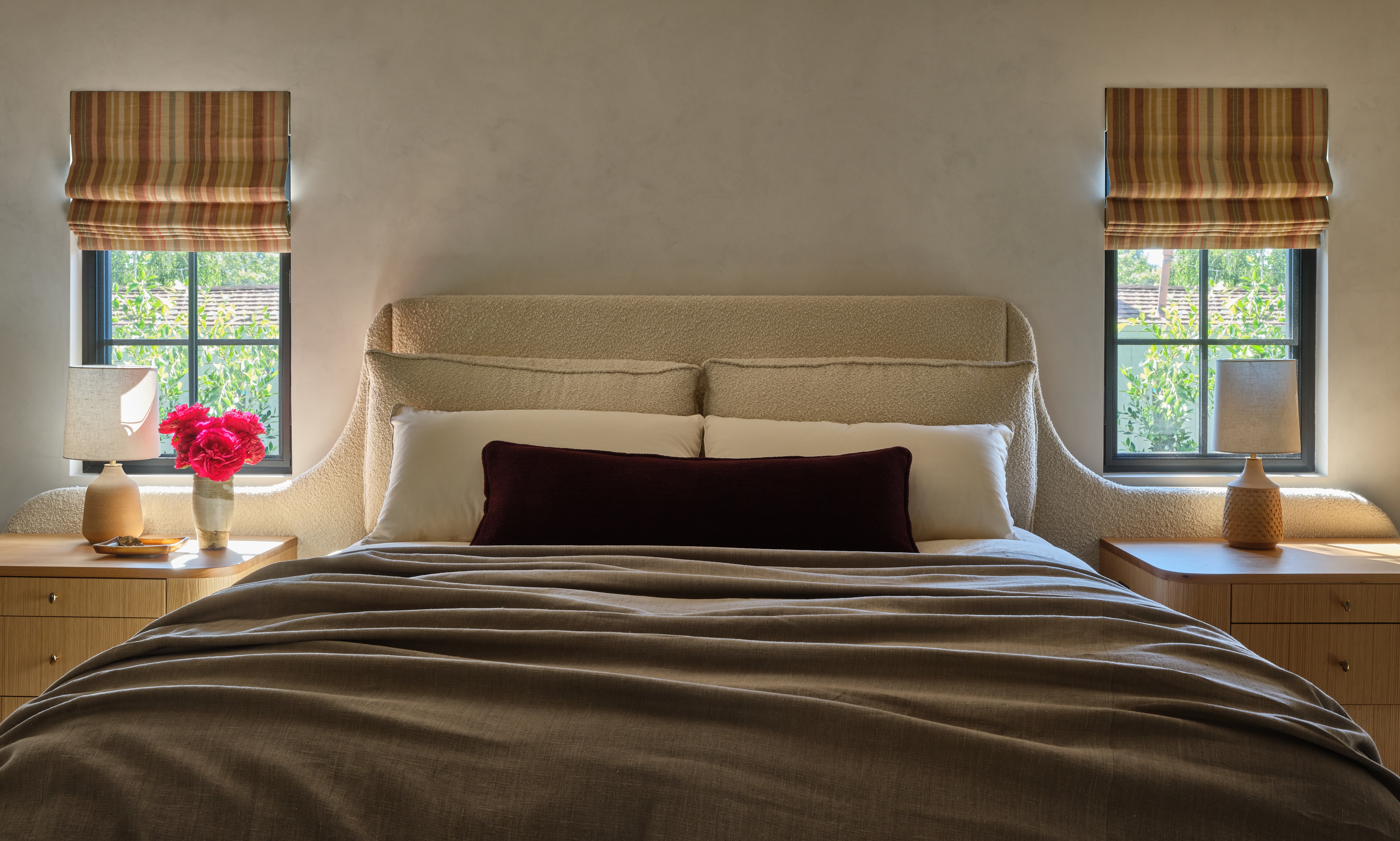
As most bed frames and headboards are symmetrical, designing a bedroom around a single key piece makes it the hero. “Working around a central axis helps to anchor your room, and you can arrange furniture and lighting in a way that’s composed without being overly contrived,” says Melissa Hutley. “The space ends up becoming easier to navigate and also tends to function better.”
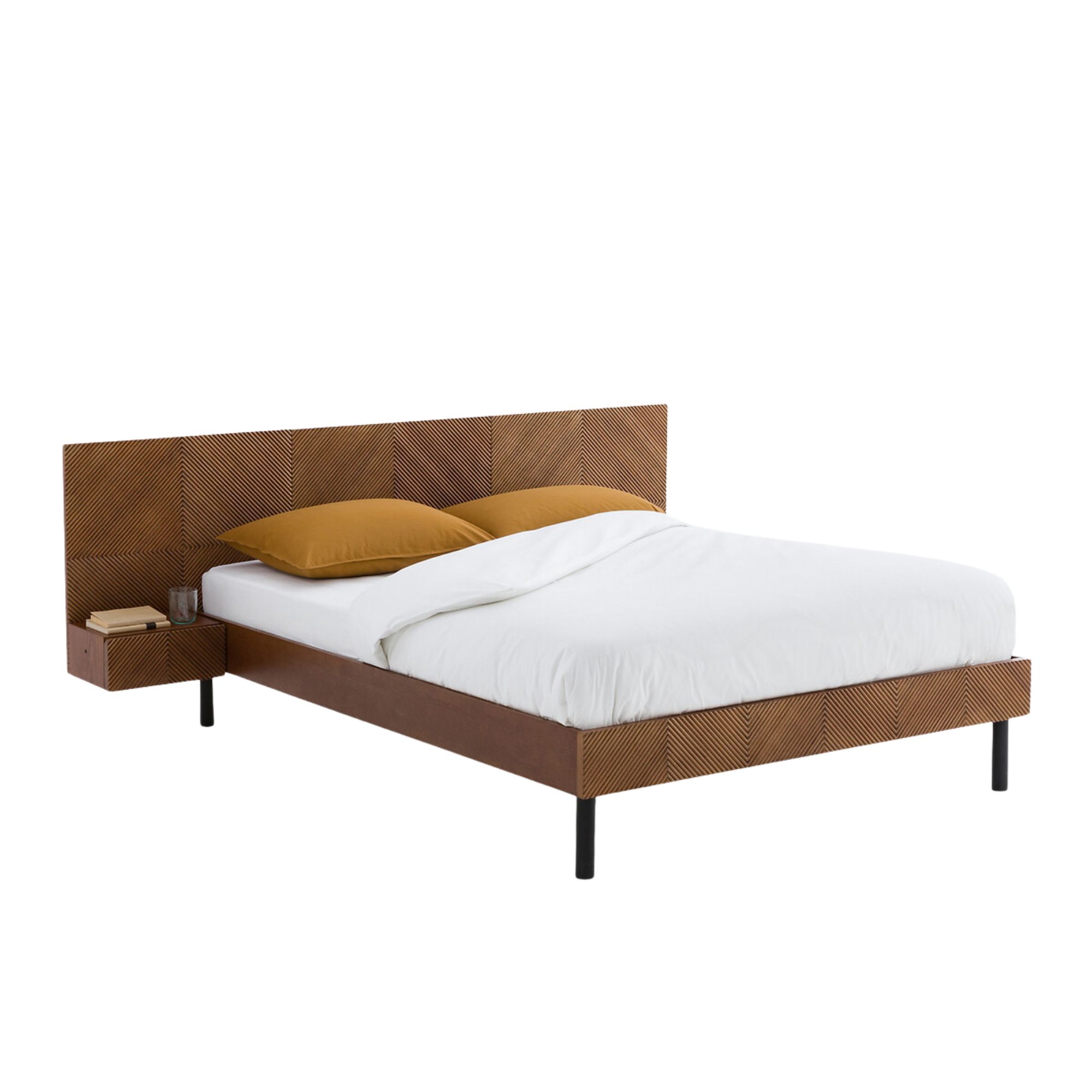
This two-in-one bedframe is ideal for achieving symmetry in smaller spaces. “I always anchor the room with one confident piece,” says Riley Uggla.
There are practical benefits, too. “Matching your nightstands and having the same lighting on either side of the bed is brilliant, especially for couples,” Riley explains. “There’s equal storage, equal light, and therefore no negotiating on what belongs where.” That said, one size doesn’t always fit all…
When Is Symmetry the Wrong Choice for a Bedroom?
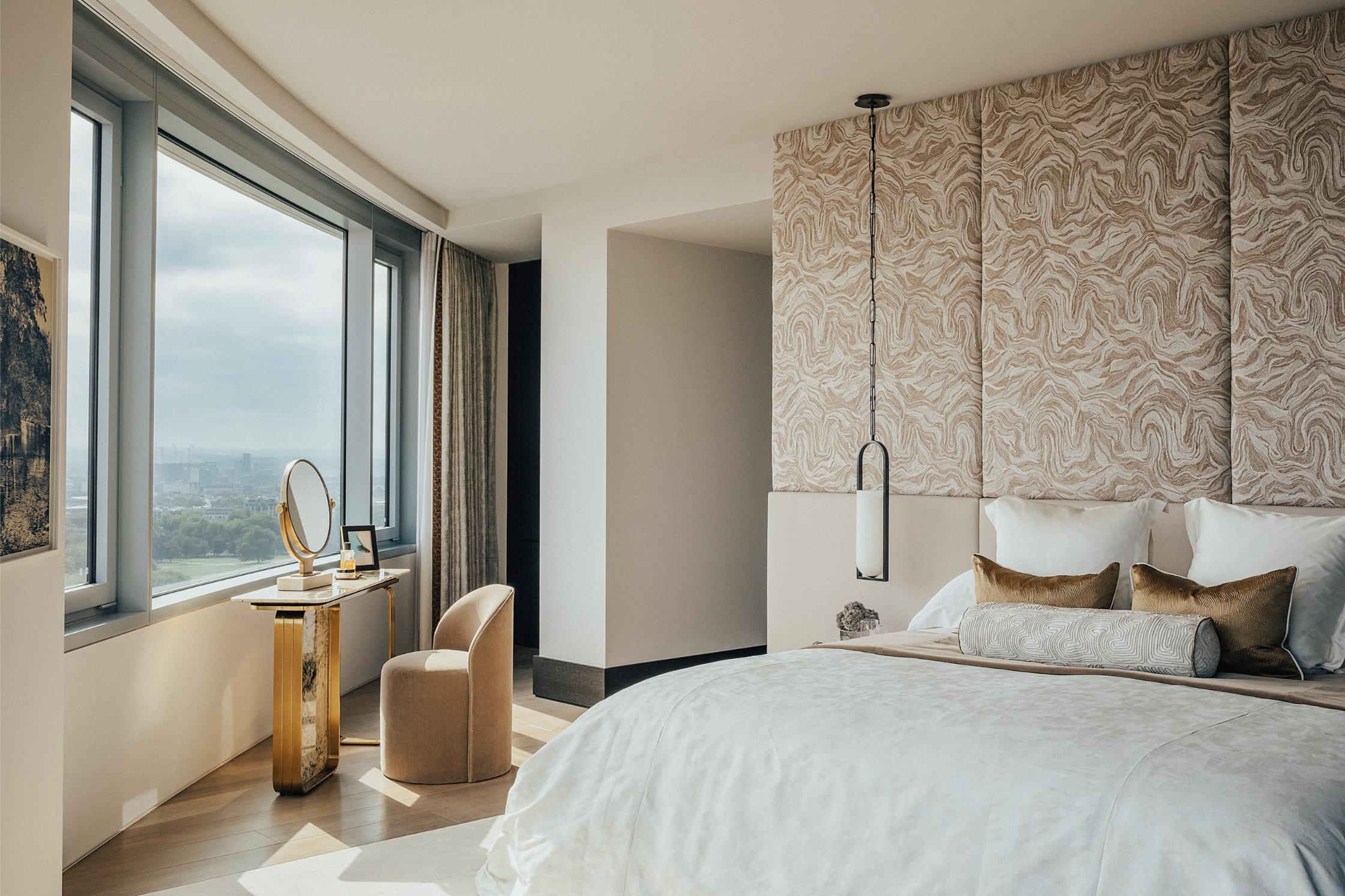
If you have to plan a bedroom around awkward angles, negotiate tricky corners, or wrangle with unusual proportions, then a balanced, grid-like layout may simply be impossible.
“Don’t try to force symmetry where it can’t exist,” advises Christie Ward, co-founder of interior design studio Ward + Gray. “Embrace your architecture rather than fight it.”
“Rooms with asymmetrical architectural features might require a more creative approach to planning, so use these as opportunities to create something more individual,” echoes Edward Bishop.
This approach to decorating — where a deeper-than-normal window recess becomes a reading nook or a once-challenging alcove ends up as a walk-in closet — taps into a growing desire for a bedroom that’s slightly less buttoned-up.
“Symmetry has a habit of making a room seem formal, even when that isn’t the intention,” the interior designer reflects.
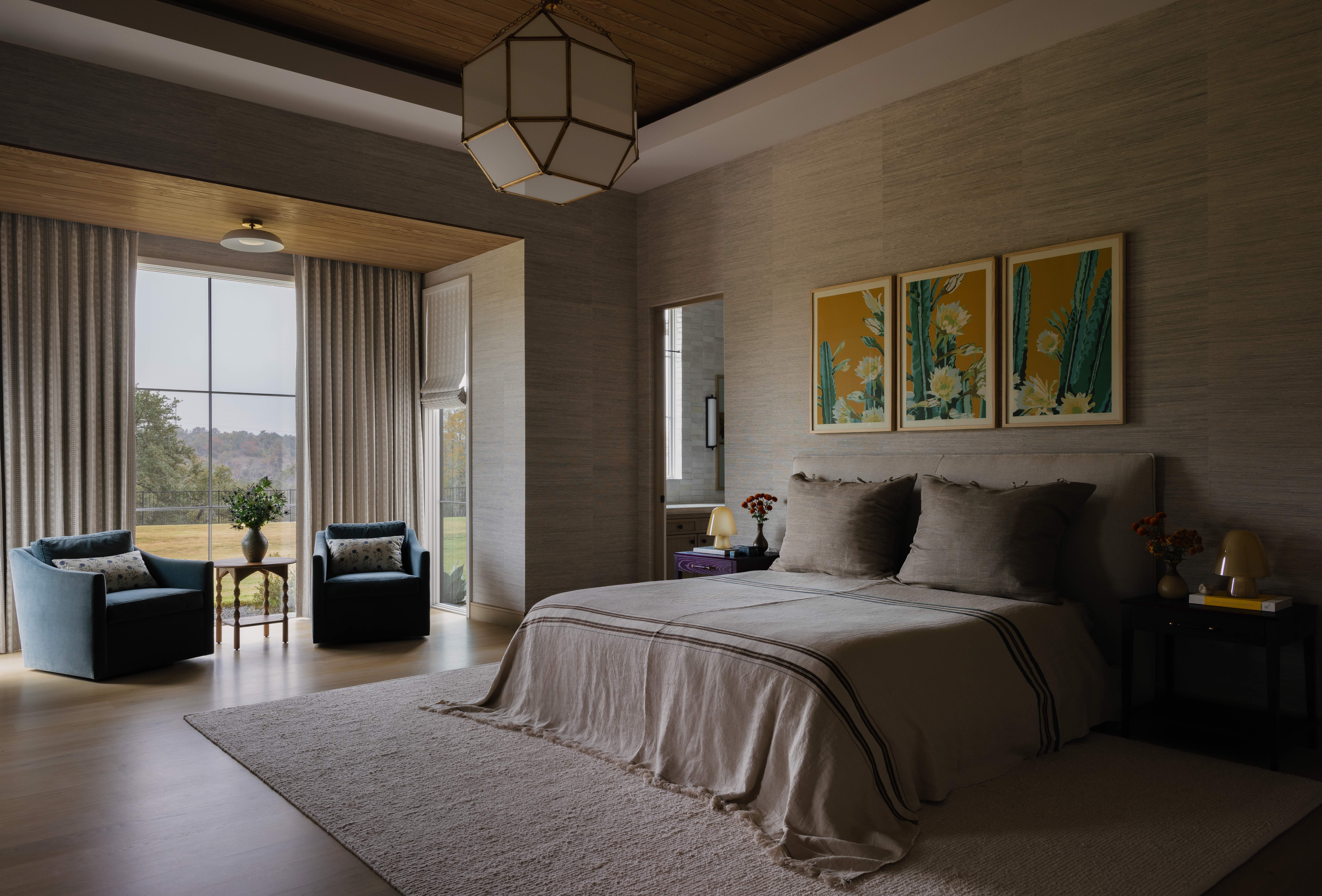
“Perfect symmetry can also get in the way of using a bedroom properly,” points out Staver Gray, who believes that different sides of the bed may have their own demands for the space.
“One person may like to read in bed, so needs a task lamp, while the other would rather have additional storage,” she says. “Thoughtful asymmetry that allows each side of the room to serve its occupants correctly can actively improve your space, while still making it feel cohesive and serene.”
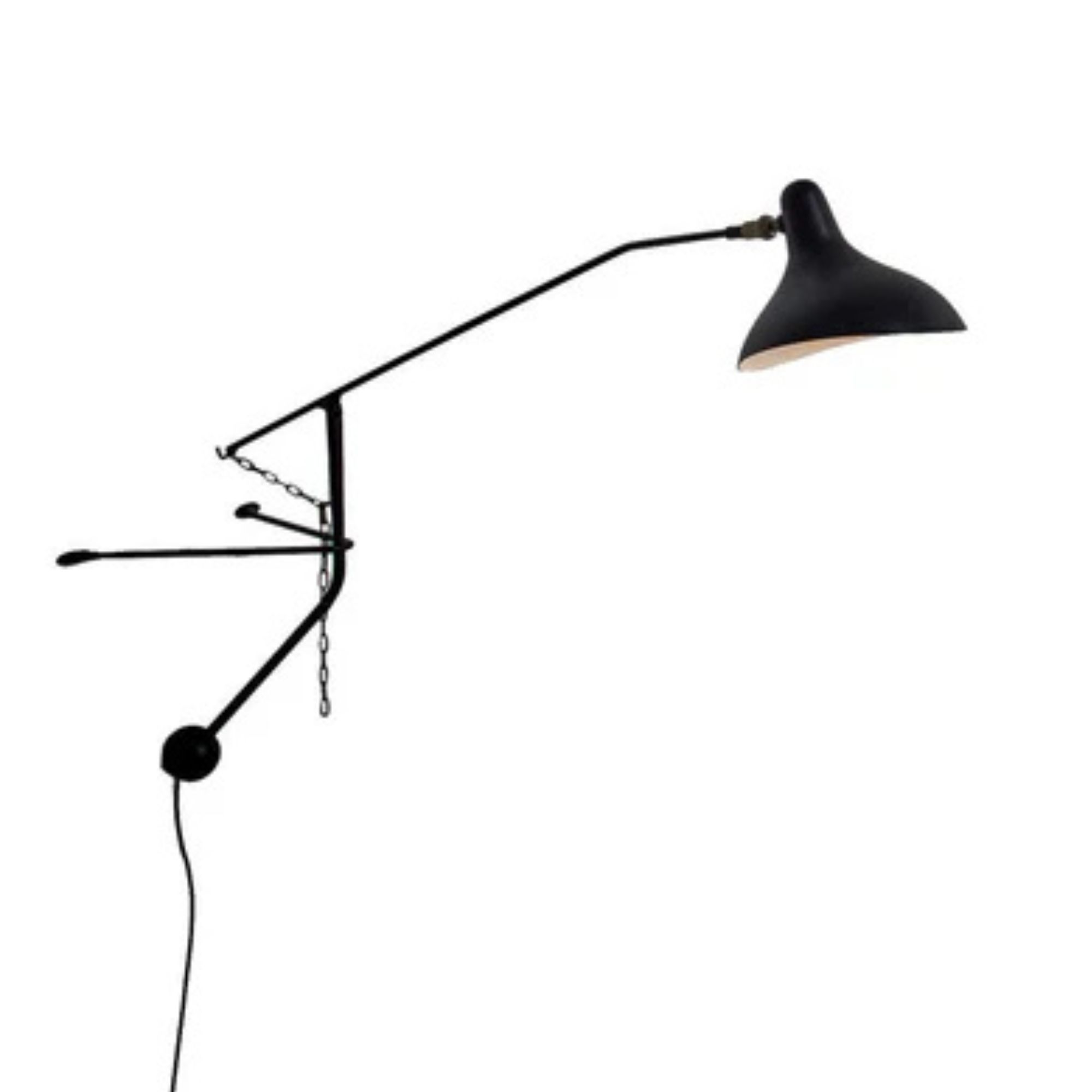
“A single wall light arching over the bed can become a moment of wow,” says Lishan Tham from Studio Shan.
How Do Designers Make Asymmetrical Bedrooms Work?
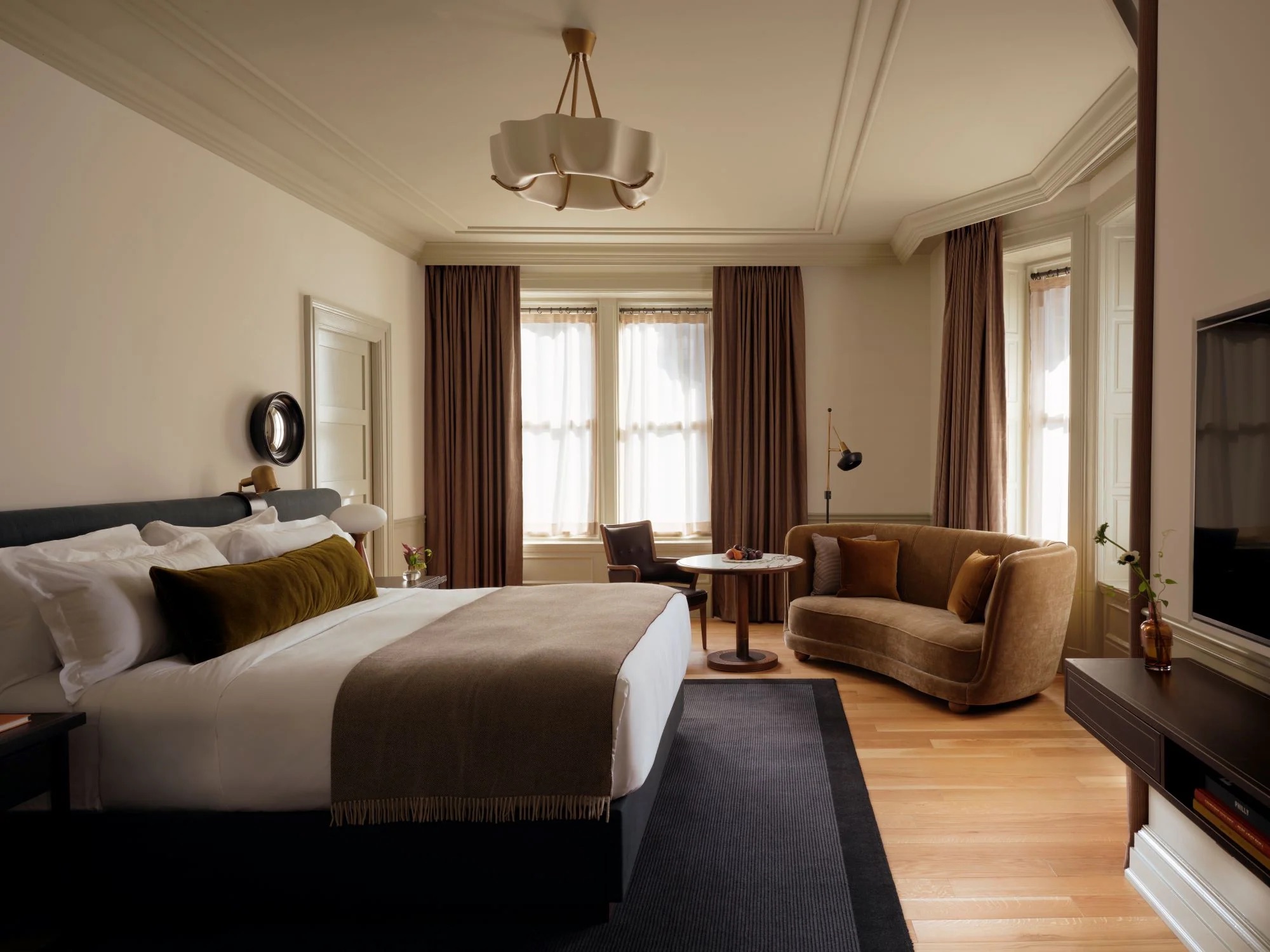
“We think about the visual weight of every object and how much of that is distributed throughout the space,” reveals Staver Gray.
This underappreciated concept can be the difference between a bedroom feeling right or seeming off. “Two pieces don't need to match; they simply need to carry equal weight," she adds. "If one side of a room has a substantial armchair, the opposite side might be balanced with a large piece of art above a console. They're different elements, and together they create a composition that works.”
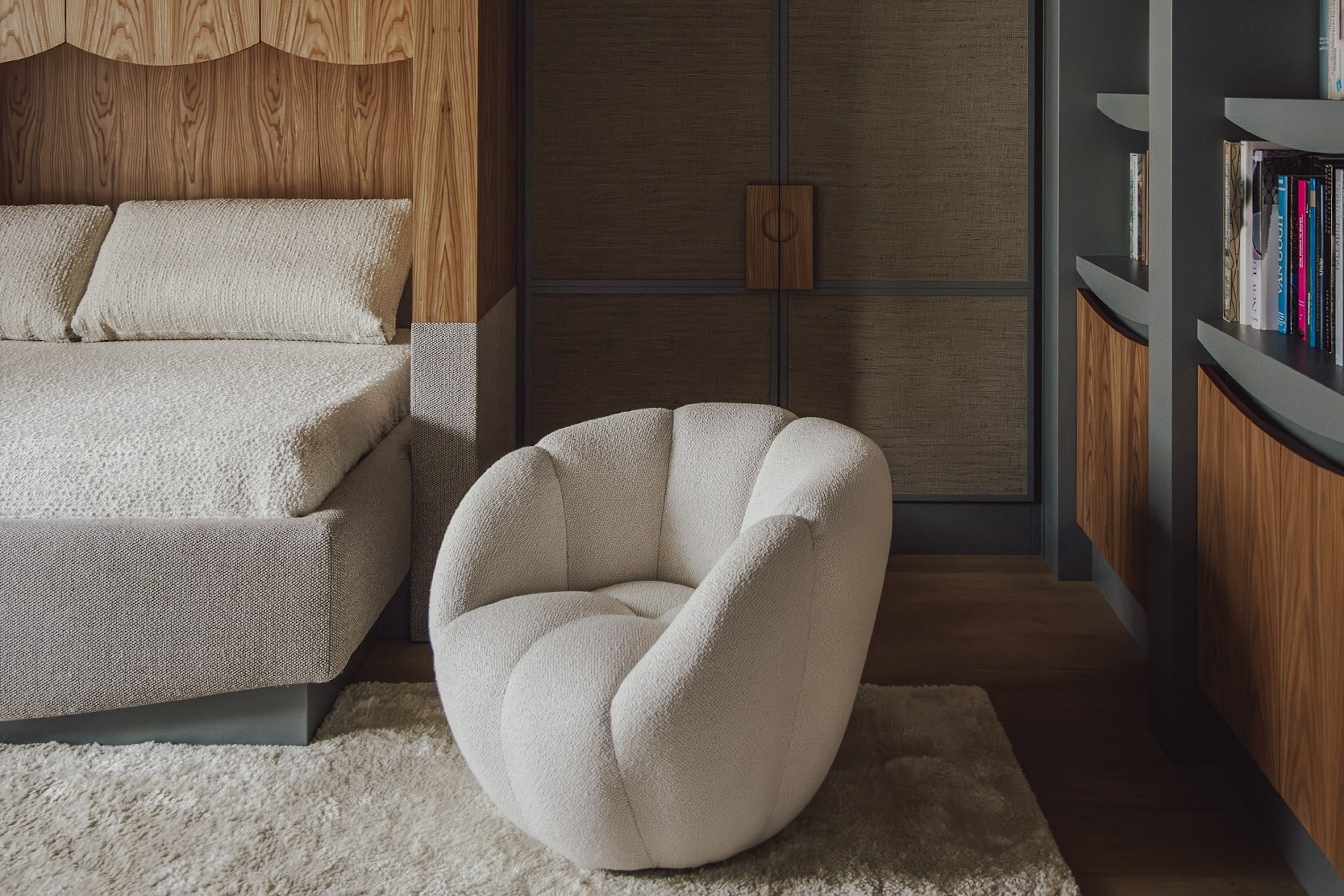
If the layout of your bedroom features a study corner at one end and a seating area in the other, creating a sense of continuity is key to making the whole space work together.
“The brain likes some uniformity,” agrees Studio Shan’s Lishan Tham. “Unite these different elements by using the same color or pattern around your room, either through color-drenching, similar materials, or even a unifying wallpaper.”
This repetition of tones and textures brings visual order, even to the most asymmetrical of bedrooms. “The real key is to introduce common threads that tie everything together,” says A.LONDON’s Edward Bishop. “Repeating those details throughout creates a cohesive scheme, even when the furniture itself isn't identical or the layout perfectly mirrored.”
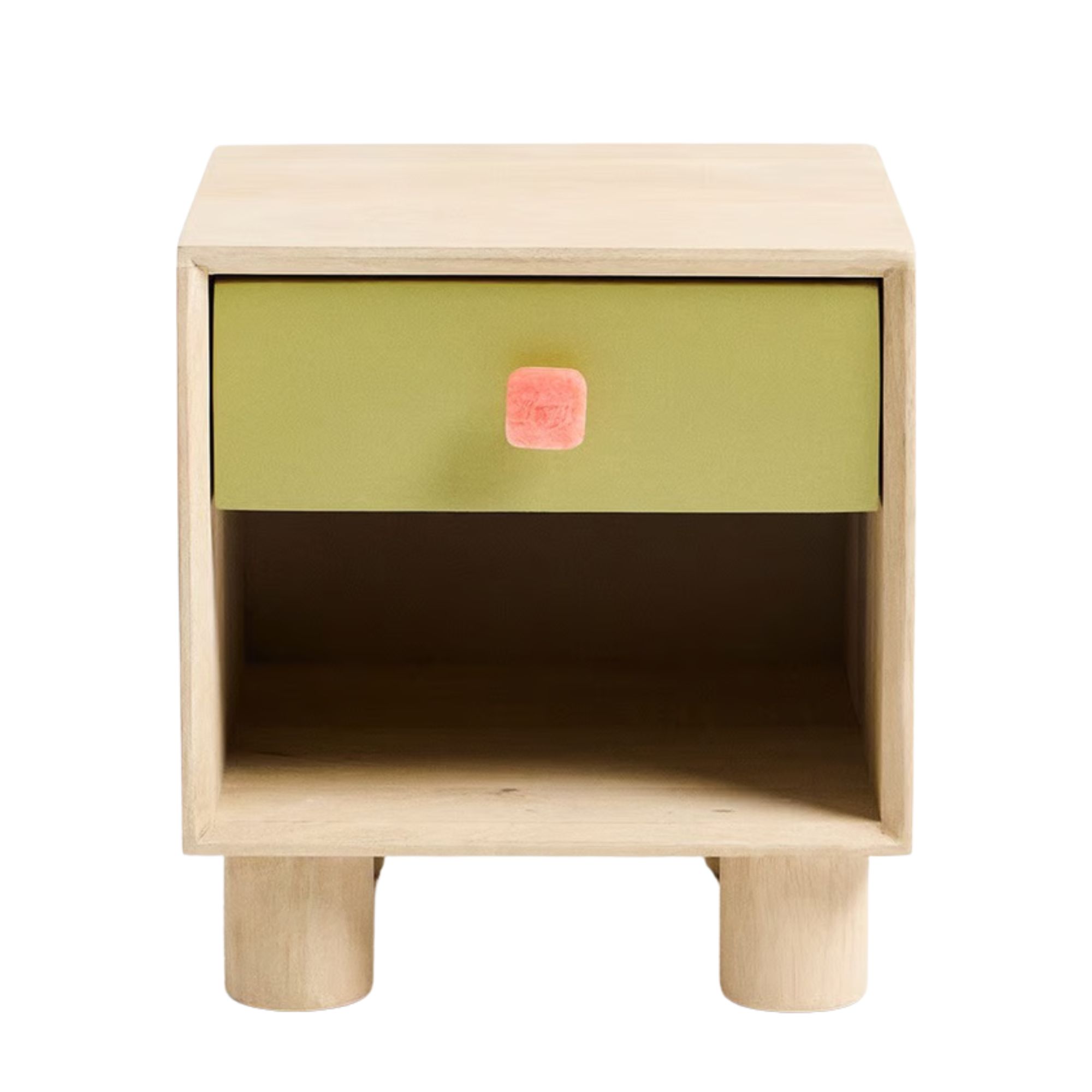
“Mixing different nightstands together can create a much more interesting and personal interior,” suggests Edward.
If you’re remodeling or simply wondering where to position your new wardrobe, it’s well worth paying attention to your floor plan. Making your bedroom symmetrical can set a restful tone, but in many spaces a less rigid layout creates a dreamier mood. There’s no right answer that applies to every bedroom, but balance seems to be the key.
No matter your project, this year’s bedroom trends offer up plenty of inspiration. Plus, sign up to Livingetc’s newsletter for more decorating ideas and expert design advice.