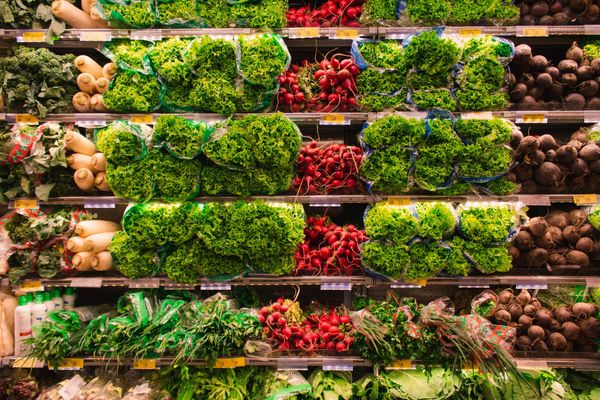
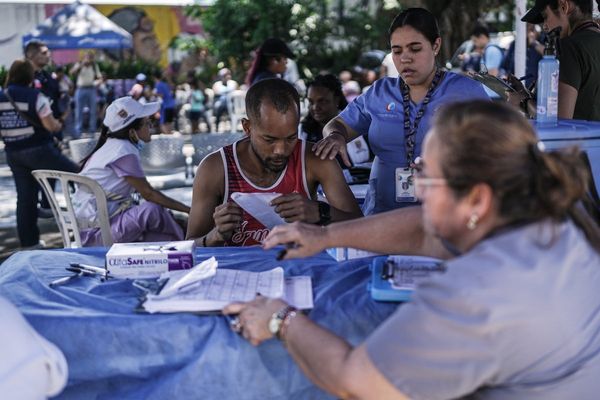
A record Cyclospora season and a nationwide iceberg lettuce recall have left a lot of shoppers looking at the supermarket produce aisle differently, and some are heading to farmers' markets instead. The instinct is understandable. The evidence supporting it is more complicated.
Buying from a nearby grower changes several things about how produce reaches you. It shortens the supply chain, reduces the number of handling steps, and often lets you ask questions of the person who grew the food. What it does not do is remove the biological pathways through which produce becomes contaminated, and in one important respect it can reduce the regulatory oversight applied to that food rather than increase it.
For households trying to make a practical decision, the honest answer is that local and national supply chains fail in different ways and at different scales. Neither is inherently safe.
The Oversight Tier Most Shoppers Do Not Know About
Federal produce safety rules are deliberately scaled. Under the FDA's Produce Safety Rule, farms with average annual produce sales of $25,000 or less over the previous three years are not covered by the rule at all.
Above that line sits a second category. Farms with average annual food sales under $500,000 that sell the majority of their food directly to consumers, or to restaurants and retailers in the same state or within 275 miles, may qualify for what is called a qualified exemption. Those farms face modified requirements involving labeling and recordkeeping rather than the full rule.
Farmers market vendors frequently fall into one of those two categories. That is not evidence of negligence, and Congress wrote the tiers deliberately to avoid imposing costs that would push small growers out of business. But it does mean a shopper cannot assume a market vendor is operating under the same water testing, worker hygiene and equipment sanitation requirements as a large supplier.
Compliance timelines also differ, and they are still rolling out. State agriculture departments enforce the rule under cooperative agreements with the FDA, and as the New York State Department of Agriculture and Markets noted this spring, pre-harvest agricultural water assessment requirements took effect for large farms in April 2025 and for small farms selling between $250,000 and $500,000 in April 2026. Very small farms selling between $25,000 and $250,000 have until April 2027.
Traceability Cuts Both Ways
The strongest argument for buying local is that a short chain is easier to trace. If a market vendor's tomatoes make people sick, there is one farm to investigate rather than a distribution network spanning several states.
The counterargument is that traceability requires records, and small direct-market vendors generally do not maintain lot-level documentation. The federal food traceability rule that would require that kind of recordkeeping is not being enforced: Congress barred the FDA from spending appropriated funds to administer or enforce it before July 20, 2028, and the agency's own proposed compliance-date extension has not been finalized. The rule also exempts many of the smallest operations.
Scale explains the difference in how failures become visible. A contaminated ingredient moving through a national supplier can sicken thousands of people across many states, which is what happened with the recalled iceberg lettuce, and that scale is what triggers a federal investigation and a public recall. A contaminated batch at a single market stall may sicken a handful of people who never connect their illness to a common source, so it is never counted, never investigated, and never recalled. Fewer detected outbreaks is not the same thing as fewer illnesses.
Cyclospora illustrates the point. The parasite spreads through food or water contaminated with feces and needs time outside a host before it becomes infectious, which is why it does not pass person to person. Imported produce has historically been implicated, but the CDC's health alert this summer documented 1,645 laboratory-confirmed cases across 34 states in people who reported no international travel. Domestic growing and handling conditions are squarely in the picture.
What Actually Reduces Risk at the Point of Purchase
Since neither channel is categorically safer, the useful questions are the ones that apply to both.
At a market, it is reasonable to ask a vendor what water source is used for irrigation and washing, whether produce is cooled and how, and whether the farm has completed produce safety training. Growers who take food safety seriously generally welcome the question. Look at practical handling as well, including whether produce is kept off the ground, whether there is shade or cooling on a hot day, and whether there is a handwashing setup for staff.
At a supermarket, the equivalent is staying current on recalls rather than relying on appearance. Recalled produce looks and smells normal, which is why checking FDA and CDC notices matters more than inspecting the item.
Washing helps for some contaminants and is worth doing, but it should not be treated as a guarantee. Cyclospora in particular is not reliably removed by rinsing, and chemically disinfecting or sanitizing produce may not fully eliminate it. Cooking is the more dependable step for people at higher risk, which includes older adults, pregnant people, young children and anyone immunocompromised.
Keeping receipts through the summer is also worth doing. Investigators rely on purchase records to trace outbreaks, and that applies to market purchases as much as retail ones.
The Bottom Line for This Summer
The public health advice has not changed and is not in tension with any of this. Fruits and vegetables remain central to a healthy diet, and no agency has recommended reducing produce intake because of the current outbreaks.
What has changed is that a specific product was identified and recalled, and consumers should check whether they have it. Beyond that named product, federal investigators still have multiple open Cyclospora investigations without an identified food source, which means there is no other specific item to avoid.
If you prefer farmers markets, buy from them. If you prefer supermarkets, buy from them. The decision that measurably affects your risk is not the venue. It is whether you track recall notices, handle produce carefully at home, and seek testing when a diarrheal illness lasts more than a few days rather than waiting it out.
Frequently Asked Questions
Is produce from a farmers market safer than supermarket produce? Not automatically. Local produce travels through fewer handling steps, but many small vendors operate under exemptions from the full federal produce safety requirements.
Which farms are exempt from the Produce Safety Rule? Farms averaging $25,000 or less in annual produce sales are not covered. Farms under $500,000 in food sales that sell mostly direct to consumers or nearby buyers may qualify for modified requirements.
Does a shorter supply chain make outbreaks easier to trace? In principle yes, but tracing depends on records. Small direct-market vendors typically do not keep lot-level documentation, and the federal traceability rule is not being enforced before July 2028.
Why do national outbreaks seem larger? Because national distribution exposes more people at once, which makes clusters detectable. Small local outbreaks often go unrecognized rather than not occurring.
Does washing produce remove Cyclospora? Not reliably. Chemical disinfection may not fully eliminate it either. Cooking is the more dependable step for people at higher risk.
What should I ask a market vendor? About the water used for irrigation and washing, how produce is cooled and stored, and whether the farm has completed produce safety training.
Should I eat less produce right now? No health agency has recommended that. Discard any recalled product, follow recall notices, and continue eating fruits and vegetables.