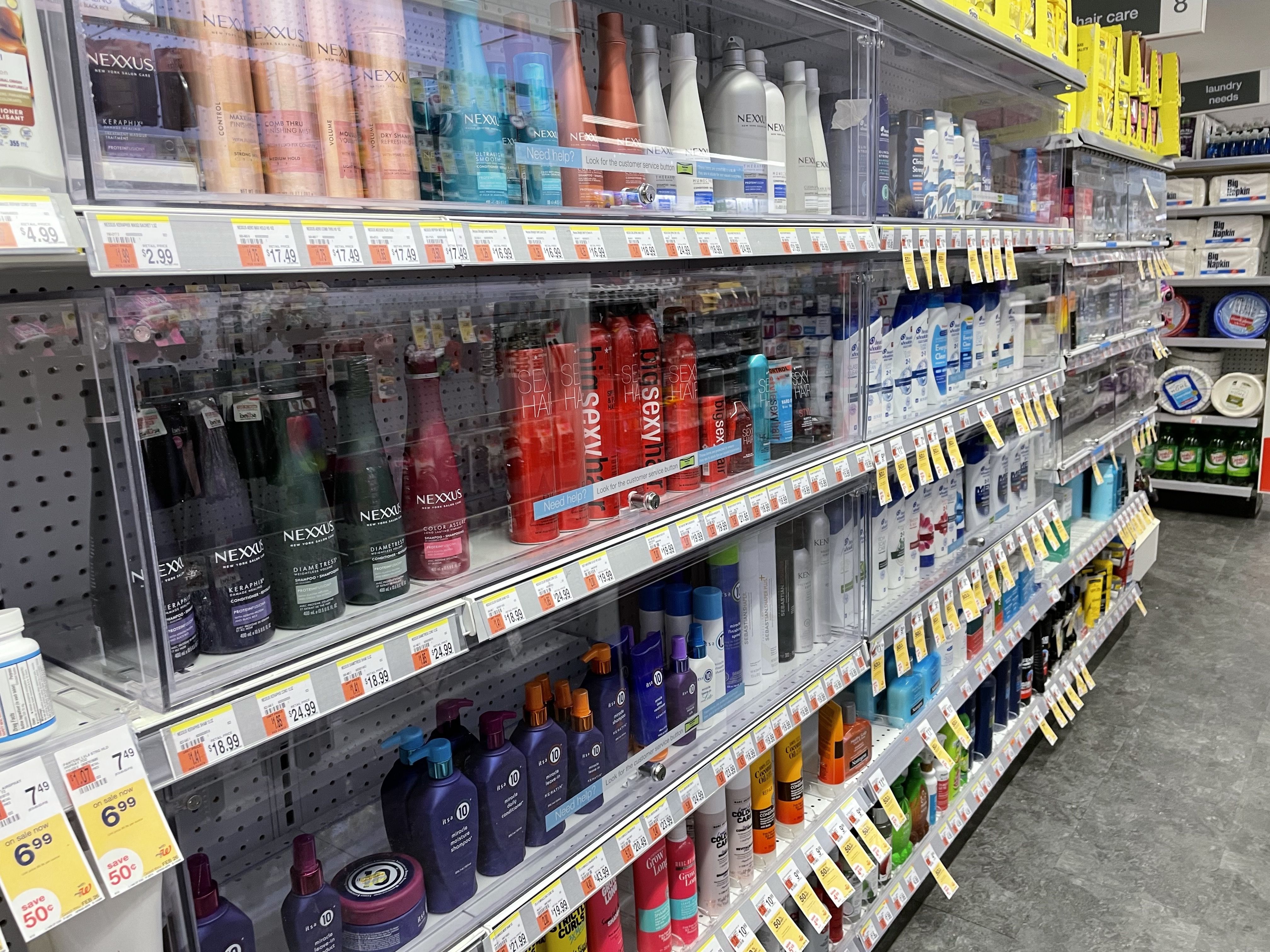
Shoplifting has gotten so bad nationally that chains like Rite Aid are closing hard-hit stores, sending terrified employees home in Ubers and locking up aisles of seemingly mundane items like deodorant and toothpaste.
Why it matters: Retailers are already reeling from the pandemic, supply chain woes and the labor shortage. Now they're combating systematic looting by organized crime gangs — which are growing more aggressive and violent.
- "It's out of control — it is just out of control," Lisa LaBruno, SVP of operations and innovation at the Retail Industry Leaders Association, tells Axios.
- A lot of the uptick is tied to the ease of reselling stolen goods online, plus the fact that consumers are buying more everyday goods online during COVID.
- "We have experienced a 300% increase in retail theft from our stores since the pandemic began." CVS spokesman Michael DeAngelis tells Axios.
At a Rite Aid that just closed its doors in midtown Manhattan, more than $200,000 in goods were stolen in December and January, per the New York Post.
- “They come in every day, sometimes twice a day, with laundry bags and just load up on stuff,” the Post quoted a store employee saying.
Driving the news: The retail industry is pressing Congress to pass the INFORM Act, which would require online marketplaces (like Amazon, eBay and Facebook) to verify sellers and provide contact information to buyers.
- Attorneys general in states like California, Arizona and New Mexico are setting up anti-shoplifting task forces and looking at stricter laws on bail reform and felony thresholds.
- District attorneys in cities like Chicago and New York are considering harsher measures against shoplifters.
The big picture: The problem is made worse by flash mobs like the 80 people who stormed a Nordstrom in San Francisco in November, and organized retail crime groups that often hire homeless people and drug addicts as "boosters" to do the dirty work.
- Store shelves aren't the only places getting hit: Warehouses and cargo trucks are also in the crosshairs.
- Teams of "boosters" will throng a store with laundry bags, grabbing what they can and assaulting workers who confront them — sometimes fatally.
Details: One Bay Area crime ring stole $8 million in merchandise from CVS, Walgreens and Target stores.
- Another one ripped off a staggering $50 million in goods — mostly health and beauty products that thieves stockpiled in a warehouse.
- "More than $1.6 million in razor blades alone were recovered," per Loss Prevention Magazine.
What stores are doing: In addition to locking high-theft items behind anti-theft panels, retailers are arming more merchandise with alarmed security tags.
- They're installing shelf sensors that can tell when a customer has been browsing for a suspiciously long time, and adding "smart" shopping carts with wheels that lock if someone sneaks it past the cash register.
- But too many locks can frustrate honest shoppers — potentially sending them into the arms of an Amazon.com instead of the corner store.
- LaBruno of the Retail Industry Leaders Association says merchants "are always doing a balancing act" to ward off theft while making inventory accessible.
Al Sharpton addressed the issue on “Morning Joe” on Thursday, saying, “They're locking up my toothpaste.”
What they're saying: A survey released in December by the National Retail Federation found that designer clothing was the top item reported stolen, followed by laundry detergent, razors, designer handbags and deodorant.
- The top five cities for organized retail crime, in order, were Los Angeles, Chicago, Miami, New York and San Francisco.
Yes, but: An analysis of crime statistics and other reporting by The Atlantic cast doubt on what it called the "great shoplifting freak-out," citing "fuzzy data" and asserting that what's being lumped together as shoplifting is actually a variety of violent crimes.
Go deeper: