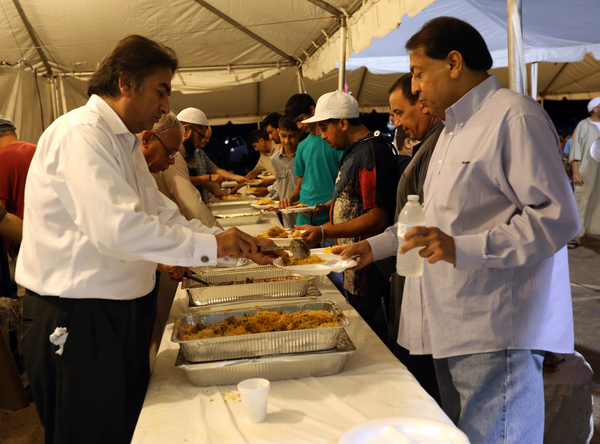
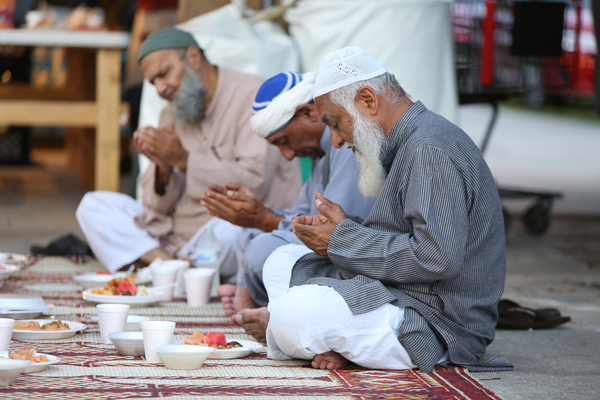
ORLANDO, Fla. _ A diffuse evening light drained from the sky over the Islamic Center of Orlando, and after a long and hungry day it was almost time for more than 600 visitors with empty stomachs to fill them together.
Knots of men and women socialized under white pavilions stretched out behind the mosque. Children chased each other and punted balls across the gravel. The mouthwatering scents of lentil soup and slow-cooked chicken drifted from cavernous pots.
"Everything is getting back to normal," mosque regular Abdul Shabir later reflected.
Yet, posted near the entrance Tuesday of the center on Ruby Lake Road, two security guards eyeballed everyone who walked onto the grounds. Their presence was another reminder of the tragedy that visited Orlando during Ramadan, the Islamic holy month set aside for spiritual reflection and fasting from sunup to sundown.
On June 12, about one week into Ramadan, a gunman swearing allegiance to the Islamic State barged into the Pulse nightclub and executed a violent attack that killed 49 and wounded more than 50 others.
After the shooting, local Muslims felt the heartache that gripped the entire region and, like others, opened their wallets and lit candles in prayer for victims. Though already weakened by fasting, many gave blood.
But compounding their grief was the suspicion and invective they encountered from those who blamed them for violence committed by Omar Mateen, a security guard who lived about two hours away in Fort Pierce.
"I guess many feel this is in Orlando, and somehow, the community is responsible," said Imam Muhammad Musri, who heads the Islamic Society of Central Florida.
In the aftermath, attendance plummeted at the celebratory mosque meals held across the region during Ramadan. Parents kept their children at home. Women wearing headscarves were afraid to go shopping.
Shabir, 26, said one particular comment by his Pakistan-born father stuck in his mind: "He said the nur _ the light _ of Ramadan is gone."
Sarah Sheikh was among those who stayed away from iftar _ or the fast-breaking dinners _ for a couple of nights after the Pulse attack. Her mother thought it would be wise to lay low for a little while and avoid congregating for the meals, which begin after 8 p.m. and last well into the night.
At Tuesday's Islamic Center iftar, she said the decision came with internal conflict.
"A lot of my friends, we were worried. We didn't know if that was the right thing to do _ if being so afraid was the right thing to feel at that time," said Sheikh, 23, crumbling a samosa between her fingers.
Imams around Central Florida urged their congregations to be cautious, and the Islamic Center of Orlando and the Islamic Society's 10 mosques stepped up security.
Musri and Imam Tariq Rasheed of the Islamic Center of Orlando both said their congregations have received hateful calls and messages. Musri said some people have raged and screamed at local mosques, even with the presence of law enforcement.
Still, local Muslims are trying to show understanding to a community buffeted by feelings of grief and helplessness, he said.
"People are very emotional, and we understand that," Musri said. "As long as there's no physical violence, we'll be patient."
While the number of anti-Muslim incidents was already on the upswing in recent months, they have spiked since Pulse, said Thania Clevenger, civil rights director for the Florida branch of the Council on American-Islamic Relations.
On June 13, attendees of the Husseini Islamic Center in Sanford found the hashtag "#stopthehate" spray painted on an exterior wall. At the Fort Pierce-area mosque once attended by Mateen, motorcyclists on Sunday held a "patriotic rally," circling the building about 15 times while yelling at congregants, according to media reports.
Sheikh, a University of Central Florida student, said she hasn't dealt with any direct attacks. But after the San Bernardino, Calif., shootings Dec. 2 that killed 14 and wounded 22, committed by self-proclaimed Islamic State supporters, a classmate she barely knew started asking her for explanations.
"I wanted to say, 'Hi, my name is Sarah,'" she said.
Instead, she was dealing with questions like, why does your religion support violence?
"At that point, I got scared, too," she said. "You'd think people would know no one supports that, and it's just the crazies of society."
But rather than staying behind closed doors after Pulse, many local Muslims have responded with the charitable outpouring they say should characterize Ramadan. Orlando resident Ali Kurnaz worked with CAIR Florida to launch an online fundraising drive that gathered almost $97,000 for Pulse victims' families.
Kurnaz, who lives just across from the nightclub, said he heard the gunshots and watched the emergency response. While still struggling to understand what it means to observe Ramadan in the wake of the tragedy, he said he is proud his community rallied around those whose lives were turned upside-down.
"I don't think the fact that it's Ramadan has ... stopped us from doing what we should, but it's actually done the opposite," he said.