WASHINGTON _ In the hours after the shooting, one side of Congress gathered to mourn. The other side debated a bill imposing sanctions on Russia and Iran.
Between them they were walking the fine line between standing with those injured and shaken in attack at an early morning Republican baseball practice in Alexandria, Va., and not letting the acts of an individual with a gun, and an intent to destroy, stop them from moving forward.
So the House met for prayers. The Senate tried business as usual, overwhelmingly backing strong sanctions against Russia for interfering in last year's U.S. elections.
Dead was shooter James T. Hodgkinson, described as a deeply partisan Bernie Sanders supporter from Illinois. His social media activity indicated he was apparently filled with disdain for the Republican Party
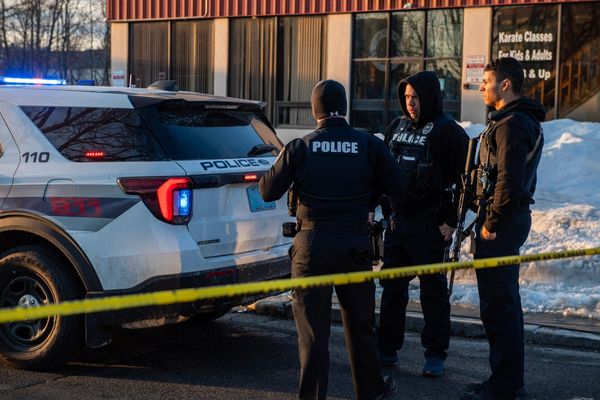
The injured included House Majority Whip Steve Scalise, R-La., two others, and two Capitol Hill police officers. The officers were injured, according to Rep. Joe Barton, R-Texas, as they "attacked the shooter and in doing so probably saved many, many lives."
The attacks were an instant reminder to everyone on both sides of the Capitol of the danger they live with every day and the example they have to relentlessly set.
While they fiercely debate policy, often in ugly, venomous ways, lawmakers know their disagreements can't be personal, and are conscious they shouldn't be projected as such. Even though they often are.
"It's a time that reminds us we're all a single family," said Rep. Adam Schiff, D-Calif. "We all share a love of this country."
The congressional community isn't all that large, and the hundreds who work here every day share a place of work and a fate. Members talk routinely of an increase in death threats. They pass through roadblocks and metal detectors just to get to their offices. Security is more and more of a concern.
So when they can come together and remind themselves and the nation they're here for one larger purpose, they do so emphatically, determined to show that a disruptor can't disrupt the process of democracy.
That's why Senate Majority Leader Mitch McConnell, R-Ky., opened the Senate Wednesday by telling colleagues "the congressional baseball game is a bipartisan charity event. I know the Senate will embrace that spirit today."
After the opening comments, Sen. Bob Corker, R-Tenn., stood up in the Senate to praise the bipartisan effort in shaping a bill on "countering Iran's destabilizing activities."
"For people that are capable of so much, their foreign policy is shockingly counter to their own interests," he said, referring to Iran. The Senate then proceeded to debate sanctions against Iran and Russia for hours.
About the only digression came when Sen. Sanders, I-Vt., told the Senate he learned the attacker "apparently volunteered on my presidential campaign."
His reaction was swift and emotion filled. "I am sickened by this despicable, despicable act," he said. "Let me be as clear as I can be ... violence of any kind is unacceptable in our society and I condemn this action in the strongest possible term. Real change can only come about through nonviolent action and anything else runs counter to our most deeply held American values."
In another wing of the Capitol, the mood was far more somber, as House members were being briefed on the shooting incident. Rep. Emanuel Cleaver, D-Mo., said he thought this time can be vitally important, to people on both sides of the aisle. He said that he's had conversations with others who admit that they dial up the partisan divide as a means of convincing voters back home to stick with them come the next election.
"This is praying time, which means this is also time for introspection," he said. "The sad reality is that we cannot control the person with a gun. We can't stop him. But we can control ourselves, and we can stop ourselves from creating a vitriolic atmosphere. We must now examine our own spirit."
Rep. Martha McSally, R-Ariz., said the decision to go ahead with the congressional baseball game, which was proceed as scheduled Thursday, was important.
"You're not going to keep us down," she said. "You're not going to stop us from doing this important, bipartisan event."
An emotional Rep. Ryan Costello, R-Pa., who missed his ride to the baseball practice early this morning, said the level of anger is high, but it's difficult to point to partisan politics alone as the cause of the shooting.
The issue, he said, is with the "the one person out of 10 thousand or 50 thousand or 100 thousand" who actually seeks to channel that anger into violence.
While House members suspended business for the day, the Senate plowed on.
It debated legislation titled "Countering Russian Influence in Europe and Eurasia." The bill, which passed 97-2, imposes new sanctions on Russia for interfering in the 2016 election, and renews sanctions previously imposed by President Barack Obama. Its passage was a strong bipartisan statement.
After the vote, another proposal was offered: A measure to "reaffirm" the American commitment to mutual defense with the North Atlantic Treaty Organization.
The proposal clearly had nothing to do with the Virginia incident. But in the measure's text was a powerful reminder of the day's violence _ it noted "members pledge that 'an armed attack against one of more of them ... shall be considered an attack against them all.""