Tokyo is bustling with a tide of foreign tourists. According to a Tokyo metropolitan government survey, the most popular destination by far is Shinjuku.
I visited the area with Yukiko Konosu, a translator who is knowledgeable about literature and entertainment in English-speaking countries, in a bid to experience the "Cool Japan" that fascinates overseas visitors.
Our first destination was the Shinjuku Tourist Information center near JR Shinjuku Station. Since it opened in December 2016, there have been 300,000 visitors -- with 70 percent of them coming from outside Japan.
The Shinjuku Convention & Visitors Bureau, a general incorporated association, operates the facility. It has a reputation for being "a center that does not say no." It handles all issues -- even small everyday matters that arise during a typical stay.
"When it comes to dining, the Golden-gai area in Shinjuku is the hot spot," said Kanae Kikuchi, executive officer of the bureau.
"To regular visitors looking for alternative spots, however, we point them to Omoide Yokocho near the West Gate of Shinjuku Station."
One of the most appealing places among foreign tourists is Kabukicho, home to spots such as the Samurai Museum, not to mention a huge Godzilla statue.
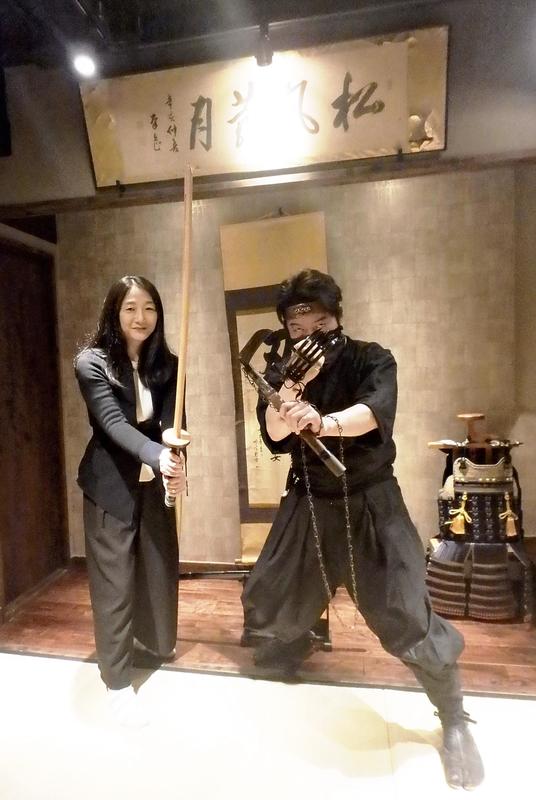
We visited Ninja Trick House, which has gained attention on TripAdvisor and other word-of-mouth-type websites.
After a video about the history and culture of the ninja, a fusuma sliding door opened and a ninja appeared. We were impressed by the unique kagizume hook-like tool, the kusarigama chain and sickle, as well as a secret shelf.
We then moved to an adjoining room -- the training hall for a ninja experience.
Konosu held a sword and took on the challenge of throwing shuriken (ninja throwing stars). "That feels great!" she said, as she hit the target with her weapons.
The experience at Ninja Trick House lasts about 40 minutes and costs 1,100 yen. Tomoyuki Yumoto, who started the business in 2016 after leaving his job as a company worker, said, "I launched this with foreign customers in mind, but many Japanese families also visit."
Ninja remain popular abroad because of the prevalence of Japanese manga and anime. But Ninja Trick House also feels fresh to Japanese visitors. The notion that ninja culture is being "reimported" is compelling.
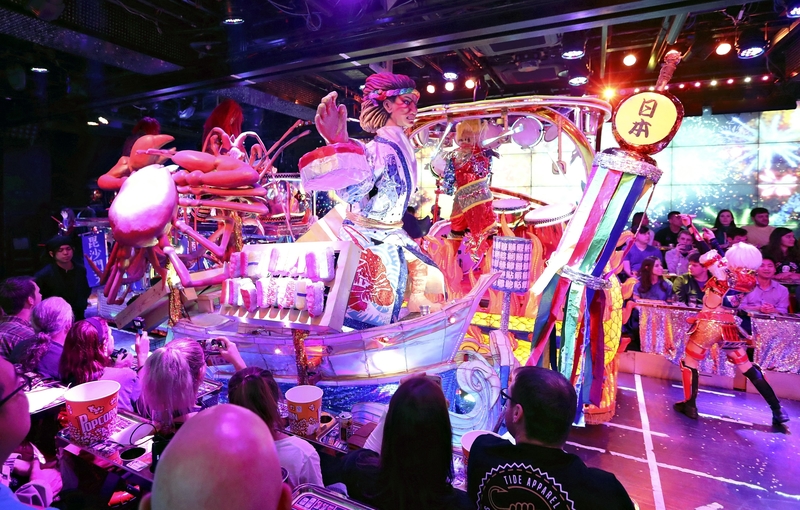
In the center of an area illuminated by neon lights, throngs of foreign visitors gather at the Robot Restaurant. It serves mainly light meals, but the big attraction is the show performed by dancers and robots.
The Robot Restaurant is certainly one of the few night entertainment establishments to be found in Japan.
The waiting room had a neo-futuristic feel, with its dazzling illuminations and golden sofas. As the show started, Japanese drums and an electric float decorated with full-colored illuminations -- as well as samurai warriors appearing one after another -- created a mood of excitement.
Next were a gigantic robot and a forest yokai monster battling amid laser beams, and a parade accompanied by rock music.
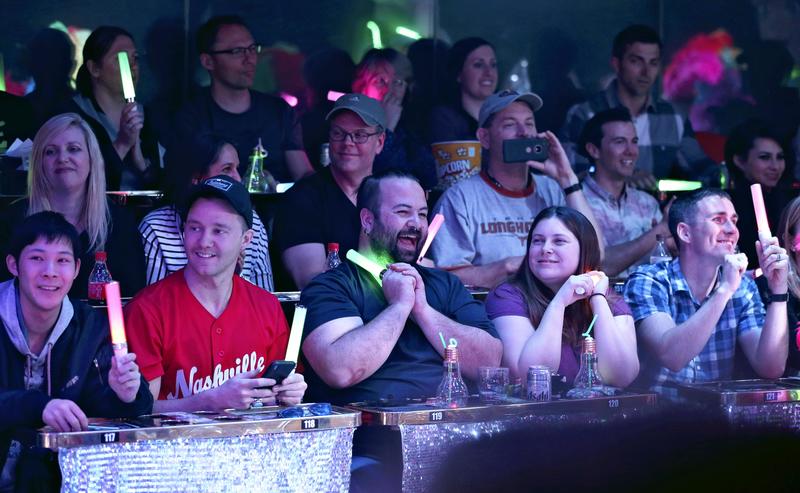
The 90-minute show left us breathless.
"The singing and dancing were both excellent," a woman from the southern part of the United States said. "Though the admission fee of 8,000 yen doesn't come cheap, it's still about the same as one of the cheaper seats on Broadway. I'd take this over that."
The Robot Restaurant opened in 2012. One of its initial targets was Japanese businesspeople who grew up watching TV anime such as "Mobile Suit Gundam," according to an official of the facility. But word of mouth boosted the number of foreign visitors, leading an organizer to add more Japanese aspects to the show.
The Robot Restaurant holds three to four performances each evening. Of its annual 180,000 visitors, 90 percent have been foreign.
Konosu: Ingenious strategy
Asked about her impression of the tourist spots, Konosu said, "I was overwhelmed by Shinjuku's chaotic power -- including the help center that doesn't say "no," Ninja Trick House, and the Robot Restaurant.
"Such attractions are taking advantage of stereotypical Japanese images like samurai, ninja and oiran (courtesans) by combining them with other elements such as amine and robots. And in contrast to the maturity of the West, there is something eccentric and lovely about it all.
"The Robot Restaurant had a cyberpunk or steampunk atmosphere that derives from science fiction. Despite its reliance on digital devices, it also conveys a handmade feeling. This conjures a nostalgic image of the future akin to iconic films like "Blade Runner" and "Brazil."
"No foreigners think ninja and samurai still roam this country -- but this is something the Japanese side has made the most of.
"Both sides seem to be playing a game by mutual agreement. I think this is an ingenious strategy that has helped Japan appear so unique and magnetic.
Read more from The Japan News at https://japannews.yomiuri.co.jp/