Shilo Kino digs deep to remind herself why she must resist urges to return to the Pākehā world, where she didn’t have to deal with feelings of guilt and shame
The first time I recited my pepeha out loud was in front of my classmates during an eight minute speech in te reo Māori.
I feel whakamā as to admit I’ve never said my full pepeha out loud before. It’s pretty much basic Māori 101. But for so long I’ve felt like a fraud to speak of a mountain, a tribe, a hapū I didn't know. I felt guilty taking ownership of a river I’ve never visited or to claim membership of a tribe I had done nothing for except receive money in the form of a scholarship. Even though I whakapapa Māori, what right do I really have to say these all belong to me?
But stating where we come from is a fundamental part of being Māori. When we meet someone for the first time, we don’t ask ‘What do you do?’ we ask ‘No hea koe?’ and through our river, our mountain and our iwi we tell a story and weave our connection to each other through our ancestral lines. Our job status or ‘What we do’ doesn't define who we are. It is our whakapapa, our tīpuna and our connection to the land that does.
I didn’t realise I was grappling with these feelings until we had to prepare our whakapuaki - an eight minute speech, ‘ko ahau tenei (this is me!)’
The first day at Te Wananga Takiura (10 weeks ago) where I’m doing full immersion te reo, I opened the student manual and read the oral assessment criteria for our first whakapuaki (there will be many this year including an hour-long speech at the end of the year). Overwhelmed is an understatement. I couldn't even string a sentence together in te reo at that time, how was I going to speak for eight minutes in te reo Māori? We had to talk about who we are, our whānau, and of course share our pepeha.
There were also other criteria such as not reading from a paper otherwise it’s an automatic fail. And we had to sing a waiata at the end of our speech. Ka aroha to every Māori who can't sing - I am one of them. Maybe Takiura is that good, not only does it help you get the reo but it turns you into a good singer too.
Week 10 came around and I still wasn't fluent and I definitely still couldn't sing so I conveniently forgot about my whakapuaki until a few weeks before when I started dreaming about standing up to deliver my speech and no words came out of my mouth.
I stay because I know the version of myself that flourished in the Pākehā world is not who I truly am. And maybe that's the whole point of all of this.
I felt the panic set in and I quickly fired off a message to my aunty, my mum, my cousins. What's nana and papa's hapū? Which one do I say? Can you text me your pepeha plz so I can make sure I say it right?
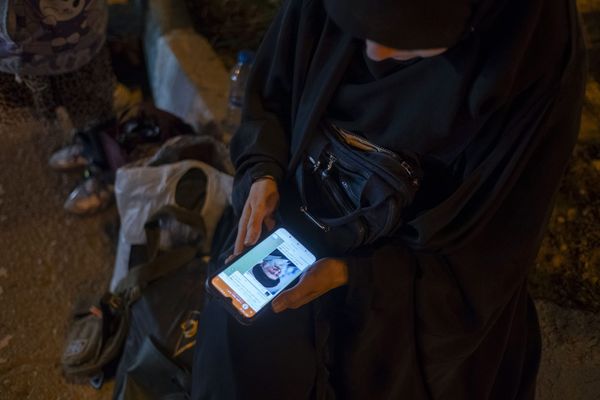
I called up another aunty and asked if I could borrow my favourite photo of my nana Teirirangi Joseph hanging on her wall. My nana who isn't here anymore but who I’ve felt this whole journey of learning reo. The poutokomanawa is the centre pole supporting the ridge pole of the marae but we also have a poutokomanawa in our life, someone or something that is our foundation. That is my nana. When she died at the young age of 58, my whānau lost our matriarch, we lost our language and we have felt the sad repercussions ever since.
When the day finally came for me to deliver my whakapuaki, I placed the photo of my Nana beside me. I wasn’t as nervous because I heard my nana’s voice speak my pepeha with me and they were no longer just words.
Ko Tainui te waka
Ko Pirongia te maunga
Ko Waipa te awa
Ko Ngati Maniapoto te iwi
Ko Ngati Rereahu te hapu
Ko Te ahoroa te Marae
Ko Rewi Maniapoto Te tangata
Ko Teirirangi Joseph rāua ko Ted Ahiwaka oku tupuna
It wasn't remembering all the kupu that was hard, it was remembering who I was. That was the hardest part.
I feel immensely proud of every single student who stood up in their class and had to overcome their personal taniwha to recite an eight-minute speech in te reo Māori. For many of us, it is the greatest challenge we have ever faced. And for many, it is also our greatest accomplishment.
There are many times in the last 10 weeks I have wanted to give up. When the tears come again and again, when I’m fumbling words, when I feel paralysed and so uncomfortable. Sometimes I just want to go back, back to the Pākehā world because I was comfortable there, I did well, I was respected and I didn’t have to deal with these awful feelings of guilt and shame that come from trying to reclaim language.
But I stay because I know the version of myself that flourished in the Pākehā world is not who I truly am. And maybe that's the whole point of all of this.
Ko wai au? Who am I? Ever since I started learning te reo I’ve come to understand who I am. I cringe when I think about how many messages I've sent to unsuspecting whānau members treating them like Māori google. "What's the name of poppa’s hapū again?" "Where's the river?" "Why don't I know this?" "How many kids did nana have again?"
The answers I am looking for won’t appear in the form of a text message. And maybe that’s why I need to go and physically stand at my river and touch the water and look up at my maunga because that will give me the answers I’m looking for and connect me even more to my tīpuna. Kanohi to kanohi.
I would give up everything I have to see my grandparents face to face, even just for five minutes. To talk to them, to ask them heaps of questions, to hear their stories. But they are not here so we must hold on to the knowledge from our kuia and kaumatua who are still here. It is my aunty in Tokoroa who holds the kete of knowledge passed down from my nana. I sent my Aunty a text after I said my whakapuaki.
"Aunty, a tera wiki ka haere au ki tō whare nā te mea he maha aku pātai. Ka kite."
Aunty, I’m coming to your house next week because I have a lot of questions. See you then.