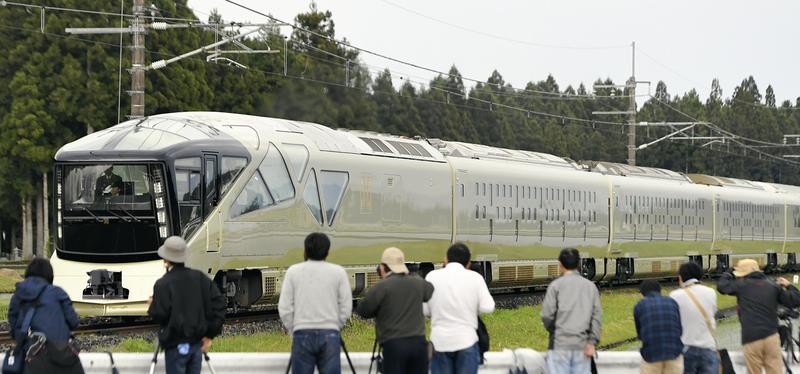
The Train Suite Shiki-shima marks the first anniversary of its launch on Tuesday. Thanks to the booming popularity of East Japan Railway Co.'s luxury sleeper train, manufacturers of interior elements and local sightseeing spots along the route have enjoyed "the Shiki-shima effect" as the train service's reputation has grown.
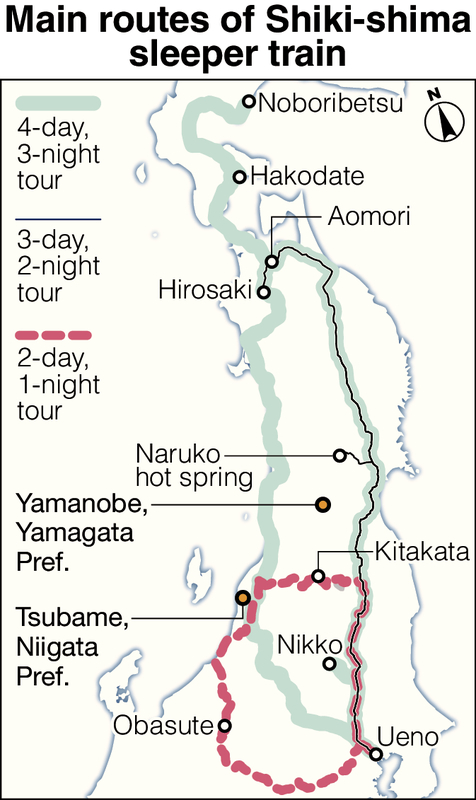
Passengers of Shiki-shima, which departs from and returns to JR Ueno Station in Tokyo, travel mainly through the Tohoku and Koshinetsu regions. They enjoy services comparable to a high-end hotel during their two- to four-day journey while stopping at stations near such places as hot spring resorts and famous sightseeing spots across eastern Japan.
By the end of March, about 2,200 people had traveled on the sleeper train, which carries up to 34 passengers per journey. Passenger tickets for each trip can be purchased via lottery.
Popularity spreads to carpet sales
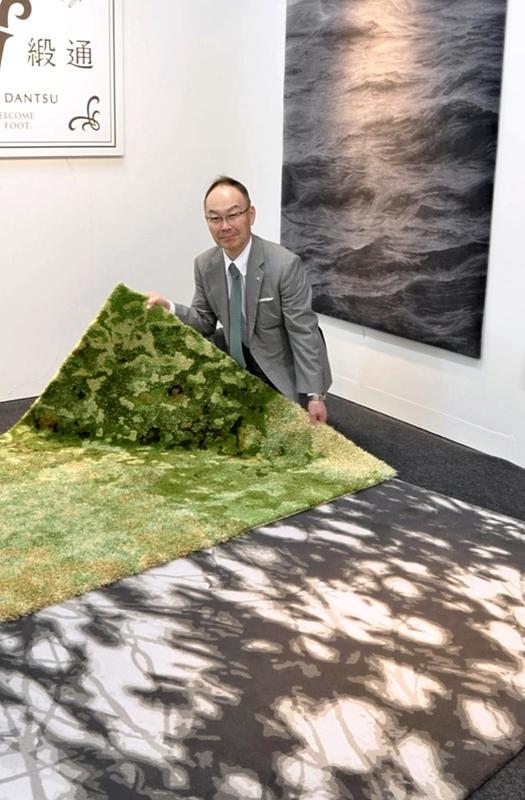
Yamanobe, Yamagata Prefecture, has flourished as a famous textile dyeing town since the Edo period (1603-1867), and artisans of Oriental Carpet Mills Ltd., which is based in Yamanobe, crafted carpets for the luxury sleeper. The handmade carpets -- inspired by the ocean, moss and sunlight streaming through trees -- adorn the train's lounge, its View Terrace cars and passenger bedrooms.
According to Oriental Carpet Mills, sales of some products with the same pattern have increased by more than 40 percent from last year. Visitors to its factory spotted the pattern and noted that it was used on the Shiki-shima, the company said.
"This is a great opportunity for our craftsmanship to become well-known to more people. I want to further promote our products, which will hopefully lead to revitalizing our town," said Oriental Carpet Mills President Hiroaki Watanabe, 56.
Surge in commemorative tickets
An unmanned station located in a mountainous area in Chikuma, Nagano Prefecture, is also enjoying increasing popularity.
The area around Obasute Station on the Shinonoi Line is known as one of Japan's three most scenic views from a train, but only about 60 people a day on average board a train at the station. Despite efforts by local residents volunteering to sell commemorative platform tickets and serve tea to visitors at the station on the weekend, the number of visitors to the station had been declining every year.
However, since May last year, when the Shiki-shima sleeper started stopping at the station about once a week, recognition of the station has surged. As a result, about 3,600 commemorative platform tickets were sold last year, an increase of about 1,100 from the previous year.
"There's only so much we can do locally to promote the area. We're hoping to spread this effect to other nearby sightseeing spots, as well as the station," said Atsumi Shikada, head of the Shinshu-Chikuma Tourism Bureau, a local general incorporated association.
A four-day, three-night trip on the sleeper train includes a visit to a traditional Tsuiki copperware factory in Tsubame, Niigata Prefecture, on the last day. An official of the city's tourist association explains the local history and other related information on a bus that takes passengers to the factory from the nearby station.
"I believe we can further promote the city's attractions by leaving an impression on the final day of the trip," an association official said.
The trip costs up to 950,000 yen per person when a room is shared by two people.
Seven Stars also a boon
The Shiki-shima train is not the only deluxe sleeper that has contributed to the recognition of local brands along the route -- Kyushu Railway Co.'s Cruise Train Seven Stars in Kyushu, which began operations in 2013, is another such sleeper train.
A local branch of Japan Agricultural Cooperatives (JA) in Saga Prefecture promoted high-grade rice produced in the prefecture to the company. The train operator was convinced, and in January last year started using the rice for lunch on tours that pass through the prefecture.
"As a result, local farmers are more strongly motivated to produce the rice. If we can offer more foodstuffs [for meals on the train trips], it could lead to an overall positive response for the agricultural products in our region," said a JA official in charge.
Studios of Kumiko wooden lattice, a local industry of Okawa, Fukuoka Prefecture, are also receiving an increasing number of requests for factory visits after the wooden works were used to decorate the interior walls of the luxury train.
Edogawa University Prof. Takeshi Sakimoto said, "[Luxury sleepers] can be a catalyst for revitalizing the regions along the route, depending on the extent to which the region utilizes the potential opportunities."
"Local residents need to work to come up with inventive approaches to welcoming passengers in their regions," Sakimoto said.
Read more from The Japan News at https://japannews.yomiuri.co.jp/