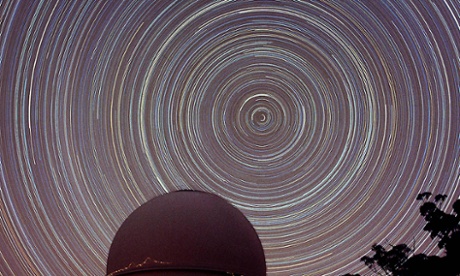
Since today is “Museum Monday”, I am sharing the next instalment in the Shelf Life video series created by the American Museum of Natural History (AMNH). Today’s video captures the methods developed by a team of scientists and their students to analyse historical images of stars and other celestial objects in the night skies and discusses their work towards making these data accessible to anyone in the world. This field -- known as historical astronomy -- has several purposes: to track long term celestial trends, such as eclipse patterns and movements of nebular clouds, and to create computer models that can date and verify ancient observations and documents.
The narrator of this video is observational astrophysicist, Ashley Pagnotta. Dr Pagnotta is the Kathryn W. Davis Postdoctoral Fellow at AMNH, where she investigates supernovae -- cataclysmic stellar explosions. As a professional astrophysicist, she uses a variety of observational tools to conduct her research across the entire electromagnetic spectrum, from the latest space X-ray telescopes to archival glass plate images taken a century or longer ago. More than half a million of these historical glass plates are held by Harvard University, which is working towards digitising them all. As part of her contribution to this project, Dr Pagnotta designed and implemented the astronomy lab practicum portion of AMNH’s Master of Arts in Teaching (MAT) program. In addition to exploring Dr Pagnotta’s research, this video describes her role in the MAT program, and we meet several of her students and learn about their contributions, too.
Watch the previous video in this series.
You are invited to visit the AMNH’s dedicated Shelf Life site. The American Museum of Natural History can be found on twitter @AMNH.
.. .. .. .. .. .. .. .. .. .. ..
GrrlScientist is very active on twitter @GrrlScientist and lurks on social media: facebook, G+, LinkedIn, and Pinterest.