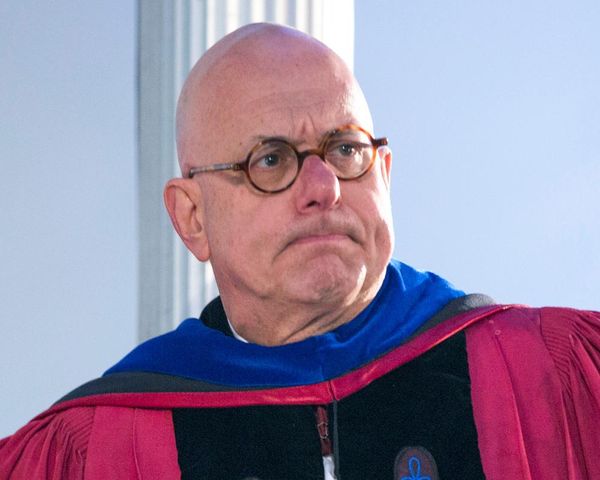
Feb. 10--Sheldon Roodman led the Legal Assistance Foundation, now LAF Chicago, for 30 years as its lawyers tackled discrimination in housing, employment and public programs for clients, most of them poor.
"He was just driven by his commitment to social justice," said Wallace Winter, who worked with Roodman as a supervising attorney with LAF. "He did a remarkable job of keeping the LAF ship afloat and steered in the right direction so we wouldn't lose funding and so that we would continue to be courageous in the kind of work we did."
Roodman, 74, died of prostate cancer Jan. 25 in his Highwood home, according to his wife, Diane. He lived in Highland Park for 30 years before moving to Highwood about 10 years ago.
Roodman grew up in St. Louis. After getting his undergraduate degree from the University of Michigan, he went on to get a law degree from Washington University in his hometown in 1966. He was managing editor of the Washington University Law Quarterly, according to the school.
After law school he was offered a one-year teaching fellowship at the University of Chicago Law School, then spent some time in corporate law with a Chicago firm before deciding it wasn't for him, his wife said.
In 1969 he joined a predecessor organization that became LAF in 1972. He became LAF's executive director in 1977 and held that post until he retired in 2007.
"Over the years, he was a genius at keeping the organization and the concept of legal aid viable through all kinds of challenges," said LAF's current executive director, Diana White. White, who succeeded Roodman, said those challenges included financial and organizational hurdles.
Financial hurdles came with shifts in national politics. A 1992 Tribune article reported on the organization's struggle to figure out what to do about a $900,000 deficit that had forced LAF to take a hard look at how it served the city's poor. Options included closing some offices as well as changes in pay and employment for its unionized staff.
Again in 1999, Roodman talked with the Tribune about financial challenges.
"It was extremely difficult," Roodman said in a story that year. "We went from 85 attorneys to 60. We had to tighten the triage that we already had even further. We had to tell more people, 'We do not have the resources to help you.'"
Winter talked about some of the changes wrought by Washington politics. "Congress did restructure some of the things we could do," he said. "One of them was class-action lawsuits (no longer allowed) and another ended the possibility of attorneys' fees (in cases LAF won)."
But Roodman wasn't deterred, Winter said. "Sheldon was really I would say fearless in giving his lawyers the encouragement and opportunity to bring impact litigation after serious reflection and analysis that there was a basis to sue," he said.
Roodman argued two cases before the U.S. Supreme Court. His work earned him several awards, including in 2007 the Justice John Paul Stevens Award given jointly by the Chicago Bar Association and the Chicago Bar Foundation. The award is presented annually to attorneys who best exemplify the former justice's commitment to integrity and public service in the practice of law.
"Sheldon was the first public interest lawyer to get the award," said Bob Glaves, executive director of the foundation. "It's a reflection on his being a trailblazer in legal aid for the poor."
The Chicago Public Interest Law Initiative recognized him for distinguished public service, and LAF presented him with a Lifetime Achievement Award.
Winter noted that Roodman's mentoring resulted in a number of people from LAF going to head legal services programs in other states.
"He really was a great role model for lawyers who wanted to do this kind of law," Winter said.
In addition to his wife, he is survived by his daughter, Stephanie Roodman Murdock; a sister, Karen Kessler; a brother, Stan Roodman; and two grandchildren.
A service was held.
Graydon Megan is a freelance reporter.