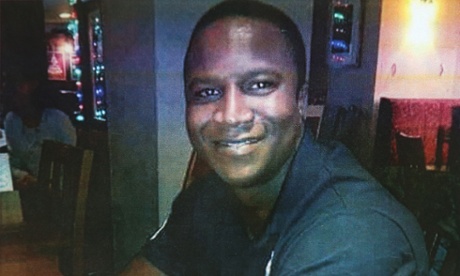
The family of Sheku Bayoh, the Sierra Leonean who died on a Kirkcaldy pavement minutes after being detained by police in May, has met Scotland’s outgoing chief constable.
Describing the discussion with Stephen House as “very robust and honest”, the family of the 31-year-old trainee gas engineer and father of two were able to raise their serious concerns over Bayoh’s death 18 weeks ago and its subsequent investigation.
The head of Police Scotland announced last month that he would step down early after growing calls for him to to resign following a series of policing failures and controversies over civil liberties under his leadership.
These included Bayoh’s death, officers’ failure to respond to a report of a motorway crash that left a dying woman stranded for three days and continuing rows over his use of stop-and-search powers and armed police patrols.
Monday’s meeting followed a 300-strong march through Kirkcaldy in support of the Bayoh family on Sunday, as their campaign for a fully independent investigation into the death continues.
The family believes that post-mortem evidence suggests Bayoh died of positional asphyxia after being brought to the ground by four police officers, one of whom weighed up to 159kg (25 stone).
Aamer Anwar, Scotland’s leading civil liberties lawyer, who is acting for the family and attended Monday’s meeting with them, previously described how within seconds of confronting Bayoh on the street at 7.10am on 3 May, officers had sprayed him with CS gas and pepper spray, even though he was unarmed and had not initially resisted arrest – despite eyewitness reports suggesting he had been wielding a knife.
The Bayoh family had previously met with the lord advocate and with the Police Investigations and Review Commissioner (Pirc), the Scottish police misconduct watchdog, whom they had criticised because of a 32-day delay before the officers involved were interviewed or forced to hand over their notebooks.
In a statement, House said: “Today I was able to meet with the family of Sheku Bayoh to personally express my condolences, and those of Police Scotland, for their loss.”
“While the investigation remains ongoing, this places legal limits on what I can discuss. However, I was able to reaffirm our absolute commitment to establishing a full and clear understanding of the events of 3 May and to learn any and every lesson from the findings of the ongoing investigation.”
Speaking for the family after the meeting, Anwar said that they had been given assurances by House that when he leaves the force these commitments will be kept by Police Scotland. “At the meeting the family reiterated that they could never accept police officers lying to them with several versions of what happened to Sheku Bayoh in the hours following his death in custody. The first version told to Collette [Bayoh’s partner] was that a member of the public had found Sheku’s body on the street.”
The family also expressed their concerns about the right of police officers to resign while under serious criminal or misconduct investigation. Legislation introduced in England and Wales last year allows police boards or chief constables to refuse such resignations and the family believes that the Scottish government should consider a similar change to the law.
The family’s lawyer added: “It is clear from the meeting with the chief constable that it is time for clarity from the lord advocate and the Scottish government on the circumstances in which police officers must provide statements following serious incidents such as deaths in custody.”
The days following the death were blighted by stereotyping and rumours, with claims that Bayoh was believed to be a terrorist or had seriously assaulted a small female police officer, an allegation later dismissed by Pirc.
It was reported by Scottish media last month that House had met the officers involved before they gave statements to the police watchdog, travelling to Fife to visit the female officer at her home. Police Scotland described it as a “welfare visit”.
Aamer Anwar concluded: “The death of Sheku Bayoh in police custody has highlighted the gaps that are present in our laws dealing with investigations of police officers. It is a matter that Police Scotland are unable to deal with but the time is right for the Scottish government in partnership with all parties including the Scottish Police Federation to address the serious failings that exist in our justice system.”
.jpg?w=600)