Doug Wilson, the pastor whose church denomination includes US Defence Secretary Pete Hegseth, is facing renewed criticism after arguing that some cases of marital rape fall into a 'gray area' that churches—not police—should address, while also saying wives should not refuse sex for extended periods within marriage.
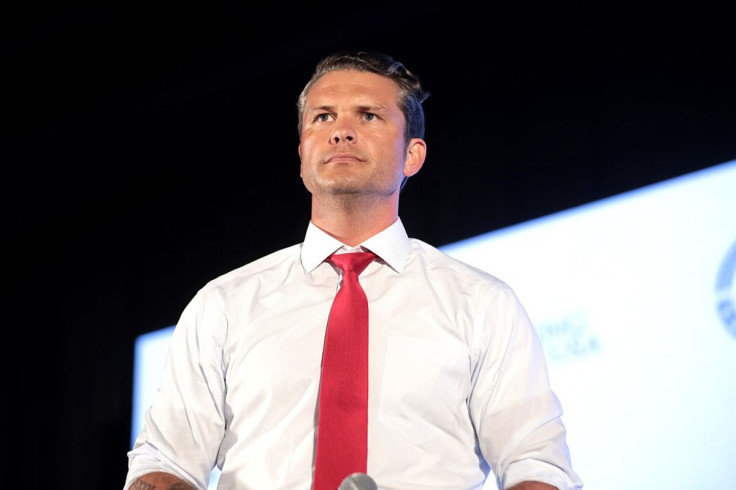
The comments, made during an interview with Uncloseted Media, have attracted fresh scrutiny because of Wilson's close association with Hegseth, who invited him to lead prayers at the Pentagon earlier this year.
Critics argue Wilson's remarks blur the issue of consent within marriage, while supporters say they reflect theological beliefs rather than public policy.
Doug Wilson's 'Gray Area' Argument on Marital Rape
In the interview, Wilson was asked directly about marital rape. He said that if a husband 'forces himself on her and rapes her, then I believe that that's a sin,' and added that violent cases should involve law enforcement.
However, he then carved out what he called a different category. According to Wilson, non‑violent cases of a husband forcing sex on his wife should largely be dealt with inside the church rather than by police. He described these as 'non‑violent' rapes that church authorities ought to handle, placing them in what he repeatedly referred to as a 'gray area.'
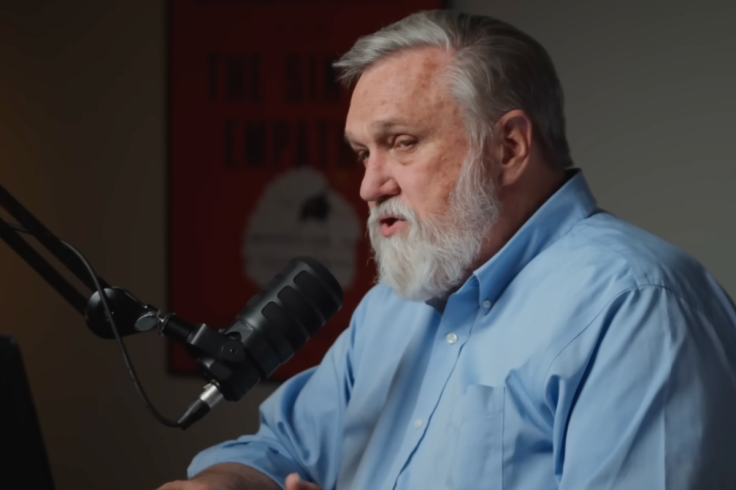
Wilson's remarks have drawn criticism because many legal systems do not distinguish between violent and non-violent forms of marital rape, and consent within marriage is generally treated under the same legal principles as consent outside marriage.
The law in many jurisdictions does not recognise a sliding scale of marital rape based on the level of force, and the very idea of a church adjudicating whether a forced sexual act within marriage is bad enough for the police is, to put it mildly, incendiary. Whether Wilson fully grasps why so many people hear that as minimising is another question.
Wilson did also say that a wife can legitimately refuse sex. He used an everyday example to sketch his line: 'Let's say she's had an absolute horrendous day, is fried, just is exhausted and says, 'Honey, please, please, no.' Does she have the right to do that? Absolutely yes, she has the right to do that.'
But he immediately narrowed that right. 'Does she have the right to cut him off for six months? No,' he said.
Wilson's comments reflect his interpretation of Christian teaching and do not represent legal guidance or public policy.
Wilson Says Withholding Sex for Months Means 'She Has the Problem'
Pressed on what he would tell a husband in that situation, Wilson said that if a man in his ministry reported that he had gone months without sex because his wife refused intimacy, he would treat the wife as the primary issue.
He said he would respond that 'she has the problem,' framing long‑term refusal of sex as a pastoral and moral failing on the wife's part. He suggested he would confront the couple by saying: 'Look, we have to talk, you're married. You need to act like you're married.'
Wilson argued that prolonged refusal of intimacy within marriage should be addressed through pastoral counselling, describing it as a marital issue requiring church intervention. In his view, mutual responsibility in marriage includes a standing obligation for wives to provide sexual access, interrupted only by short‑term, situational refusals. Extended periods without sex, if initiated by the wife, become grounds for church intervention, and, in his words, a 'problem' that she is causing.
The interviewer then pushed the logic to its obvious and deeply uncomfortable limit. If a wife withholds sex for too long, the interviewer asked, would the husband be 'justified' in raping her?
Wilson said no, but then offered an answer that many will find cold comfort. 'It's not justified, but neither behavior is justified. So basically what you'd have there is a marital mess,' he replied, adding that 'both of them [are] sinning against each other.'
Those comments quickly drew criticism from advocates who argue that any suggestion of shared responsibility in cases involving forced sex risks undermining the principle of consent.
Why Pete Hegseth's Pastor Is Under the Microscope
Wilson's comments have received heightened attention because of his public relationship with Hegseth. Earlier this year, the Defence Secretary invited him to lead prayers at the Pentagon before military operations involving Iran, bringing Wilson's theology into the national spotlight.
That appearance was a symbolic moment. Here was a pastor known for hardline conservative theology and Christian nationalist leanings, brought into the heart of US military command ahead of a major conflict. It raised eyebrows at the time. These latest comments are only intensifying those concerns.
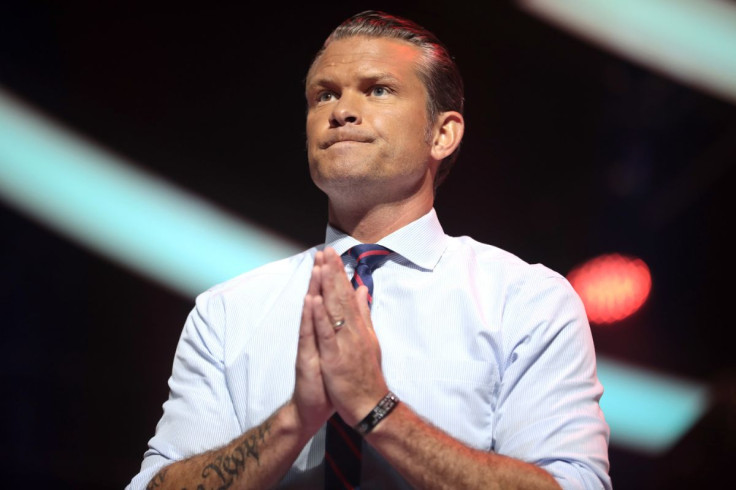
Hegseth has already faced accusations that he is aligned with Christian nationalist views, and that his actions since taking office reflect an effort to infuse US defence policy with his religious ideology. Bringing Wilson in to pray at the Pentagon fuelled that narrative. Having that same pastor now opine on 'non‑violent rape' as church business and on wives' supposed lack of a 'right' to withhold sex is the sort of thing that sets off alarm bells in Washington and beyond.
Critics argue that when a defence secretary publicly associates with a religious leader, it is not purely private spirituality. It signals whose moral framework he finds compelling. If that framework includes dubious ideas about marital consent and about the state's role in protecting victims of sexual violence, then questions are inevitable. Neither Hegseth nor the Pentagon has publicly commented on Wilson's latest remarks.
Supporters of Wilson argue his comments should be understood within the context of Christian pastoral teaching rather than secular criminal law, and say they do not advocate breaking existing legal standards governing sexual assault. Some will insist that a pastor can hold conservative views on sex while still respecting the law. That may be true on paper, but politics is often about what people hear and fear, not only what is written in the small print.
Wilson's remarks have renewed debate over the relationship between religious teaching, consent and public office at a time when discussions about sexual violence remain politically and culturally sensitive.
Whether the controversy has any lasting impact on Hegseth is unclear. For now, attention remains focused on Wilson's comments and the questions they have raised about the views of one of the Defence Secretary's closest religious advisers.