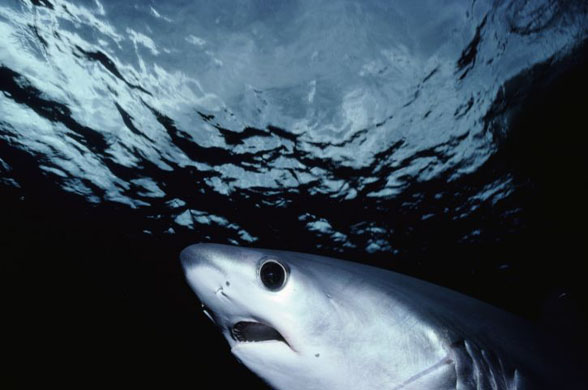
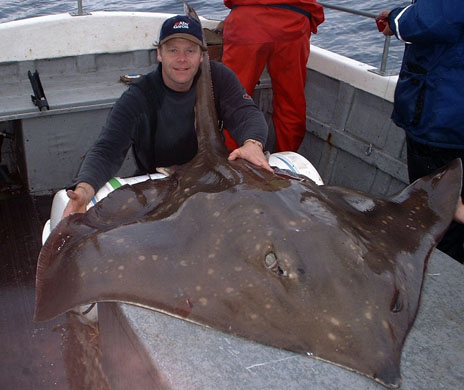
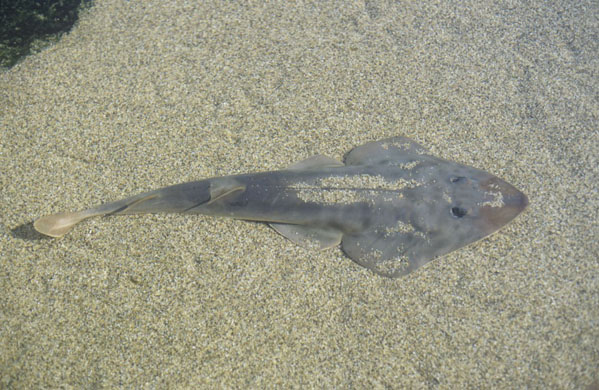
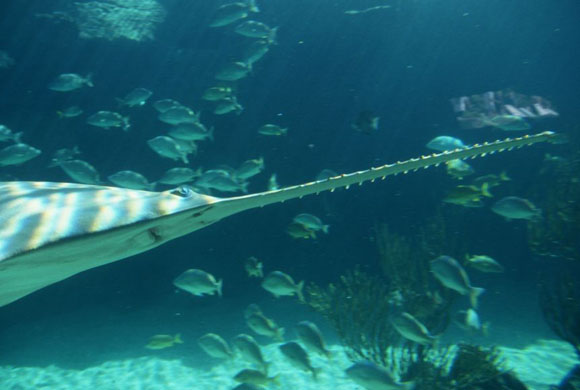
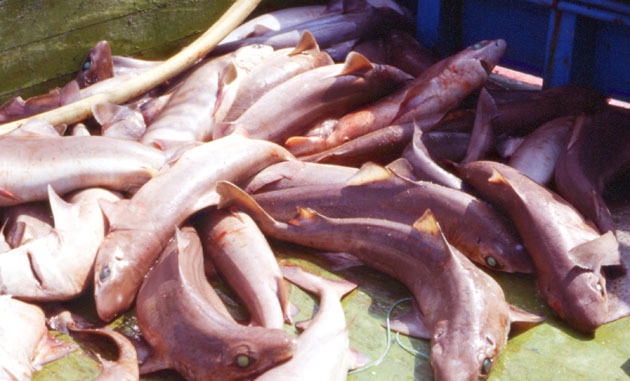
Basking shark feeding on plankton in the Atlantic Ocean. Basking sharks have small teeth and use their gills to collect food. Basking sharks are the world's second largest fish and listed as vulnerable by the IUCN Photograph: Jeffrey L. Rotman/CorbisBigeye thresher sharks are slow growing and threatened by commercial fisheries. Sharks are hunted for liver oil, skin and finsPhotograph: Jeffrey L. Rotman/CorbisCommon skate before it is tagged and released alive. This species, now uncommon, has vanished from the Channel, the North Sea and most other inshore areas. Its large body makes it an easy catchPhotograph: Terry Jackson
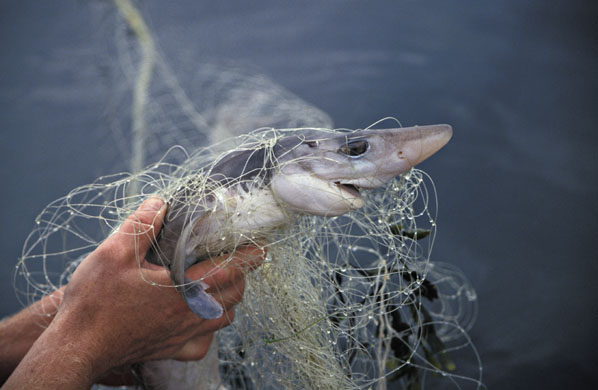
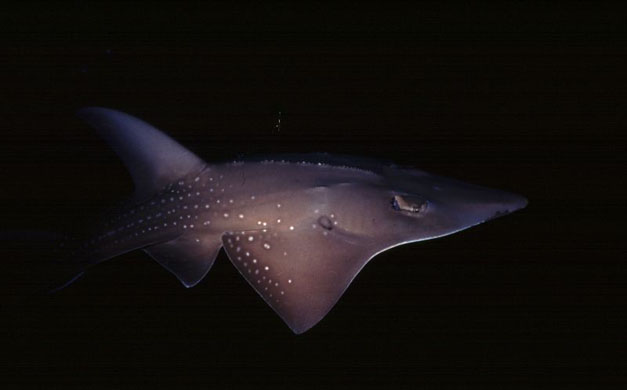
Spiny dogfish shark found dead in a fishing net. In Britain it is often sold in fish and chip shops 'rock salmon'. It was once the most abundant species and can live for up to 70 years. It is now critically endangeredPhotograph: GettyAngel sharks are bottom feeders and hide in seaweed or under sand before lunging at their prey. They are called angel sharks because of wing-like fins and are critically endangeredPhotograph: Alex Smailes/CorbisGuitarfish can reach up to 5 or 6 feet in length and feed on crustaceans on the seabed. Their fins are highly sought after in Asia for use in shark fin soup. They are classified as endangered in the north-east Atlantic Photograph: CorbisSawfish have a saw-like snout, called a rostrum which is covered with motion- and electro-sensitive pores that allow them to detect the heartbeats of prey buried in the ocean floor. IUCN scientists say it might be too late to save two types of the critically endangered sawfishPhotograph: Tom Brakefield /CorbisThe whitefin tope shark is classified as endangered Photograph: Alexander Rþsche/CorbisGulper sharks are a large common deep-water dogfish and are classed as vulnerable. It is sought for its rich liver oil which is used in the cosmetics industryPhotograph: /Javier Guallart
Sign up to read this article
Read news from 100’s of titles, curated specifically for you.