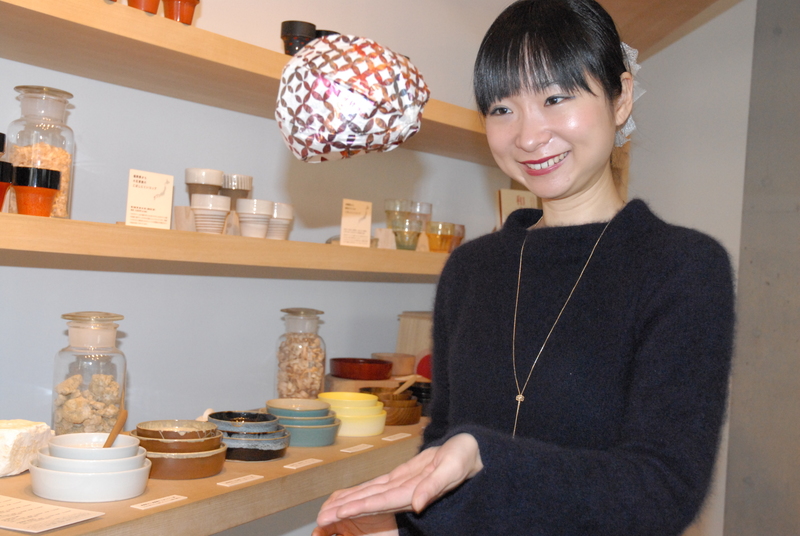
Rika Yajima feared that many Japanese people were living their lives "without encountering Japan," so she decided to provide an outlet to develop and promote Japanese traditions.
Despite being born and raised in Japan, Yajima said Japanese culture felt foreign in the modern lifestyle she led. "It's not a matter of like or dislike. It's simply unknown," she said. "Some Japanese people just don't have a chance to come into contact with their traditional culture."
Concerned that Japan's heritage was at stake if the skills and wisdom inherent in Japanese traditions were eventually to die out, the 29-year-old entrepreneur wanted to champion traditional Japanese culture, and decided to narrow her target, focusing on babies and small children.
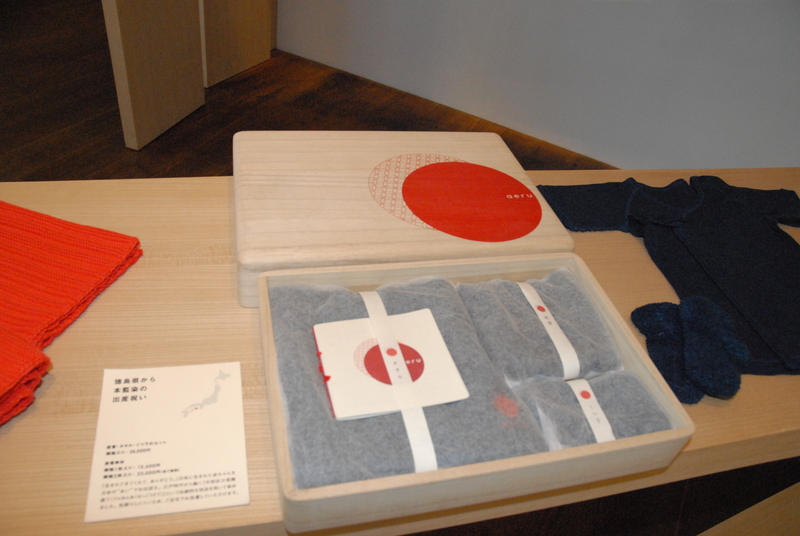
With the realization that early exposure is key to passing traditions on to future generations, she launched a company that develops products for newborns to children up to aged 6. All of the items are created with traditional techniques in a bid to nurture an environment where people can encounter Japanese craftsmanship.
"Everything begins by knowing," she said. "If traditional items have been around you since you were born, you would naturally continue to use them as you grow up."
Yajima named her company "aeru," a Japanese word that describes the harmonious combination of different elements. However, her goal is not simply to preserve traditions in their original forms; she hopes that they can be developed further. "[Aeru] doesn't simply mean 'mix,'" she said. "The company treasures the harmonious blend of traditional and modern sensitivities to create new values. These help enrich our lives."
Given her focus on young children, aeru's first product was a gift set for newborns that included baby items such as clothes and a towel hand-dyed with natural indigo in Tokushima Prefecture.
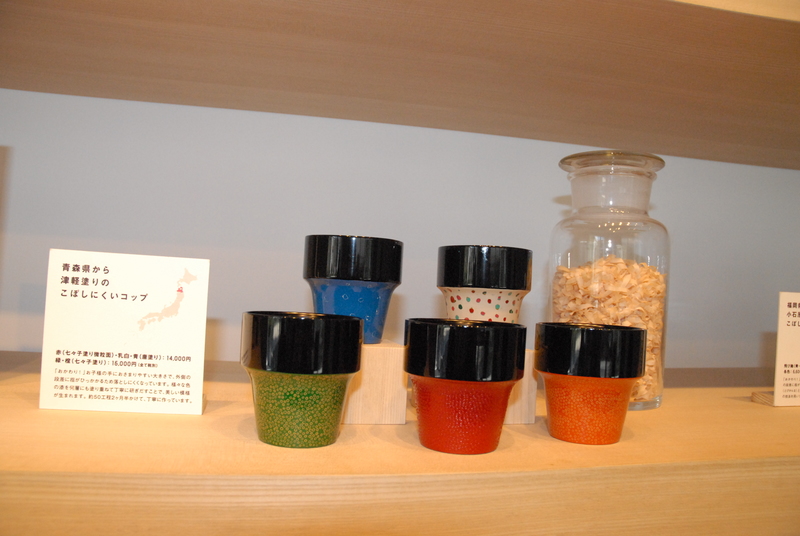
Aeru's lineup of products has since expanded to include an "unspillable receptacles" series, featuring ceramics such as Tsugaruyaki from Aomori Prefecture and Yamanaka lacquerware from Ishikawa Prefecture. The dishes have a unique design to support young children as they learn to eat independently. It also offers traditional toys such as a washi paper ball made using spring water in Ehime Prefecture.
Unlike many goods for children with colorful and eye-catching designs, aeru's products are simple and modest. The items can be used by children as they grow up, and some are even suitable for adults. The company also offers repair services to ensure its products last a lifetime -- a practice that encourages people from a young age to use daily items affectionately instead of viewing things as disposable.
In recent years, aeru has gone beyond tangible products, and now targets a wider range of people. In 2015, the company launched its "aeru room" project, in which it furnishes hotel rooms with items produced by artisans whose skills and techniques are unique to the history and culture of a region. Aeru rooms are currently available in Nagasaki and Himeji, Hyogo Prefecture. Yajima hopes to spread the project to all of Japan's 47 prefectures. Other projects, such as early childhood education, are also being envisioned as part of her efforts to contribute to society.
Inspired by journalism
Yajima said that she never intended to become an entrepreneur. Initially, she aspired to pursue a career in journalism after discovering the joy of conveying information. At an elementary school, Yajima was a member of the broadcasting club, and she fondly remembers being complimented by a teacher about her reporting skills at an athletics event. The teacher, who was working behind the scenes so could not watch the event, told Yajima the day was enjoyable thanks to her running commentary. "I was happy to please someone through my reporting," she recalled.
That experience was one of the reasons she joined the political science department of Keio University's Faculty of Law, which has many graduates who enter the media industry. When trying to figure out what she wanted to cover as a journalist, Yajima realized she was a "Japanese person who longed for Japan," recalling pleasant memories from club activities during her junior high and high school days, when she experienced the Japanese tea ceremony and flower arrangement.
When she was at university, she nurtured her journalistic skills by writing articles about young Japanese artisans across the nation for a travel agency's publication. She also launched a group called "Wa-ai" with an aim to include Japanese culture in the daily lives of students. She regularly went to school wearing kimono, and began using traditional crafts on a daily basis. This led her to appreciate the aesthetic pleasure derived from the exquisite craftsmanship and rich traditions of Japanese artisans.
Above all, Yajima said she began living her life in a manner befitting the use of these items of such beauty and refined functionality. "The more I used traditional crafts, the more I realized their charm, and my attachment to them grew," she said.
Yajima wondered about the best way to convey the charms of traditional crafts to babies and small children. She concluded that the means should be tangible, appealing to their instincts, rather than communicated through words.
Yajima first looked for a company that produced traditional Japanese items for children. After failing to find any, she decided to start her own business, which launched in 2011 when she was a senior at university. Through the company, she was able to link the dots of her passions: Her eagerness to convey information and her desire to convey Japan's traditions.
"As a result of pursing my interests and meeting various people, I ended up becoming an entrepreneur," she said. "However, what I'm doing is not a retailing business but exploring and presenting ways that could be good for society."
"I see myself as a 'journalist' tasked with conveying Japanese traditions to future generations," she added.
Her business approach has won her international recognition. Last year, Yajima was selected to represent Japan for the Asia-Pacific Economic Cooperation (APEC) Business Efficiency and Success Target Awards, and she won the Grand Prize and Best Social Impact Award.
"I don't think we've done anything extraordinary," she said. "Across the globe, people have become increasingly concerned about their disappearing culture and traditions. A desire to pass them on to the next generation is something we all have in common."
'Sanpo-yoshi' approach
In the belief that commerce without culture is unsustainable, Yajima's business model is aimed at developing a cycle in which the economy and culture grow together. Lifestyles have changed as a result of modernization. Mass-produced daily commodities became cheaper and more disposable during the years of rapid economic growth. Amid such social transformations, cultural roots and traditions have been left behind. Yajima wants to bring back a spiritual richness to materialized modern society to improve the quality of people's lives.
One of her key business principles is the "sanpo-yoshi" creed of merchants in Omi, now Shiga Prefecture, that stresses the importance of satisfying three parties: the seller, buyer and society. Calling herself her company's first customer, Yajima said: "I only pursue what I enjoy. First, I have to satisfy myself, and then try to spread the enjoyment and happiness to our customers and eventually to society," she said.
Following such a business concept, the happiness of her employees is also important. In what Yajima calls "social experiments," her company offers bespoke employment terms. The work styles of employees are arranged individually, allowing them to choose the location, working hours and other conditions, to help them improve their quality of life.
"We're determined not to simply gloss over reality. We're actually trying hard to achieve our ideals. If they become commonly accepted, perhaps society will change," she said.
Read more from The Japan News at https://japannews.yomiuri.co.jp/