Shakespeare shake-up: the new-look RSC HQ in Stratford
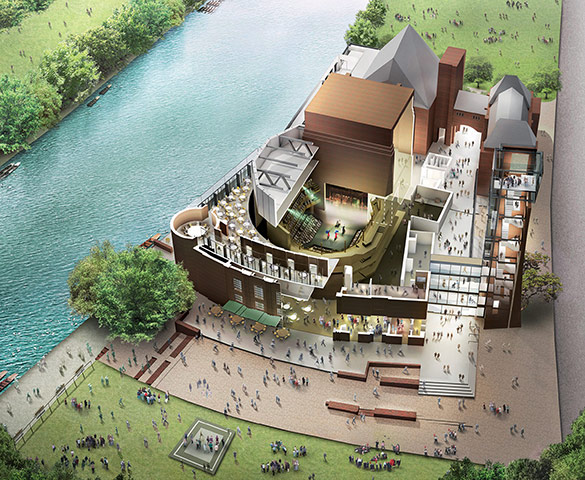
Inside story ... The original computer-generated plans for the renovation give a good overview of the project, which involved scooping out the old 1930s theatre and creating a new one inside Elisabeth Scott's art deco wallsPhotograph: RSCThe building work in progress from above, showing the original RST flytower and proscenium arch with remnants of the Victorian theatre (now the Swan) behind. The curve of the art deco brick facade can be seen in the foregroundPhotograph: Peter Cook/RCAThe RSC had originally planned to demolish what was known by locals as the 'jam factory' and build afresh, but protests forced them to reconsider. Here the lantern for the new 36-metre tower is hoisted into placePhotograph: Peter Cook/RSC
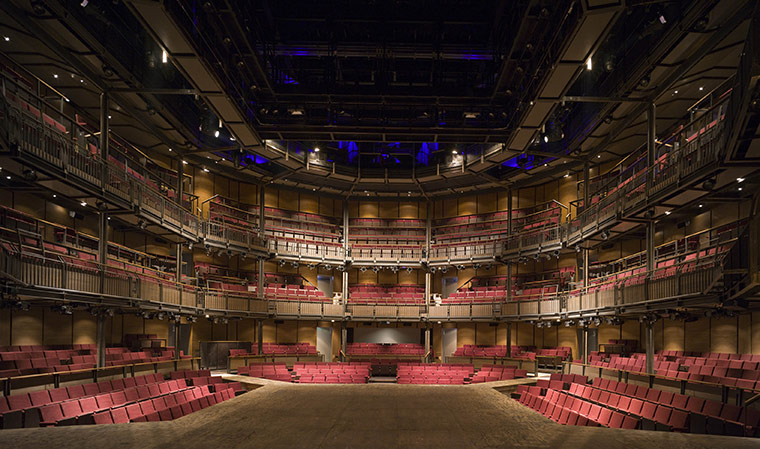
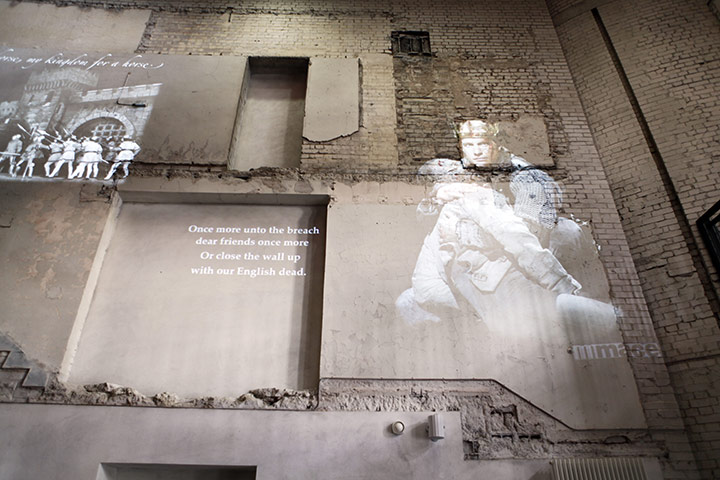
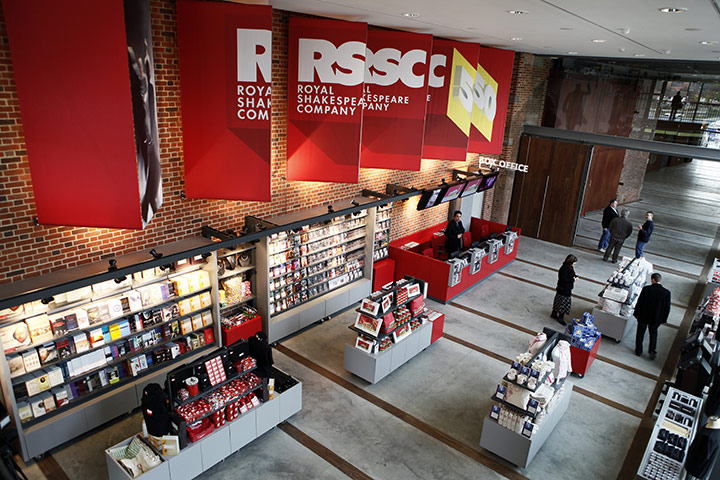
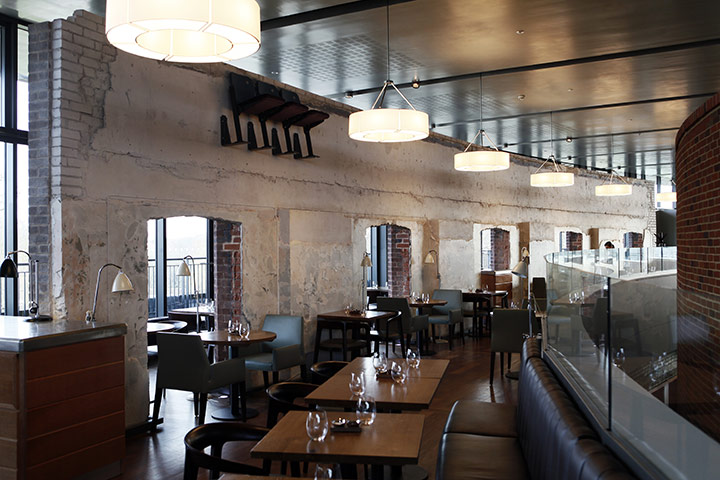
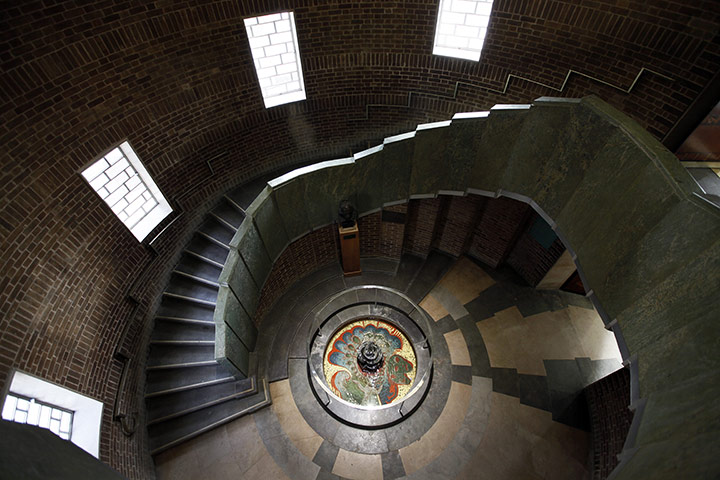
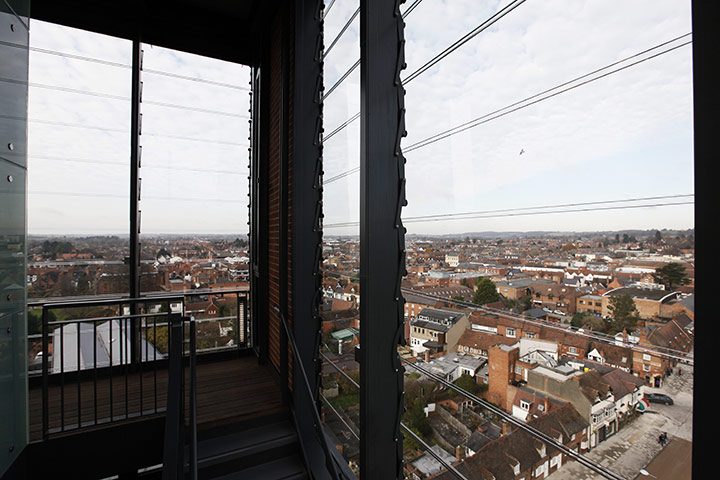
The new tower from the outside, joined to the original building by a new glazed atriumPhotograph: David Sillitoe for the GuardianThe most fundamental change to the complex has been to the main theatre: the 1,400-seat art deco auditorium, designed by Elisabeth Scott in 1927, has been demolished, and replaced with what is intended to be a stage in the style of Shakespeare’s day, complete with a stage that thrusts out into the audiencePhotograph: Peter Cook/RSCActors are now about 15 metres, rather than 27 metres, from the back row, so it’s goodbye (at least in theory) to that declamatory performing stylePhotograph: David Sillitoe for the GuardianWhereas the old building turned its back on the town, the new complex has been designed to provide a more welcoming face. There is now a new public square in front, encouraging people to stroll in even if they're not attending a performancePhotograph: David Sillitoe for the GuardianThe complex has a complicated history. The first theatre on the site was a flamboyant piece of Victorian gothic called the Shakespeare Memorial theatre, which opened in 1879. After fire struck in 1926, Scott’s art deco theatre was built into those parts that survivedPhotograph: David Sillitoe for the GuardianThe architect Rab Bennetts and his team have tried to bring many styles – gothic, art deco, Modern – into a cohesive whole. This is a section of the original Victorian structure, transformed into the smaller Swan theatre in the 1980sPhotograph: David Sillitoe for the GuardianBrick and concrete co-exist, as well as timbers that are both ancient and freshly sawnPhotograph: David Sillitoe for the GuardianThe complex houses the obligatory gift shopPhotograph: David Sillitoe for the GuardianA new restaurant now tops the Scott section. Floating on the wall to the left, you can see three seats from the old auditorium – left as a reminder of where the back row originally satPhotograph: David Sillitoe for the GuardianThe art deco fountain staircase survives from Scott's building, and has been rejuvenated in the refitPhotograph: David Sillitoe for the GuardianViews from the top of the tower, through glass louvres, are of four counties and every local site associated with Shakespeare himself Photograph: David Sillitoe for the Guardian
Sign up to read this article
Read news from 100’s of titles, curated specifically for you.