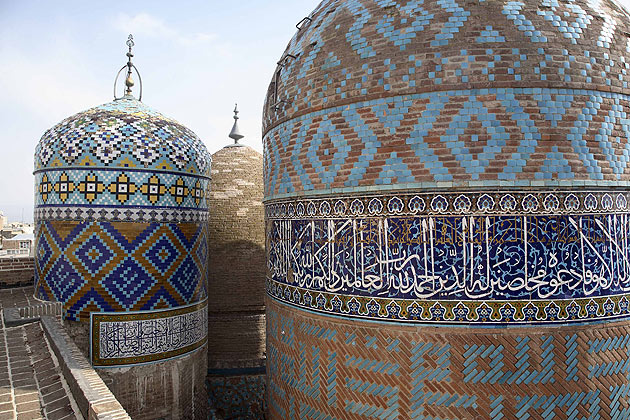
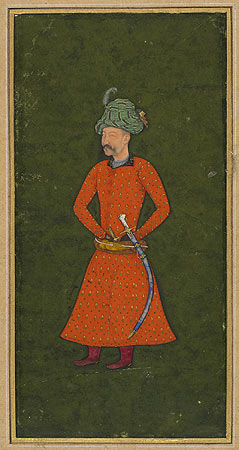
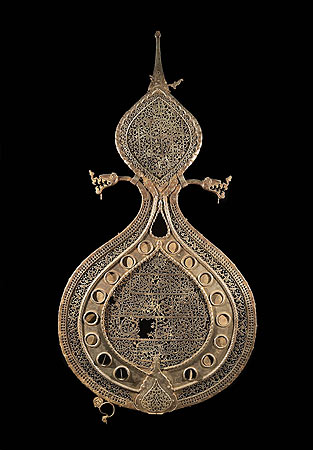
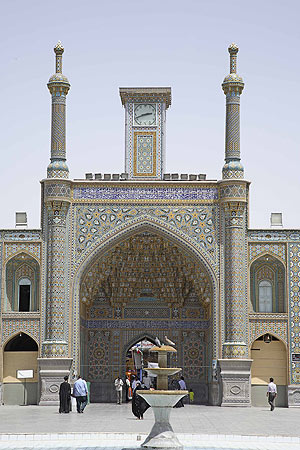
Tombs of Shaykh Safi and of Shah Isma'il I at ArdabilPhotograph: Ebrahim Khadem Bayat/British MuseumThis small portrait of Shah Abbas shows the importance of the relationship between Persia and Iran and was produced by one of the court artists of the Mughal Emperor JahangirPhotograph: British MuseumA steel standard (or 'alam) dating from the first half of the 17th century. These objects, carried in Shi'i religious processions, evolved from battle standardsPhotograph: British Museum
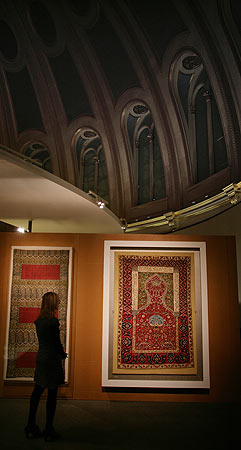
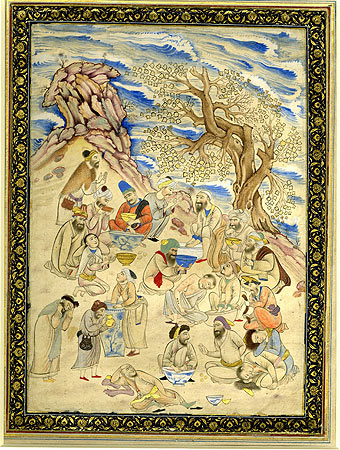
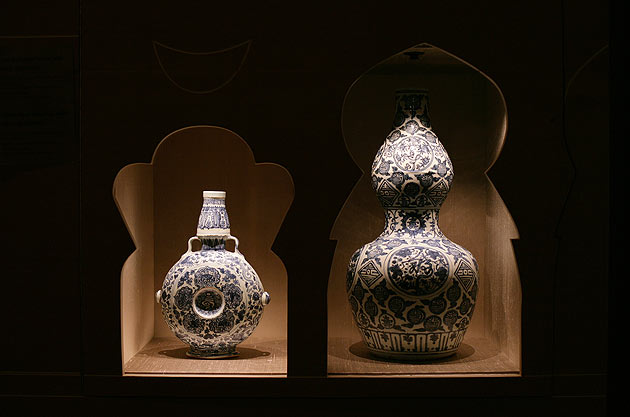
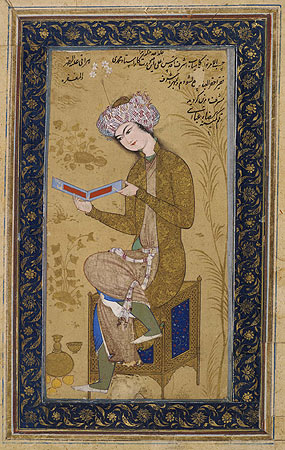
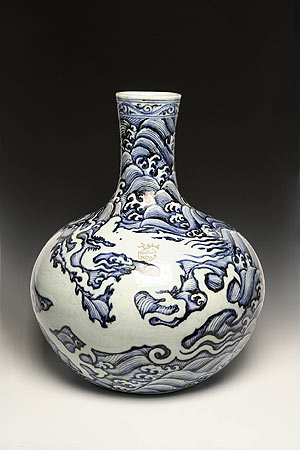
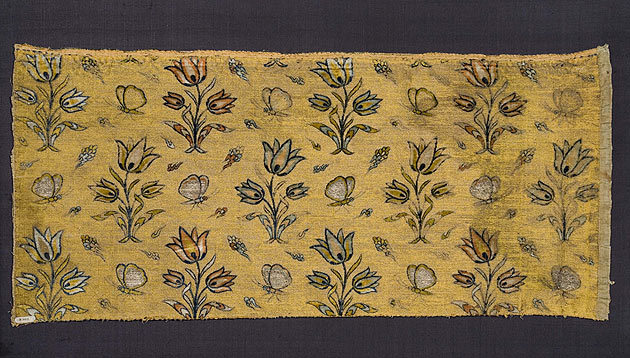
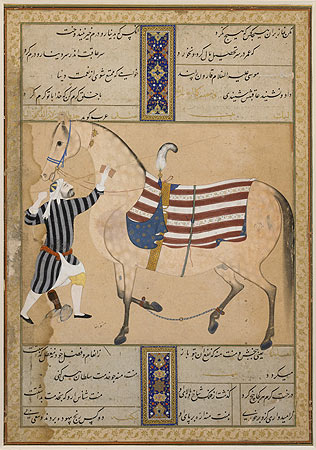
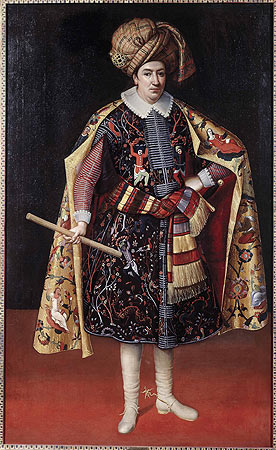
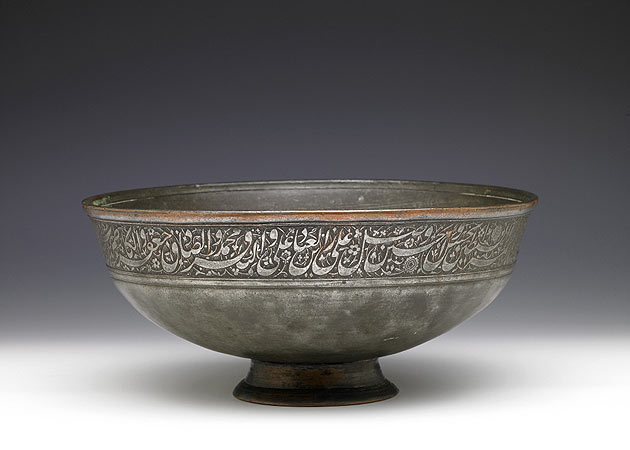
A visitor to the Shah Abbas exhibition at the British Museum stops in front of a prayer rug, created in Iran during the 17th centuryPhotograph: Martin Godwin/GuardianThis painting dating from 1640 shows a group of dervishes drinking, praying, washing and sleeping beneath a dramatic sky. By including praying figures next to wine drinkers the artist may have had a satirical aim, reflecting the officially negative view of the excesses of Sufis during the reign of Shah AbbasPhotograph: British MuseumA pilgrim flask and gourd-shaped bottle, both from China, Ming dynasty, on display at the Shah Abbas exhibition at The British MuseumPhotograph: Martin Godwin/GuardianA gouache painting signed by Riza-yi Abbasi. This painting provides an insight into several aspects of art and society at the Safavid court in the 1620s. The young man reading embodies the fashion of the dayPhotograph: British MuseumLarge bulbous porcelain flask with three-clawed dragon among waves. Flasks such as these were produced in both the Yongle (1403-24) and Xuande (1425-35) eras at Jingdezhen with minor variations to the decoration and shape of the neckPhotograph: British MuseumThe Hazrat-i Ma'suma Shrine at QumPhotograph: Ebrahim Khadem Bayat/British MuseumVoided silk-velvet textile fragment from Iran, dating from the first quarter of the 17th century. This fabric represents the type of luxury silks that were produced as a result of Shal Abbas's stimulus to trade with EuropePhotograph: Hans-Joachim Bartsch/Staatliche Museen zu BerlinThis watercolour, dating from the very end of the 16th century, shows a horse likely to belong to Shah Abbas as its blanket, feather ornament and brand all suggest it is from the royal stables. Even though his name is signed on the piece, some elementary errors in the execution make it doubtful that it is the work of Riza-yi AbbasiPhotograph: British MuseumA portrait of Sir Robert Sherley by an unknown artist at some point before 1628. One of the novel policies of Shah Abbas was his openness to foreigners and non-Muslims. Sherley worked for Abbas, trying to encourage Europe to trade with IranPhotograph: Berkeley Will TrustAlthough this tinned copper bowl was produced after the death of Shah Abbas, it represents the continuation of a type that gained currency in the 17th century. It is unadorned save for its nasta liq (calligraphic) inscription band, which contains the 14 names of the Shia Immaculate OnesPhotograph: British MuseumA detail of Shah Abbas as depicted on the wall of Chihil Sutun Palace in Isfahan, dating from around 1647Photograph: British Museum
Sign up to read this article
Read news from 100’s of titles, curated specifically for you.