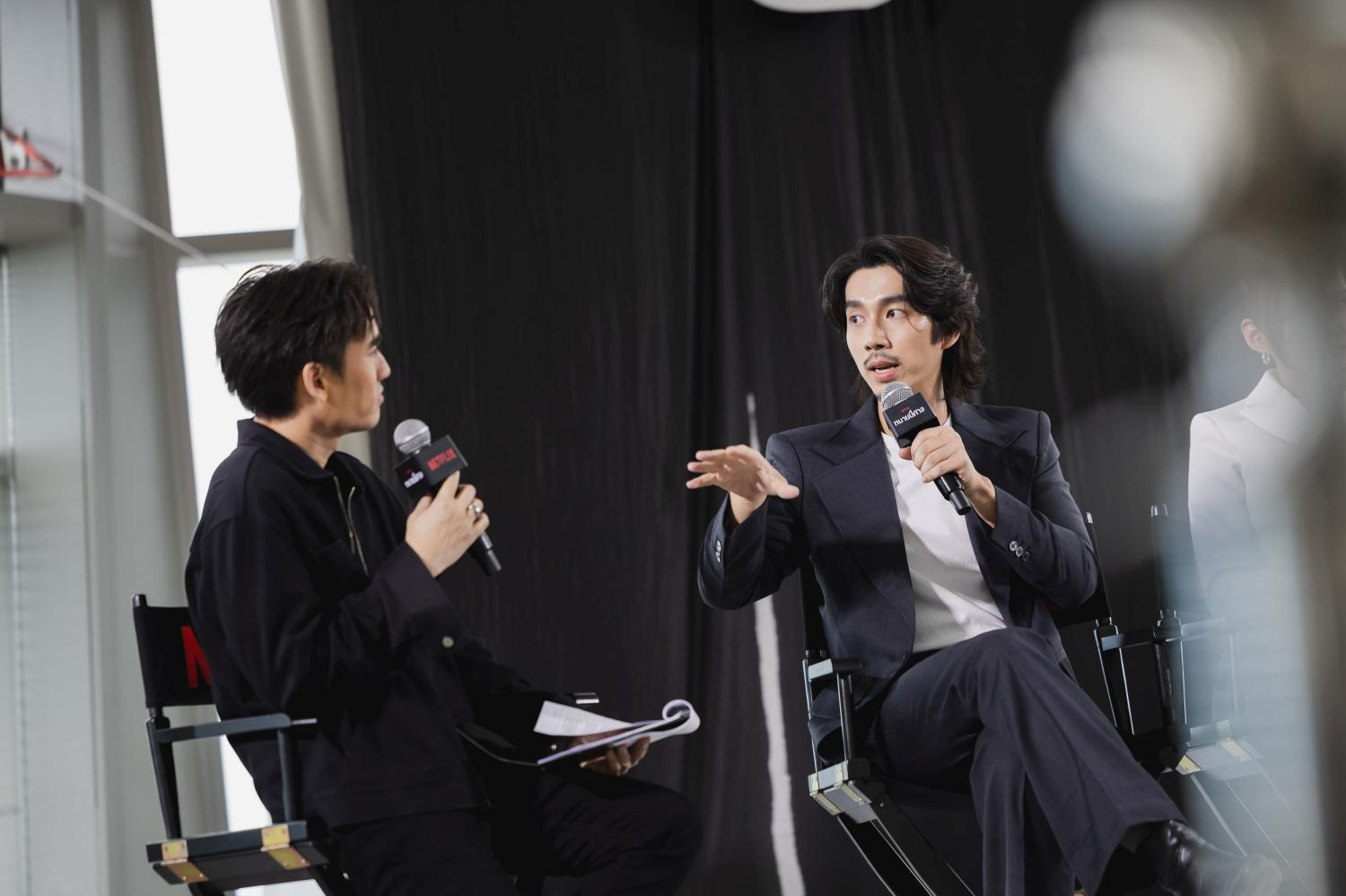
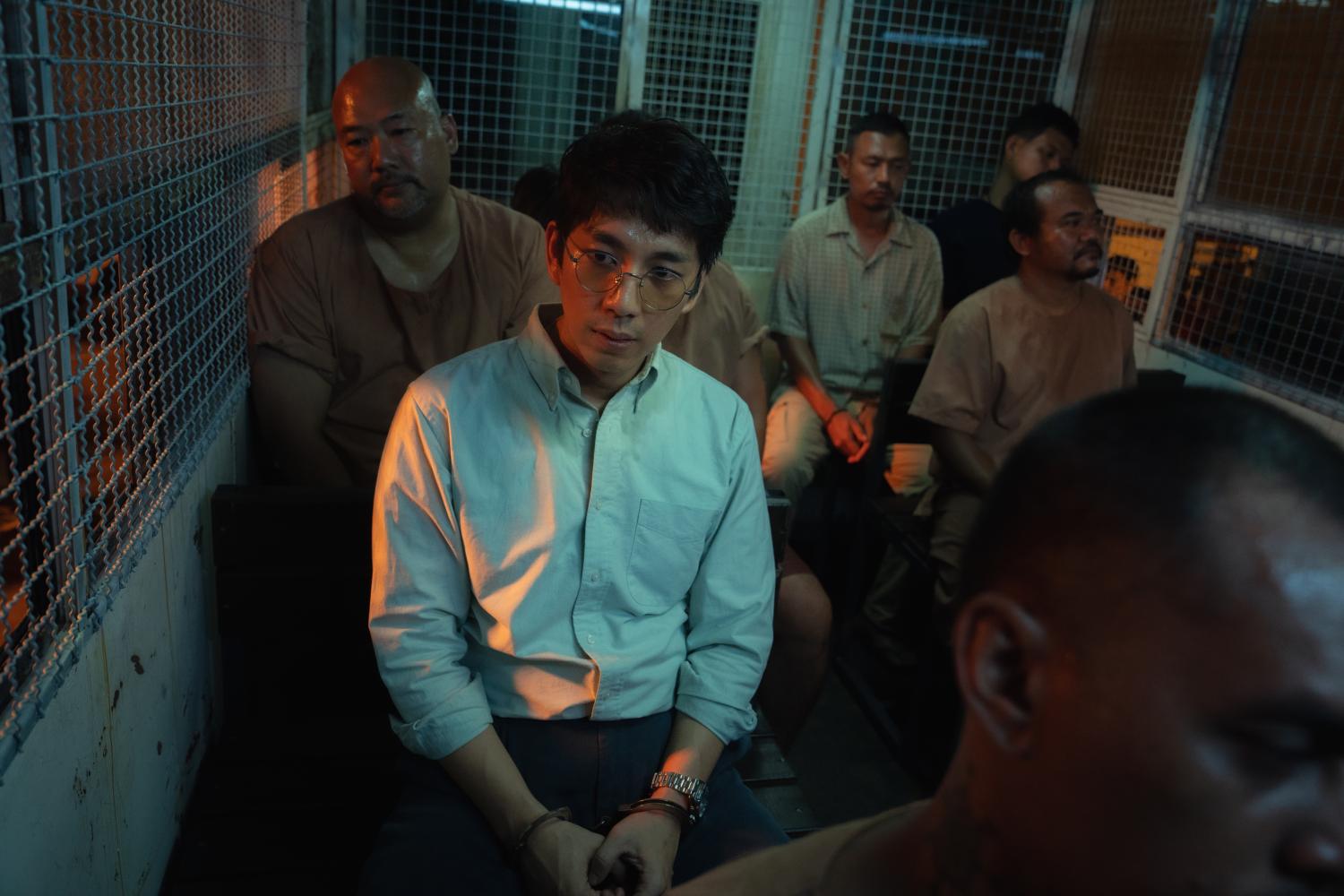
A new Netflix series, The Evil Lawyer, presents all shades of the Thai justice system. A Thai court drama series that involved intensive research for over half a decade, the series aims to portray the game of wit inside the courtroom in a way that is both entertaining and grounded in realism while weaving in issues close to the creators' hearts that audiences around the world can relate to.
The recent press call was presented in the form of a monochrome exhibition-style experience, inviting audiences to question a world where nothing is entirely black or white and encouraging them to seek answers within the series. The Evil Lawyer, now available to stream on Netflix, positions itself as a courtroom drama that challenges perception, morality and the blurred boundaries of justice.
Following the success of his acclaimed series Mad Unicorn, director Nottapon Boonprakob returns with a new creative challenge in The Evil Lawyer. He collaborates with co-creator Jakrin Thepwong, who serves as co-director and co-writer and creative director Songphon Chantarasom.
Together, they aim to deliver a courtroom narrative that balances emotional intensity with accessibility, making complex legal and moral questions engaging for a broad audience. The project was developed through Netflix's Content Lab initiative under the Creative Economy Agency, a platform designed to connect emerging creators with industry partners and foster the development of high-potential projects.
Director Nottapon spoke about the extensive development process behind the series, emphasising the depth of research involved.

"The writing team had to do a lot of research. They interviewed and consulted with people in the legal industry," he said. He further explained how this research shaped both narrative clarity and character depth.
"I helped shape the various issues to make it easier for the audience to understand the story and add dimension and background to the characters. You can feel and believe that the stories in the series are realistic and can really happen."
Beyond the writing process, Nottapon highlighted the creative challenges of staging courtroom sequences in a way that maintains engagement while staying true to procedural realism.
"We had to design the conversation scenes in the court to be fun and easy to understand. I chose to use the technique of moving the camera to connect to the crime scenes of various cases," he said.
"Therefore, blocking in the courtroom was very important and we had to prepare a lot in ordering the scenes that need to be filmed. You need to be able to see how each shot will fit into the larger picture. It was a challenge in directing this series."
His comments underline the series' ambition to merge cinematic storytelling with legal authenticity, transforming courtroom exchanges into dynamic narrative sequences rather than static dialogue-driven scenes.
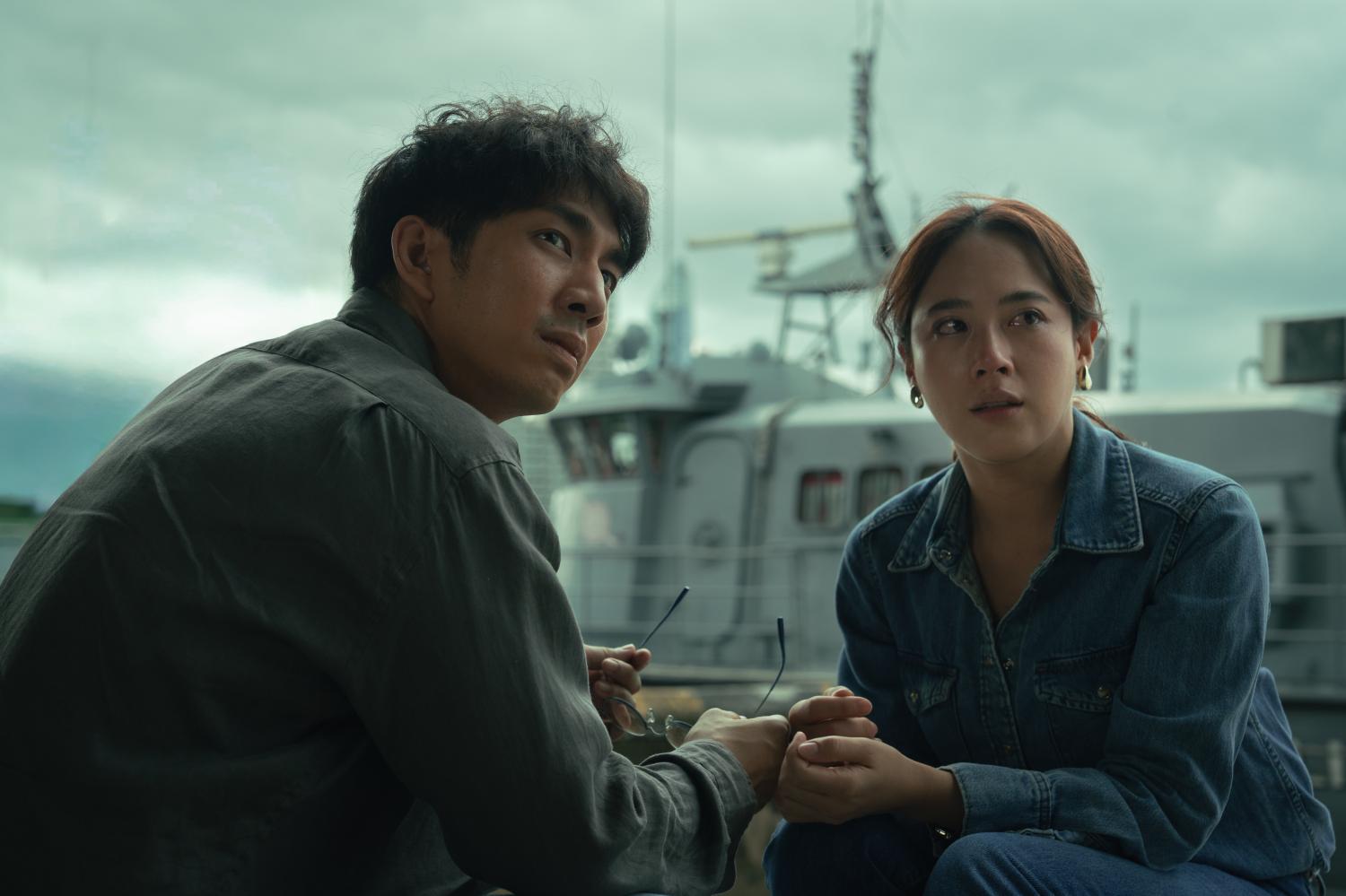
Rhatha Phongam, who takes on the role of the flashy attorney Jittri, described the role as a defining moment in her career. It is her first time taking on a leading role of this scale and she spoke openly about its complexity and emotional demands.
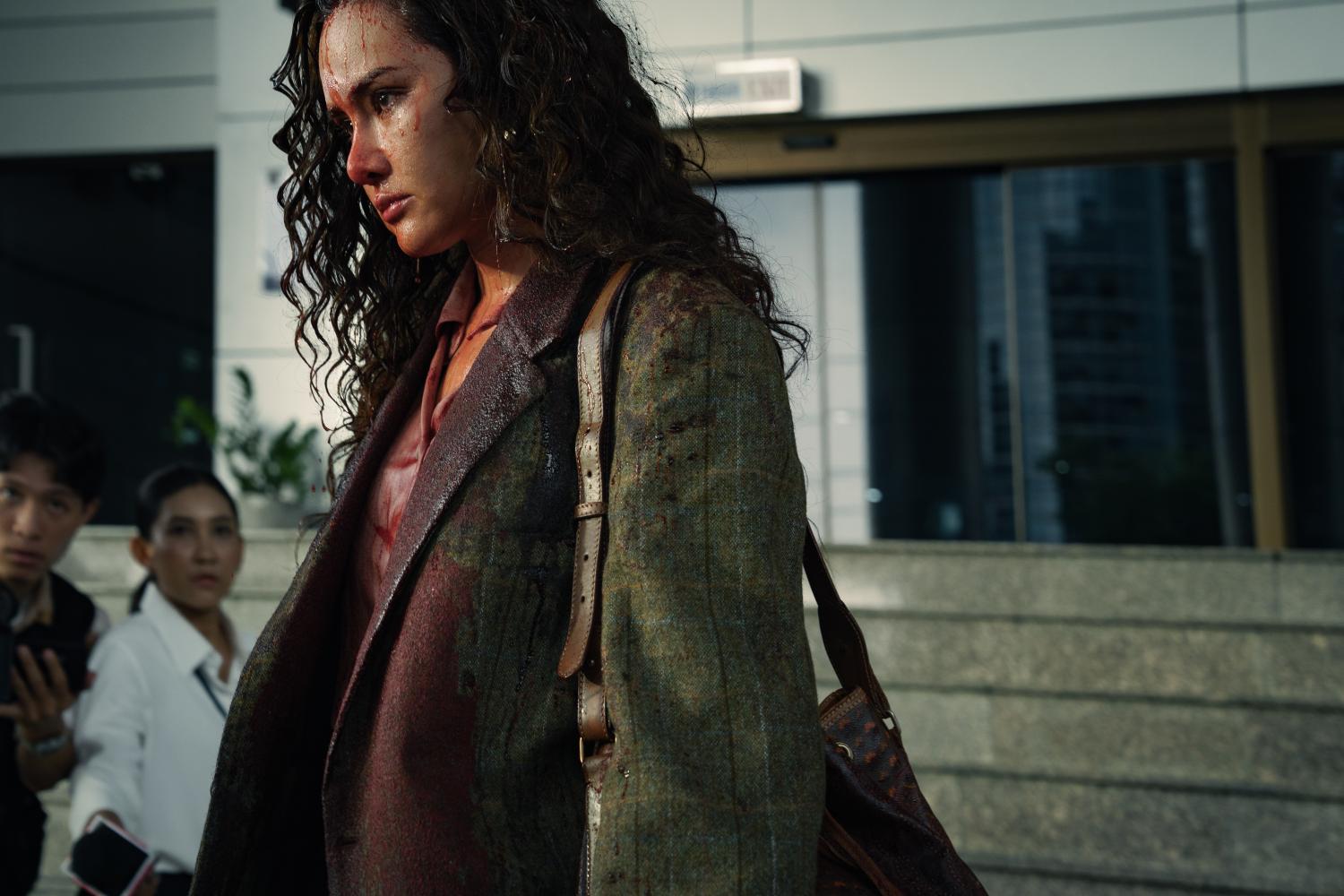
"The most challenging thing is to convey the dimension of Jittri's character, which has many overlapping personalities, both ruthless, cool and edgy," she said.
"Each personality has many hidden layers of depth. For example, in the court scene, there was a lot of dialogue and it was very challenging. I had to think at all times, but the rhythm and speed made it a fun scene.
"In addition, the series will allow viewers to see the justice process in different aspects and make people understand that we cannot judge anyone from just one side because none of us are all good or all bad. I ask everyone not to judge Jittri by the methods she uses but try to understand why she had to choose to walk this path."
Her portrayal reflects one of the central thematic concerns of the series: the idea that moral judgement is rarely absolute and that every legal argument is rooted in human complexity rather than clear ethical division.
Actor Nat Kitcharit, who plays Mek, a young lawyer guided by strong ideals, also reflected on the emotional and psychological evolution of his character throughout the series.
"For the first time in my life, I played a character whose development was unpredictable. Mek is a character that drives the heart of the whole story," he said. "He tries to maintain a core mindset or set of beliefs."
He further elaborated on the central philosophical tension of the narrative, which questions the nature of justice and moral certainty.
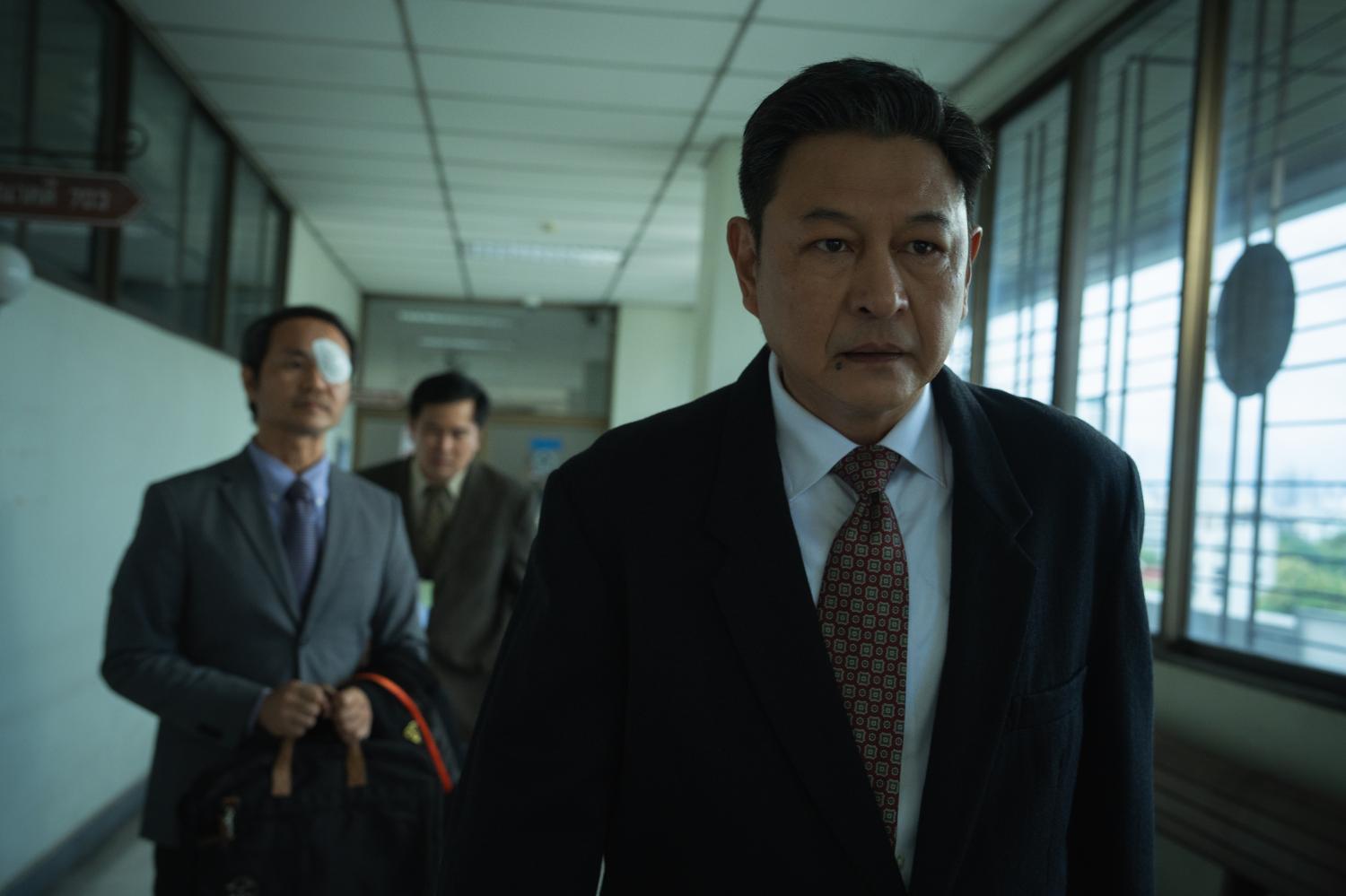
"From having had a certain perspective on justice and to see the world through Jittri's way, The Evil Lawyer invites the audience to ask the question: White or black, who do you ask? And this story doesn't ask who is right or wrong but it asks 'what would you do?'."
Through Mek's journey, the series frames justice not as a fixed principle, but as a shifting perception shaped by experience, influence and emotional conflict.
From the production and industry perspective, Malobika Banerji, Vice-President of Content, Southeast Asia Content at Netflix, emphasised both the thematic depth and the development journey of the project, highlighting how The Evil Lawyer reflects Netflix's broader commitment to supporting regional storytelling with global resonance.
"What makes The Evil Lawyer distinct is that the courtroom isn't presented just as a place where justice is delivered -- it's a battleground where power, influence and personal ambition collide."
She further elaborated on the extensive research and authenticity behind the series.
"Director Nottapon and his team spent years researching the realities of the Thai legal landscape, speaking with lawyers, judges, prosecutors and people whose lives have been shaped by the justice system.
"That authenticity gives weight and credibility to a story that is ultimately about much bigger questions: power, morality and the cost of pursuing the truth. While deeply rooted in Thailand, those questions are universal, which is why we believe The Evil Lawyer can resonate with audiences anywhere."
Banerji also highlighted Netflix's role in nurturing creators from early-stage development through to full production.
"One of the things we're most proud of is being able to support creators early in their journey, and continue growing with them as their ambitions evolve. We first encountered The Evil Lawyer as a pitch at the Creative Economy Agency's Content Lab. What excited us wasn't just the idea itself, but the ambition behind it."
She added that the project's progression was strengthened by the involvement of its director.
"As the project developed, we saw how Nottapon brought Mad Unicorn to life and were sure that he would be perfect for this project and were very excited when he decided to come on board. Our goal isn't simply to commission individual projects, it's also to help local creators grow from one breakthrough to the next."