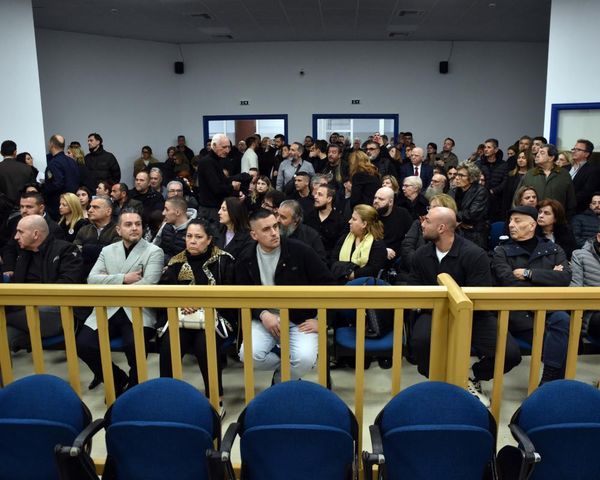
On March 15 tens of thousands of people attended March 4 Justice rallies in 40 cities and regional towns in Australia.
The rallies were held to protest against the sexual assault, abuse and harassment of Australian women. Grace Tame, sexual assault survivor and Australian of the Year (2021) addressed the Hobart rally. She said: "Behaviour unspoken, behaviour ignored, is behaviour endorsed".
Sexual violence should not be a fact of life in our society. Enough is enough.
Brittany Higgins told protesters outside Federal Parliament: "There is a horrible societal acceptance of sexual violence experienced by women in Australia."
It's time our parliamentary leaders on both sides of politics addressed the common occurrence of gendered violence. Brittany, a former Liberal party staffer, had alleged to The Project's Lisa Wilkinson in February that she had been raped by a former senior ministerial advisor in the parliamentary office of Linda Reynolds, Minister for Defence.
Following Brittany's allegations, Prime Minister Scott Morrison launched four inquiries into the workplace culture at Parliament House as ongoing allegations surfaced in the media.
Fair-minded Australians reject the politics of indifference to injustice.
Australian Bureau of Statistics' 2016 Public Safety Survey estimated that one in six women (17 per cent or 1.6 million) and one in 25 men (4.3 per cent or 385,000) had experienced at least one sexual assault since the age of 15. The survey also estimated that 1.6 per cent (148,000) of women and 0.6 per cent (57,200) of men aged over 18 had been sexually assaulted at least once in the preceding year.
Unfortunately, almost nine in 10 women who had experienced aggravated sexual assault in the past 10 years did not contact police. NSW Police Commissioner Mick Fuller recently told a parliamentary committee that police pursued 10 per cent of sexual assault complaints they had received and just 10 per cent of these reports were successfully prosecuted.
Conviction rates of 0.1-0.2 per cent of total sexual assaults (reported or unreported), simply reinforce the prevalence of sexual violence in Australia.
After the March 4 Justice rally outside of Federal Parliament, the Prime Minister told Parliament: "As terribly difficult as it must be, going to the police and making a statement is the only way to achieve justice and to ensure the perpetrator can no longer harm anyone else."
However, survivors are typically reluctant to engage a harrowing legal system, for which there is either little trust or a low probably for a successful prosecution.
Since 1995, the National Community Attitudes towards Violence against Women Survey has been regularly held involving respondents aged 16 and over. The 2017 findings help us understand the ongoing prevalence for gendered sexual and domestic violence, and why Australian politicians are generally reluctant to act.
For example, 19 per cent of respondents were unaware that non-consensual sex in marriage is against the law. Forty-two per cent agreed that it was common for sexual assault accusations to be used to get back at men.
Thirteen per cent of respondents believed that if a woman was raped while she was drunk or affected by drugs then she was at least partly responsible. Thirty-one per cent considered women who say they were raped had generally led the man on and then had regrets. Rape results from men not being able to control their need for sex (33 per cent). Fourteen per cent agreed that domestic violence could be excused if the violent person genuinely regretted their conduct.
Fair-minded Australians reject the politics of indifference to injustice.
Justice in politics requires its leaders to have due regard for their decisions (or lack thereof) on its citizens, irrespective of age, gender, sexuality, ethnicity, religion, ability or by any other basis.
Martin Luther King Jr. said "injustice anywhere is a threat to justice everywhere". There can be no justification for acts of injustice.
Australians are entitled to be reasonably protected from sexual assault and domestic violence. Tragically, survivors have long experienced systemic indifference to their sexual assault, abuse or harassment.
Should politicians continue their intransigence and equivocation about legislating substantive changes to resolve gendered sexual violence in Australia, then it's reasonable that women press for meaningful change by being independently elected to the senate cross bench of federal parliament to exact maximum leverage.
It's time.
For help regarding a sexual assault, call 1800 Respect 1800 737 732, Lifeline 13 11 14, NSW Rape Crisis Counselling Service 1800 424 017 or LGBTIQ+ Violence Service 1800 497 212.
Dr Michael Walton is a Lambton psychologist
Our journalists work hard to provide local, up-to-date news to the community. This is how you can continue to access our trusted content:
- Bookmark: newcastleherald.com.au
- Download our app
- Make sure you are signed up for our breaking and regular headlines newsletters
- Follow us on Twitter
- Follow us on Instagram
- Follow us on Google News