Seven years after tsunami, Japanese live uneasily with seawalls
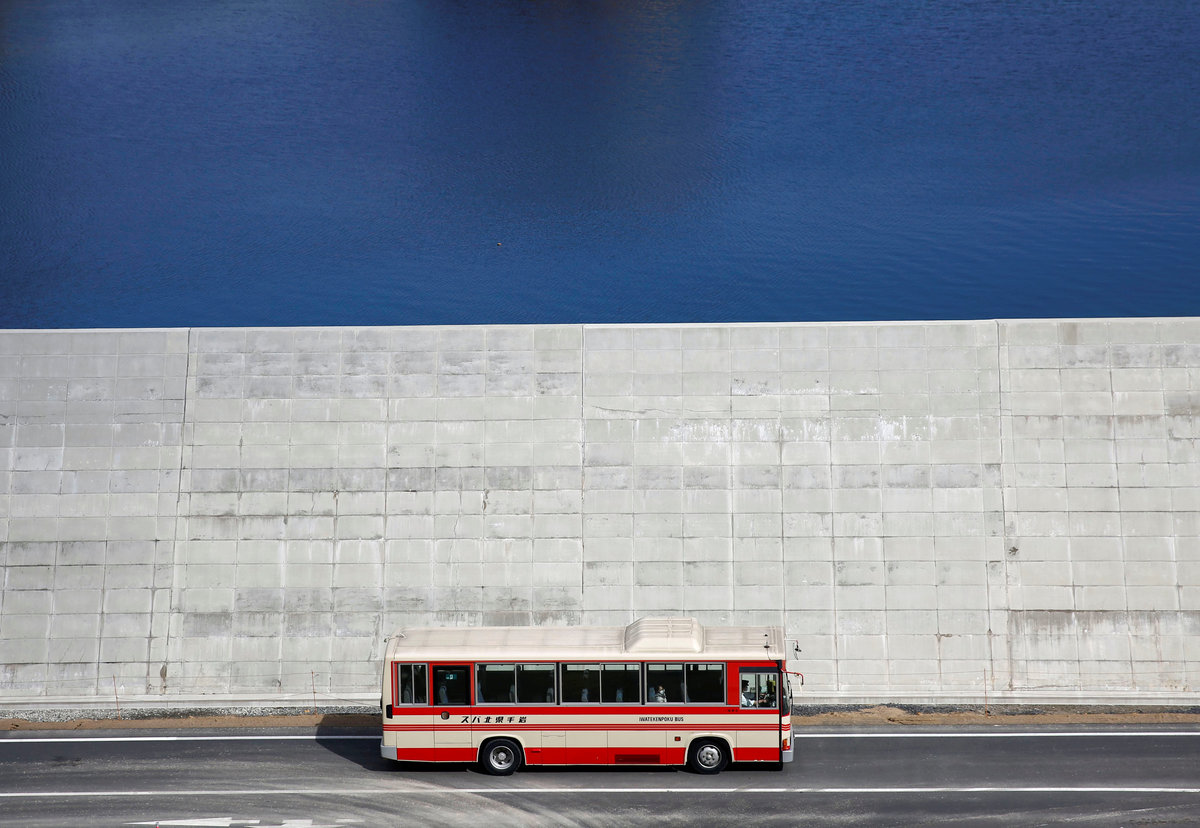
A bus is driven past a seawall in Yamada village, Iwate Prefecture, Japan, March 3, 2018. REUTERS/Kim Kyung-Hoon
RIKUZENTAKATA, Japan (Reuters) - When a massive earthquake struck in 2011, Japanese oyster fisherman Atsushi Fujita was working as usual by the sea. Soon after, a huge black wave slammed into his city and killed nearly 2,000 people.
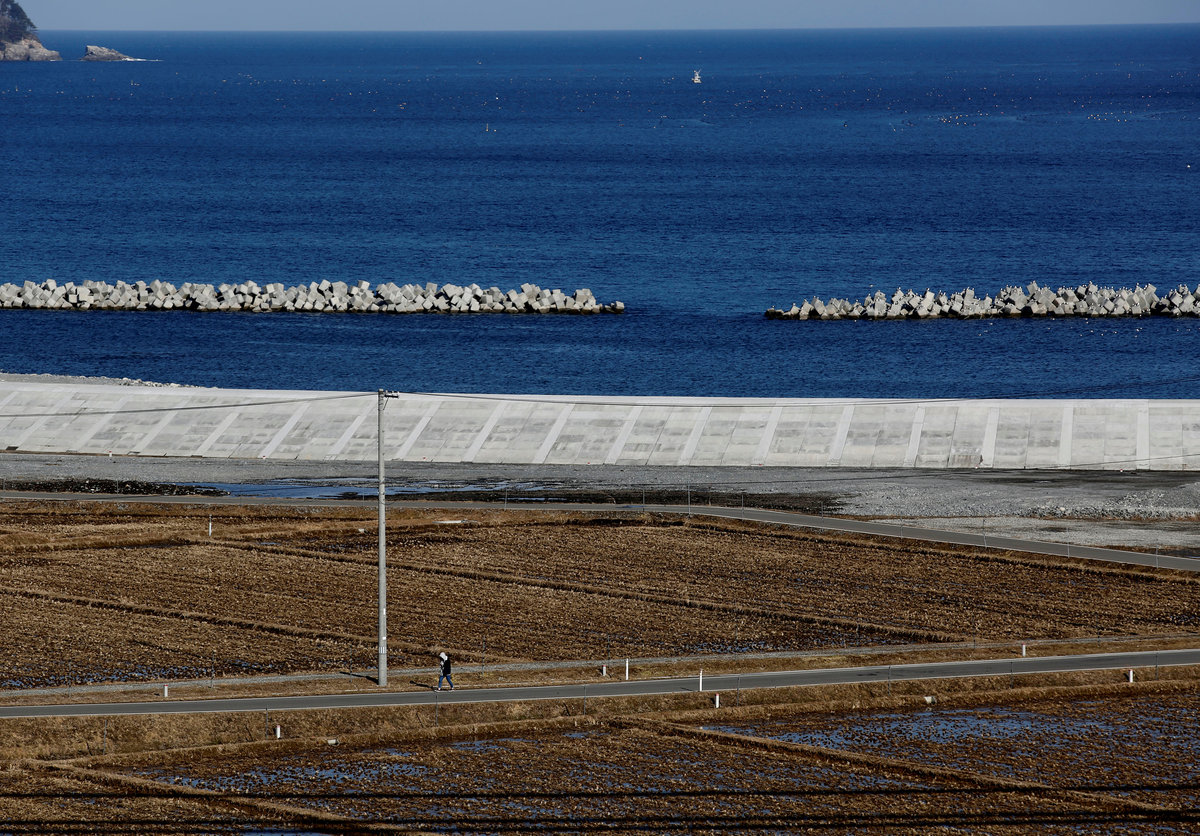
Seven years on, Fujita and thousands like him along Japan's northeast coast have rebuilt their lives alongside huge sea walls that experts say will protect them if another giant tsunami, which some see as inevitable in a seismically active nation like Japan, was to strike.
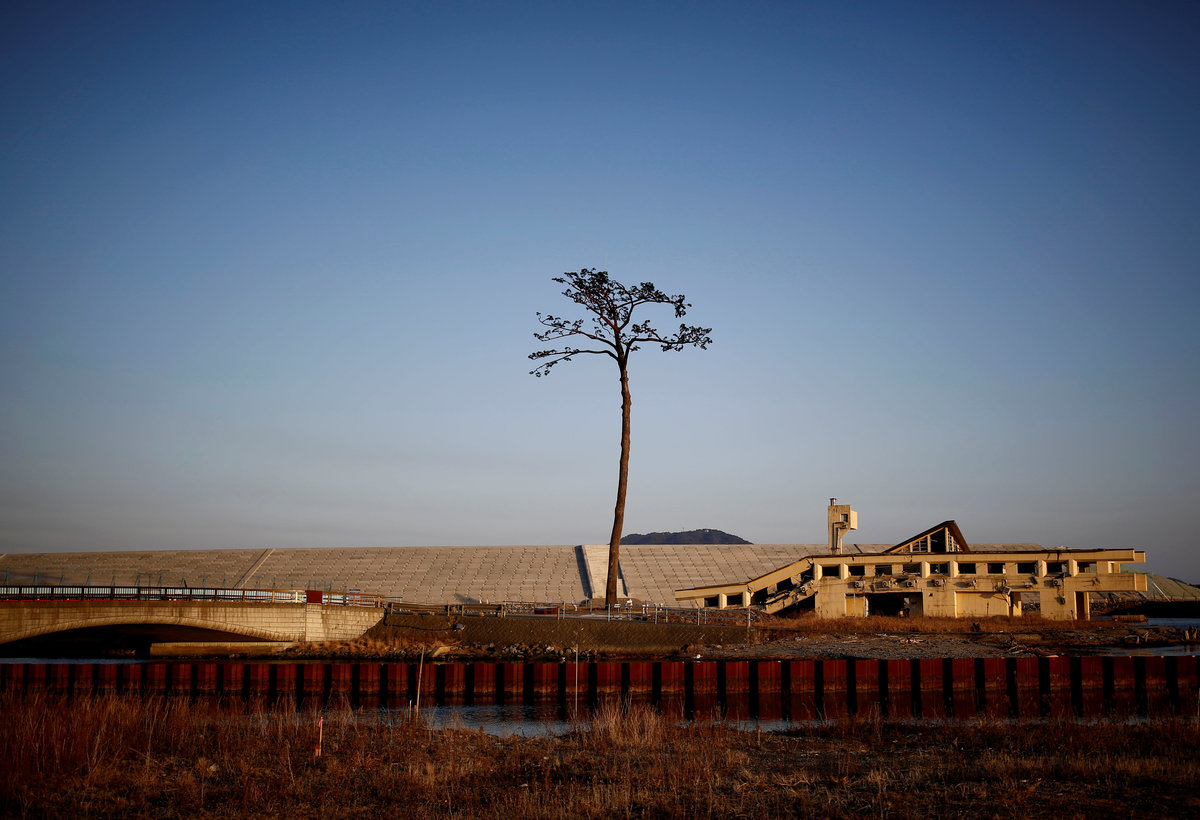
'Miracle Pine', a tree which is said to symbolise hope and recovery after it survived the 2011 tsunami, stands next to a damaged building in front of the newly built seawall in Rikuzentakata, Iwate Prefecture, Japan, March 3, 2018. REUTERS/Kim Kyung-Hoon
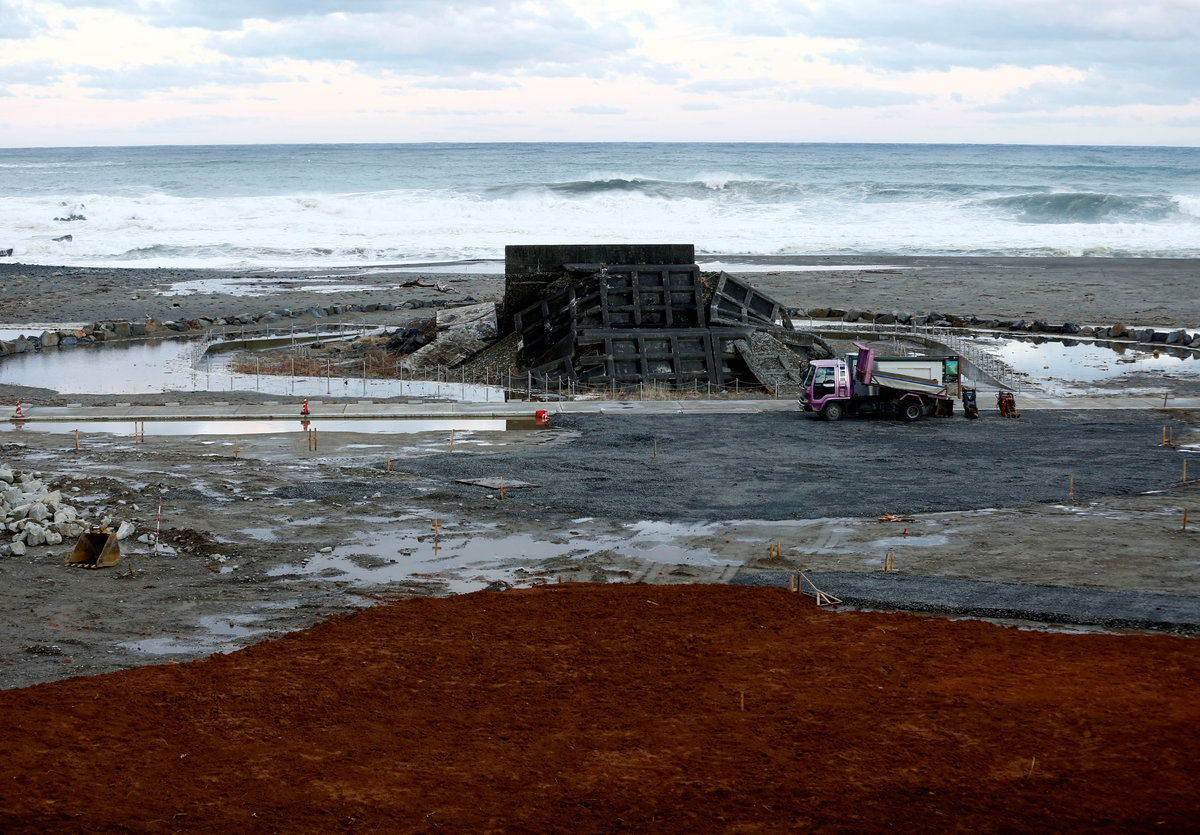
The 12.5-meter (41-ft) concrete wall replaced a 4-meter breakwater that was swamped in the March 11, 2011 disaster. The earthquake and tsunami, which reached as high as 30 meters in some areas, killed nearly 18,000 people across Japan and triggered a nuclear meltdown at the Fukushima power plant.
"It feels like we're in jail, even though we haven't done anything bad," the 52-year-old Fujita said.
(Click http://reut.rs/2oT9XTa to see a picture package of the sea walls built after the 2011 earthquake and tsunami.)
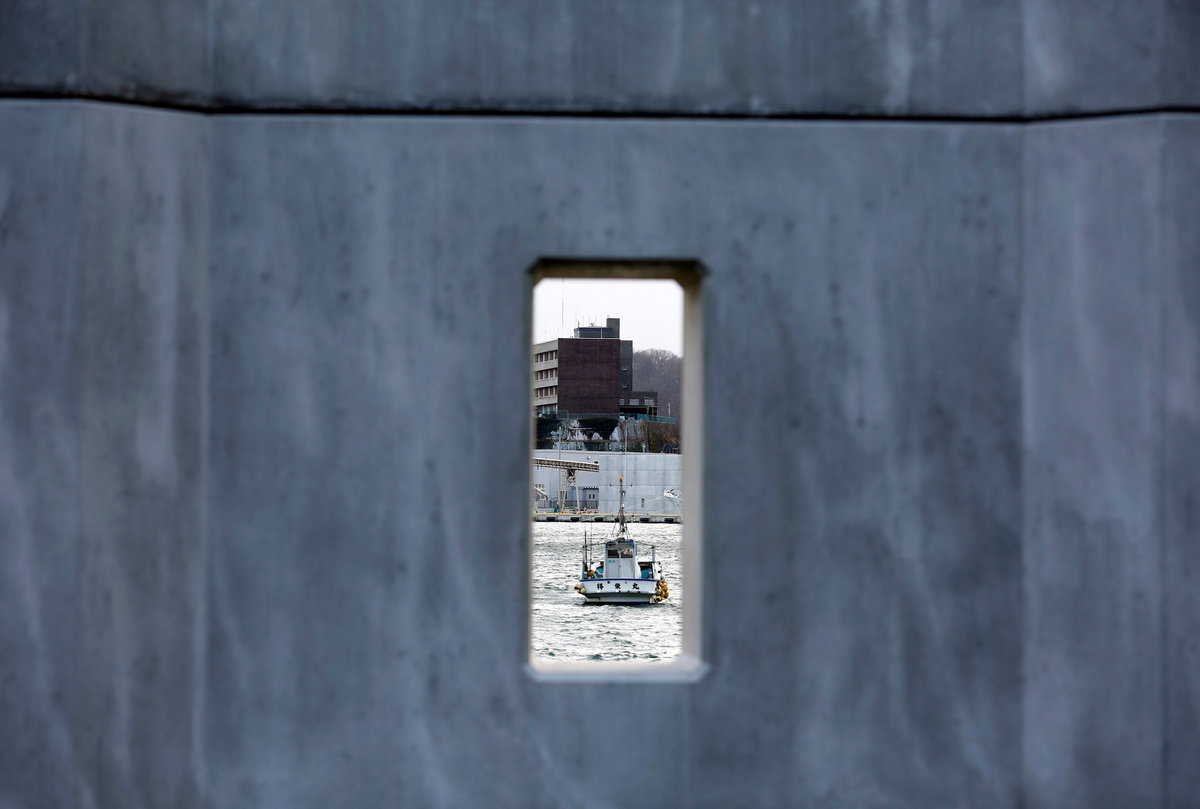
A fishing boat is seen through a window of a seawall at a port in Miyako, Iwate Prefecture, Japan, March 2, 2018. REUTERS/Kim Kyung-Hoon
Since the disaster, some towns have forbidden construction in flat areas nearest the coast and have relocated residents to higher land. Others, such as Rikuzentakata, have raised the level of their land by several meters before constructing new buildings.
A common thread, though, is the construction of seawalls to replace breakwaters that were overwhelmed by the tsunami. Some 395 km (245 miles) of walls have been built at a cost of 1.35 trillion yen ($12.74 billion).
"The seawalls will halt tsunamis and prevent them from inundating the land," said Hiroyasu Kawai, researcher at the Port and Airport Research Institute in Yokosuka, near Tokyo.
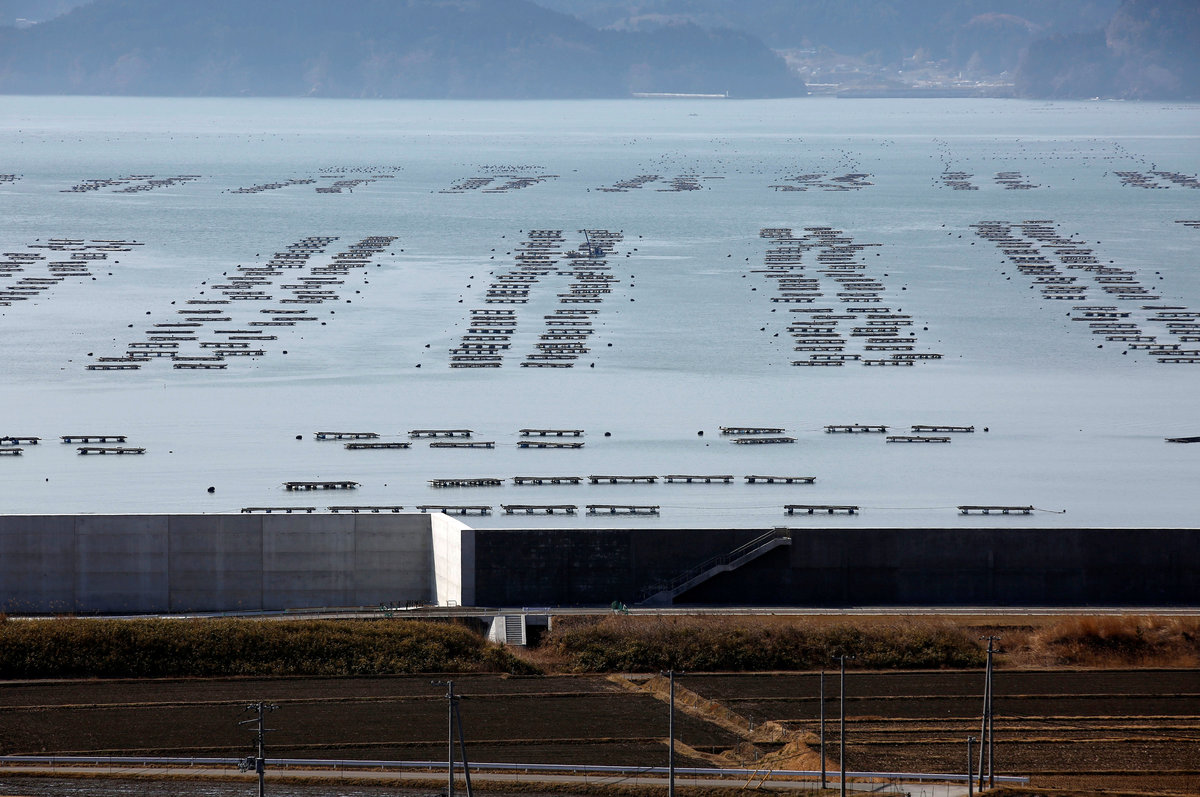
An oyster farm is seen behind a seawall at Hirota Bay in Rikuzentakata, Iwate Prefecture, Japan, March 4, 2018. REUTERS/Kim Kyung-Hoon
"Even if the tsunami is bigger than the wall, the wall will delay flooding and guarantee more time for evacuation."
ADJUSTING
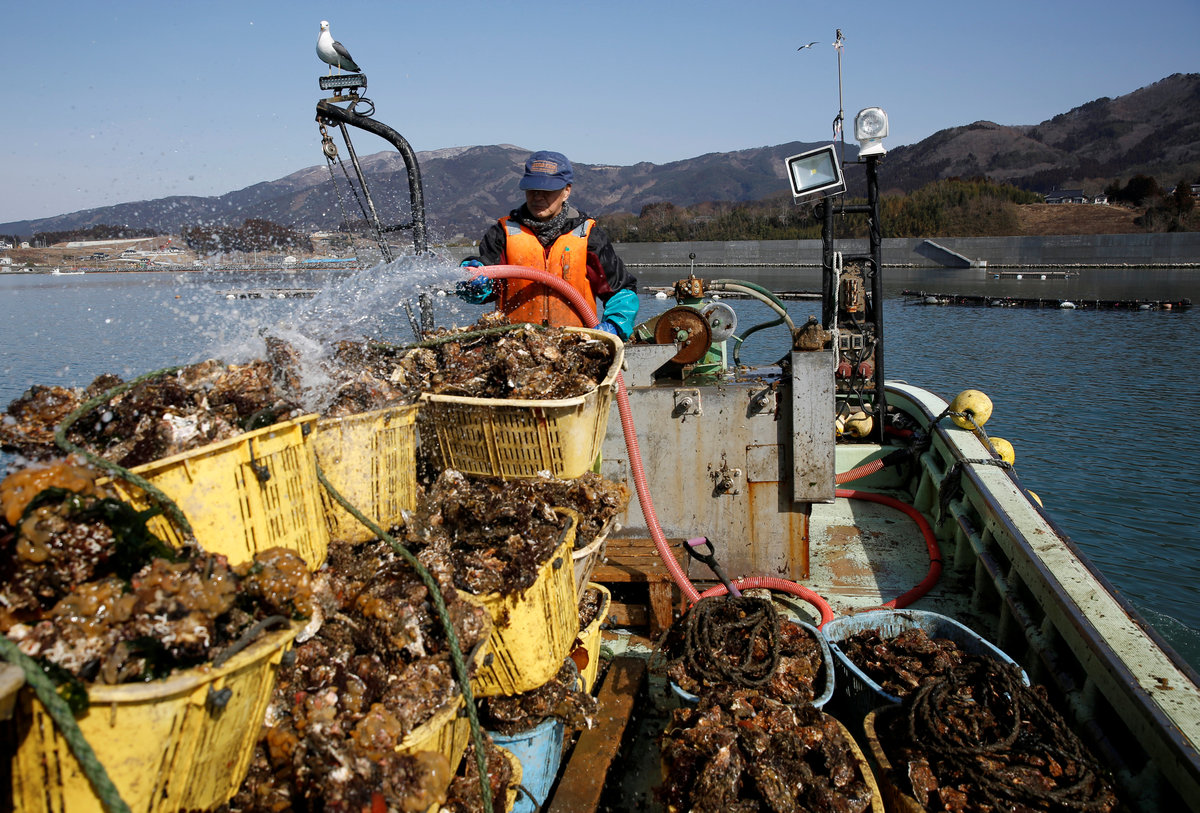
A fisherman sprays water over oysters on a boat, which he harvested from an oyster farm at Hirota Bay in Rikuzentakata, Iwate Prefecture, Japan, March 4, 2018. The seawall can be seen in the background. REUTERS/Kim Kyung-Hoon
Many residents initially welcomed the idea of the walls but have become more critical over time. Some say they were not consulted enough in the planning stages or that money spent on the walls has meant that other rebuilding, such as housing, has fallen behind.
Others worry the walls will damage tourism.
"About 50 years ago, we came up here with the kids and enjoyed drives along the beautiful ocean and bays," said Reiko Iijima, a tourist from central Japan, who was eating at an oyster restaurant across from the seawall.
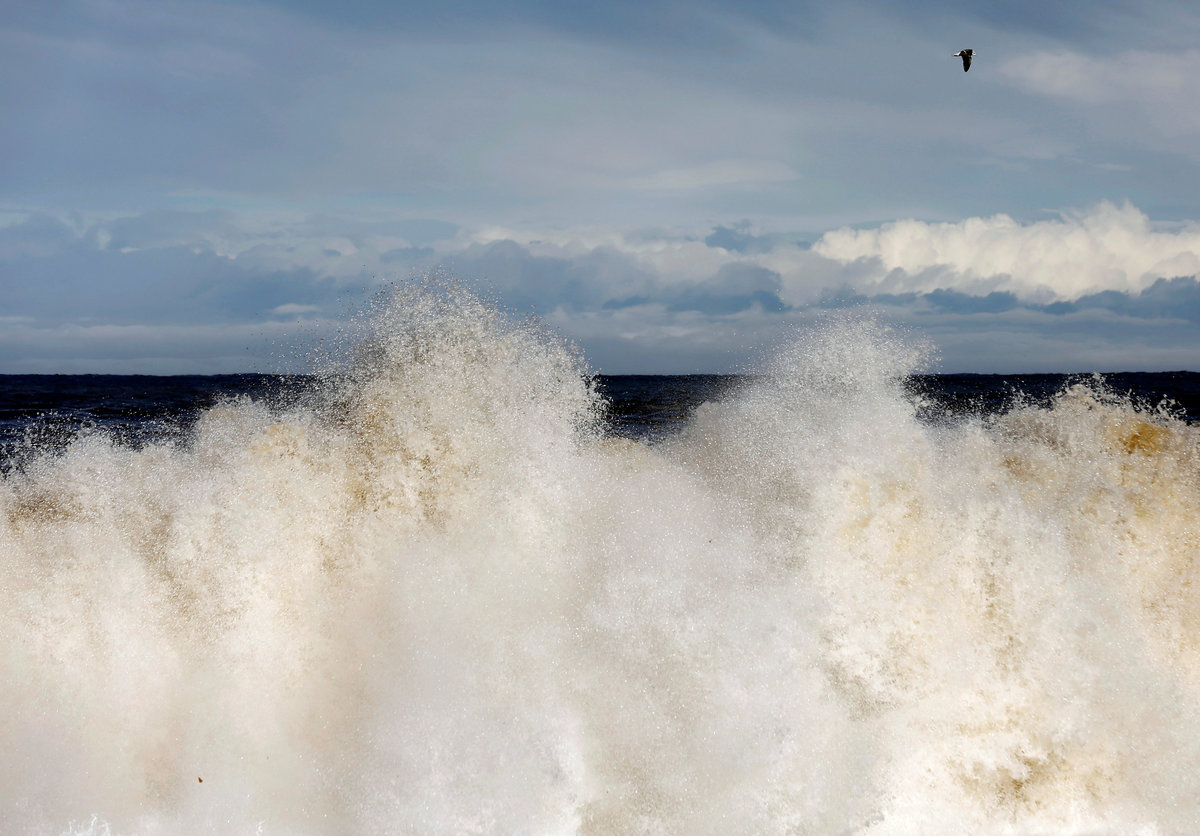
A seagull flies over a wave at Fudaihama beach in Fudai, Iwate Prefecture, Japan, March 1, 2018. REUTERS/Kim Kyung-Hoon
"Now, there's not even a trace of that."
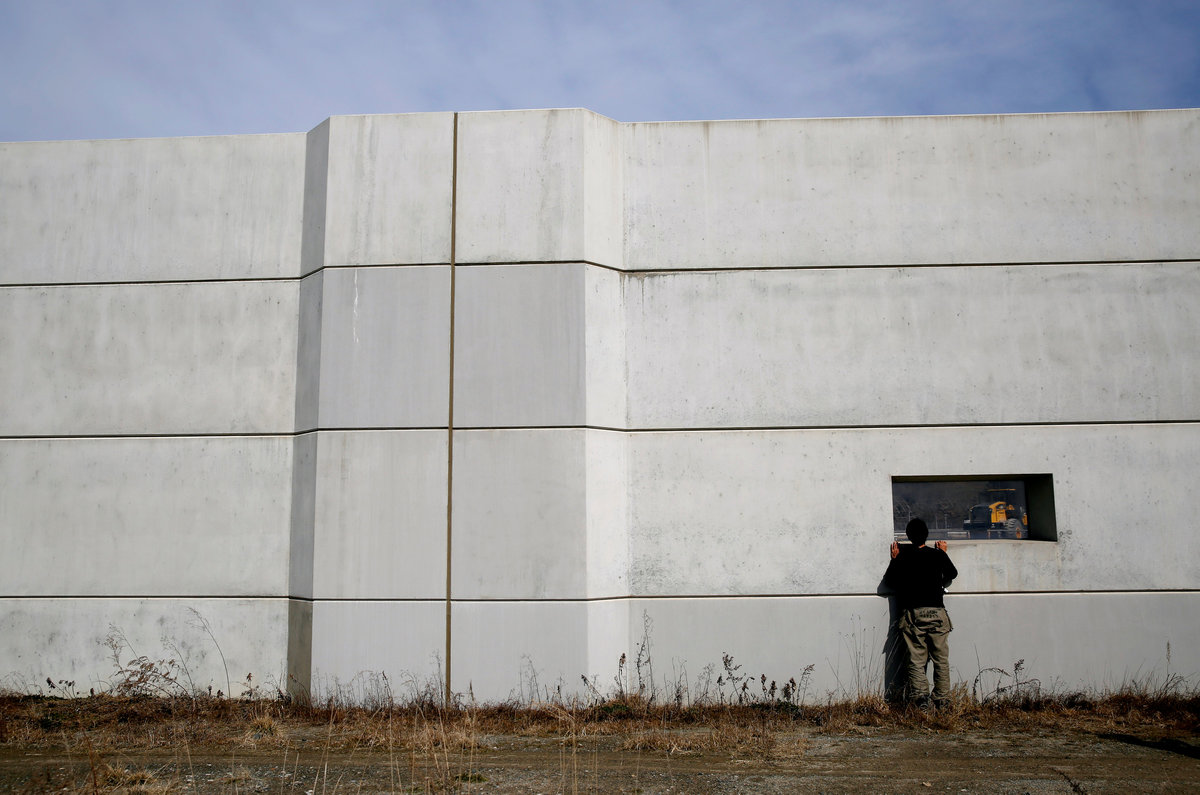
Part of a wall in the city of Kesennuma, further south, has windows in it - but these, too, draw complaints.
"They're a parody," said Yuichiro Ito, who lost his home and younger brother in the tsunami. "It's just to keep us happy with something we never wanted in the first place."
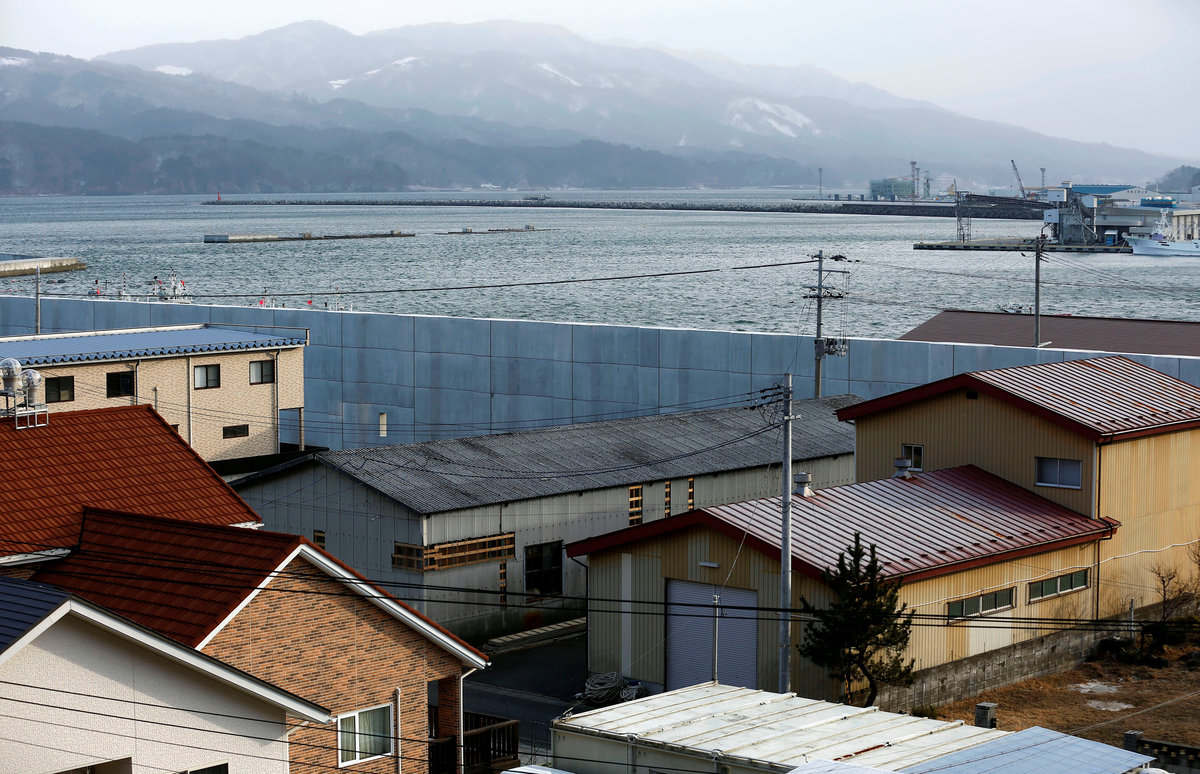
Residential houses and commercial buildings stand behind a seawall at a port in Miyako, Iwate Prefecture, Japan, March 2, 2018. REUTERS/Kim Kyung-Hoon
Fisherman Fujita said that while the tsunami had improved oyster farming in the area by stirring up sea floors and removing accumulated sludge, the sea walls could block natural water flows from the land and impact future production.
Many municipalities said the giant walls had to be in place before permission could be granted for reconstruction elsewhere.
"I can't say things like 'the wall should be lower' or 'we don't need it,'" said Katsuhiro Hatakeyama, who has rebuilt his bed and breakfast business in the same location as before. "It's thanks to the wall that I could rebuild, and now have a job."
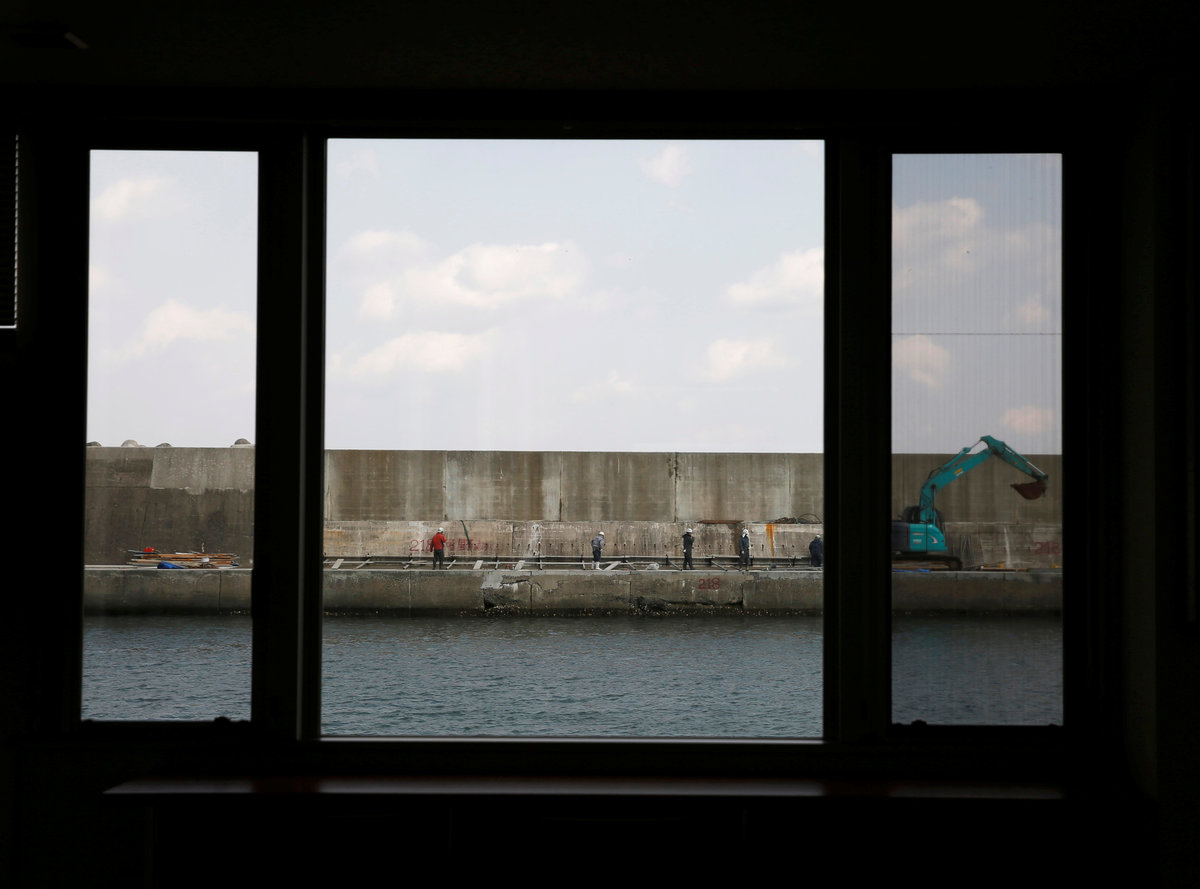
A construction site used to reinforce and extend an old seawall is seen through a window of a ferry terminal in Tanohata village, Iwate Prefecture, Japan, March 2, 2018. REUTERS/Kim Kyung-Hoon
But many find the wall hard to adjust to.
"Everyone here has lived with the sea, through generations," said Sotaro Usui, head of a tuna supply company. "The wall keeps us apart - and that's unbearable."
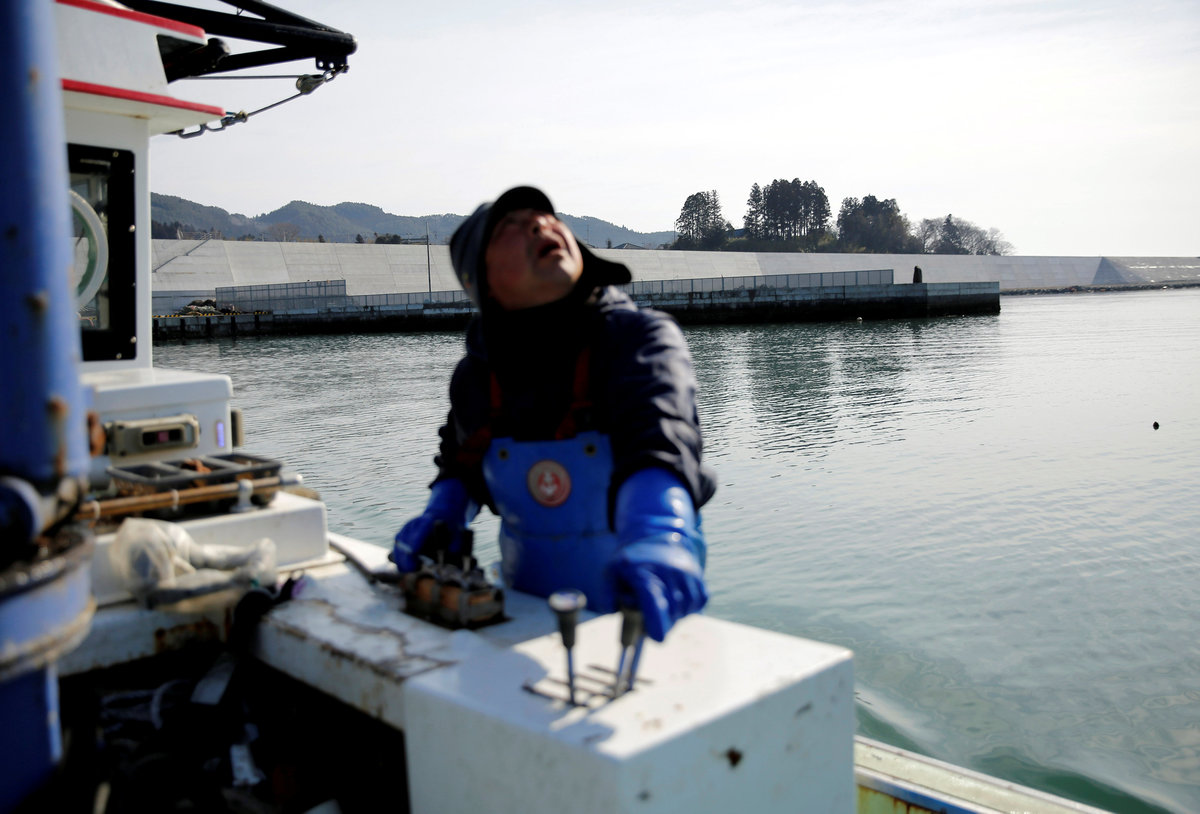
Atsushi Fujita sails his boat as he leaves a dock where seawalls are installed at Hirota Bay in Rikuzentakata, Iwate Prefecture, Japan, March 4, 2018. REUTERS/Kim Kyung-Hoon
(Additional reporting by Kim Kyung-hoon, Writing by Elaine Lies; Editing by Karishma Singh and Neil Fullick)
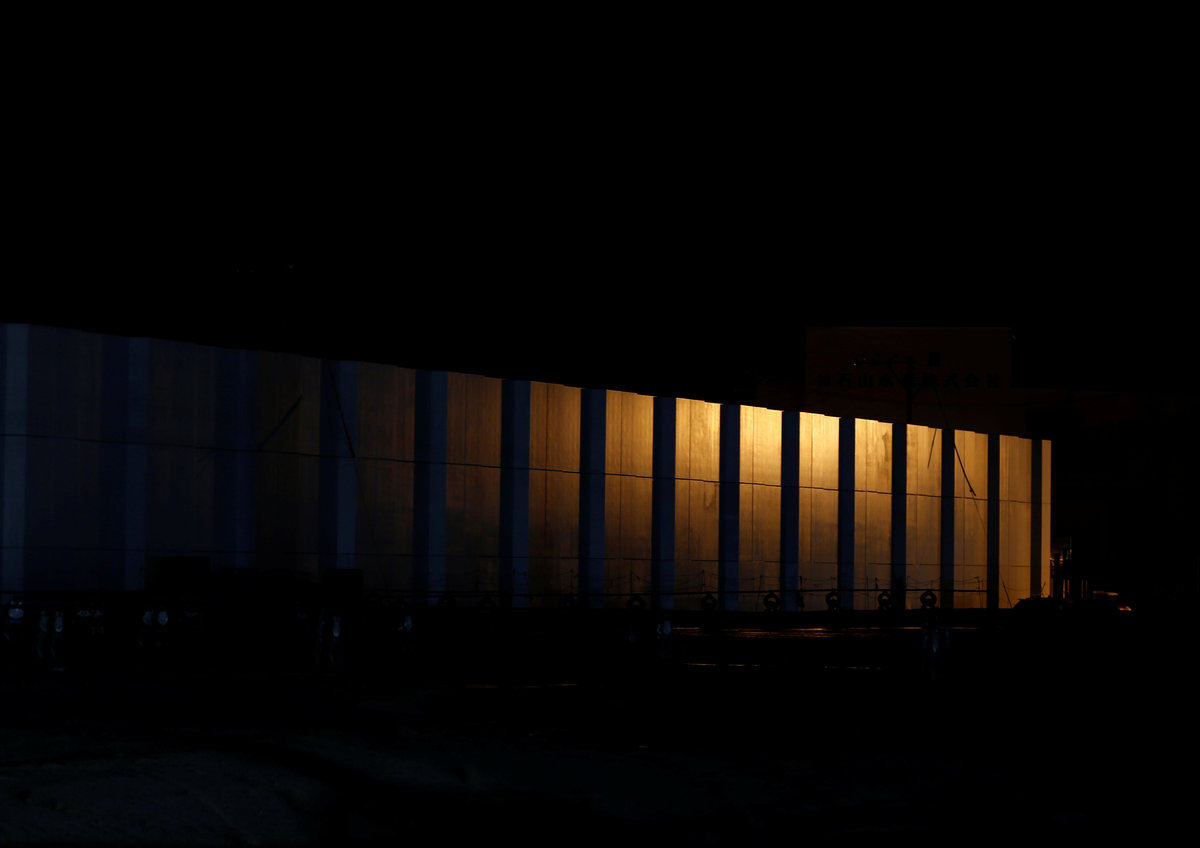
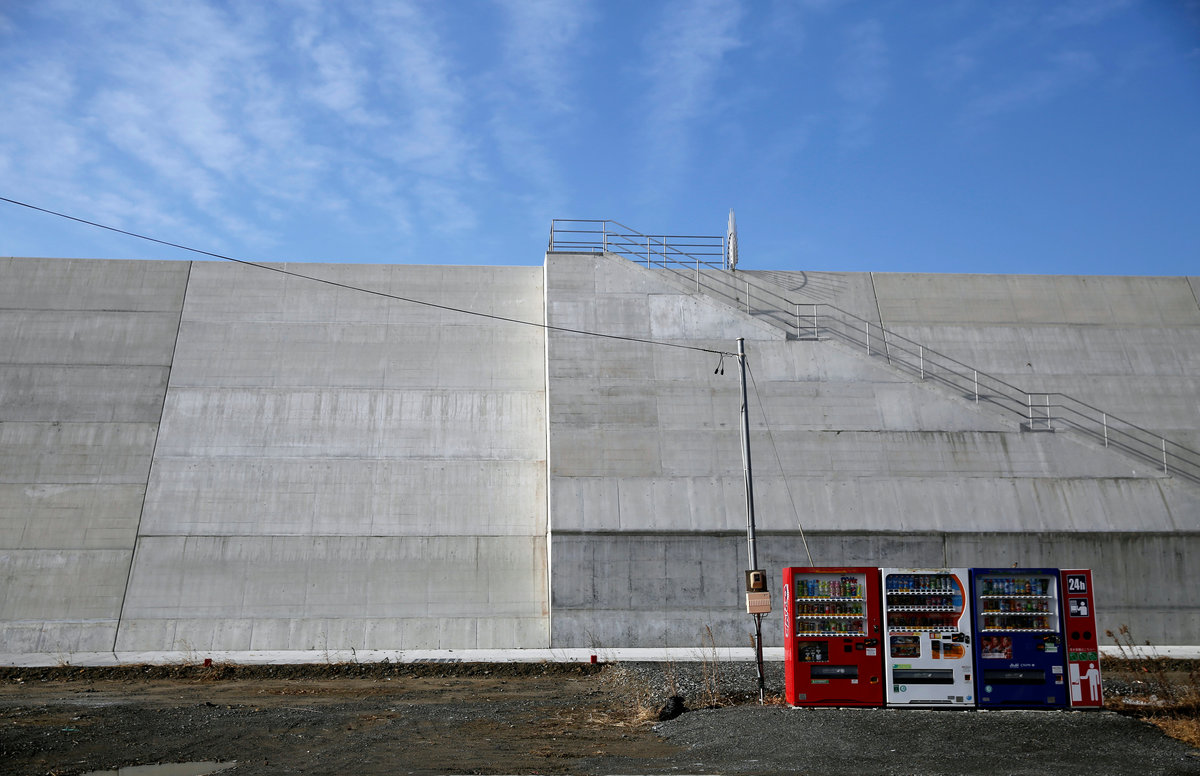
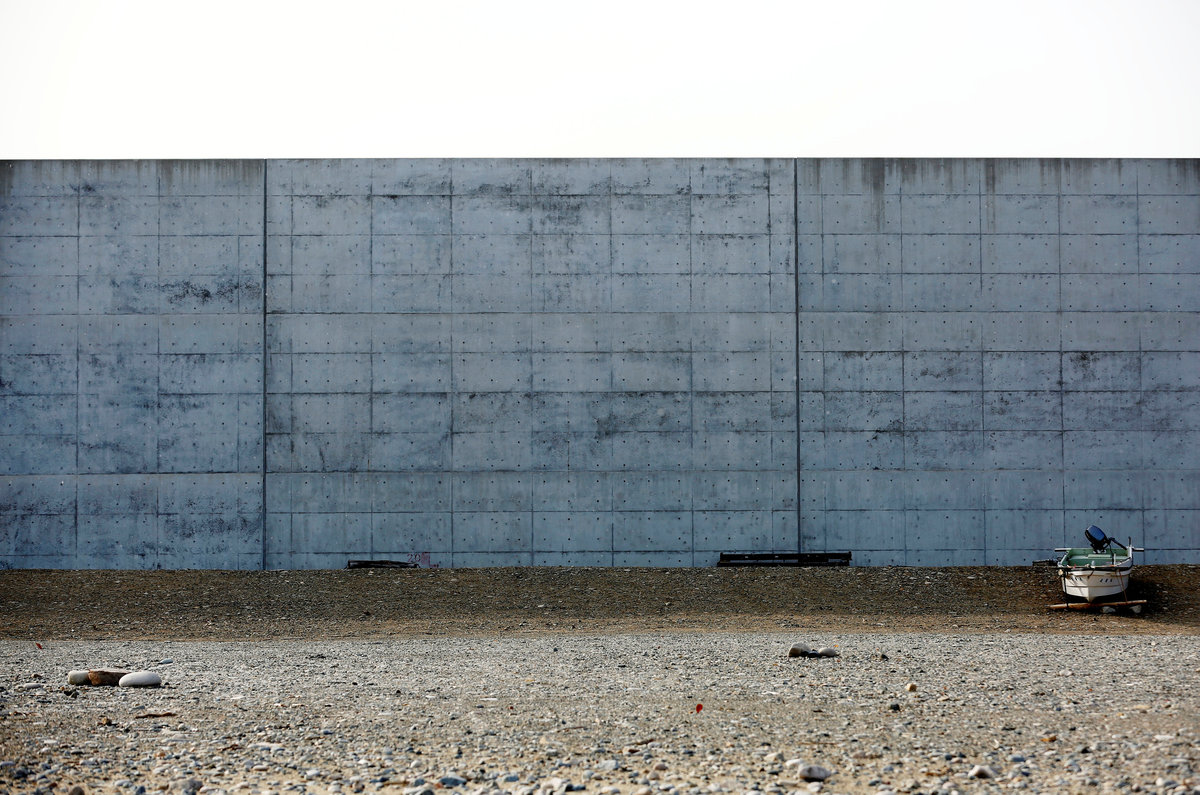
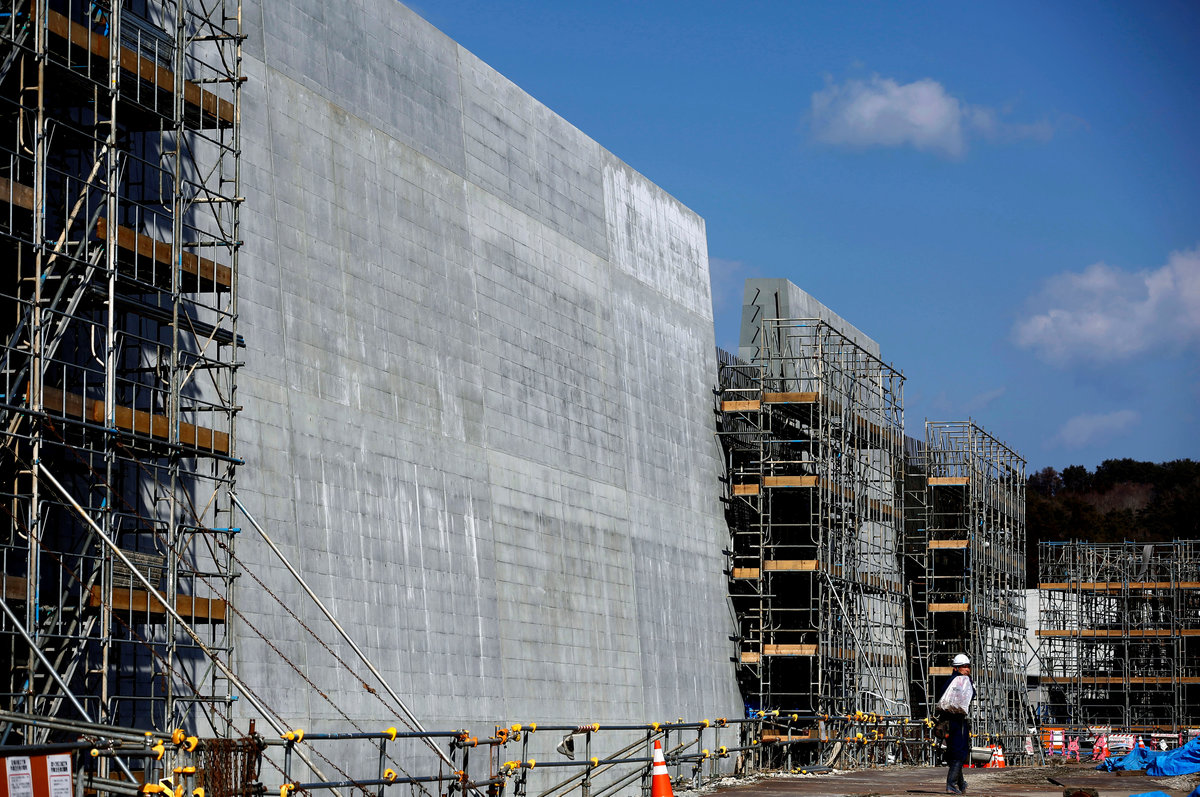
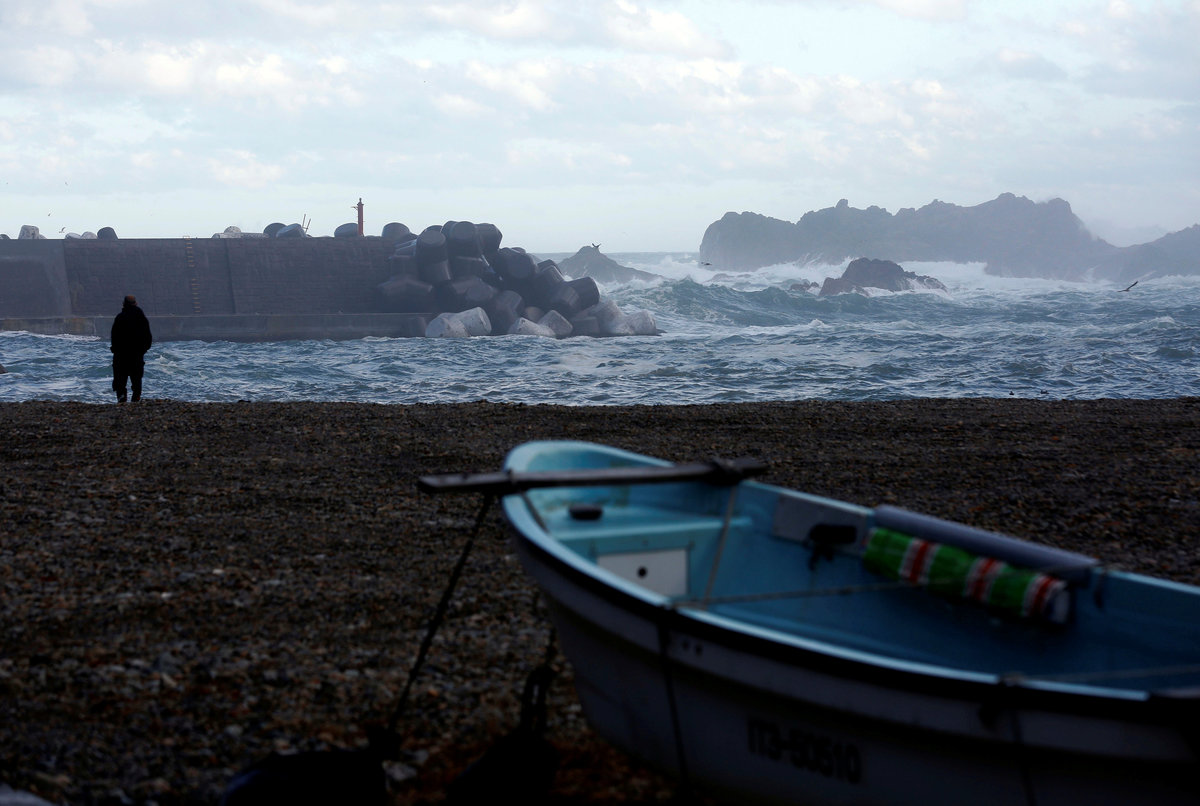
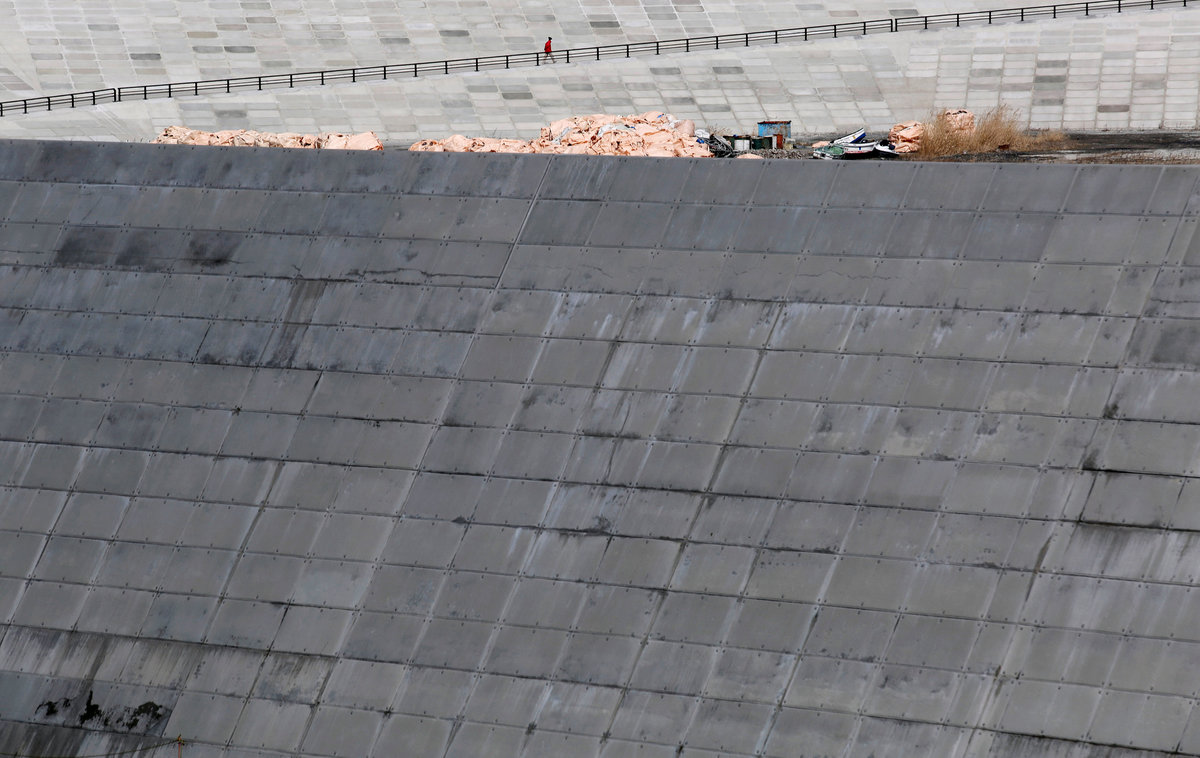
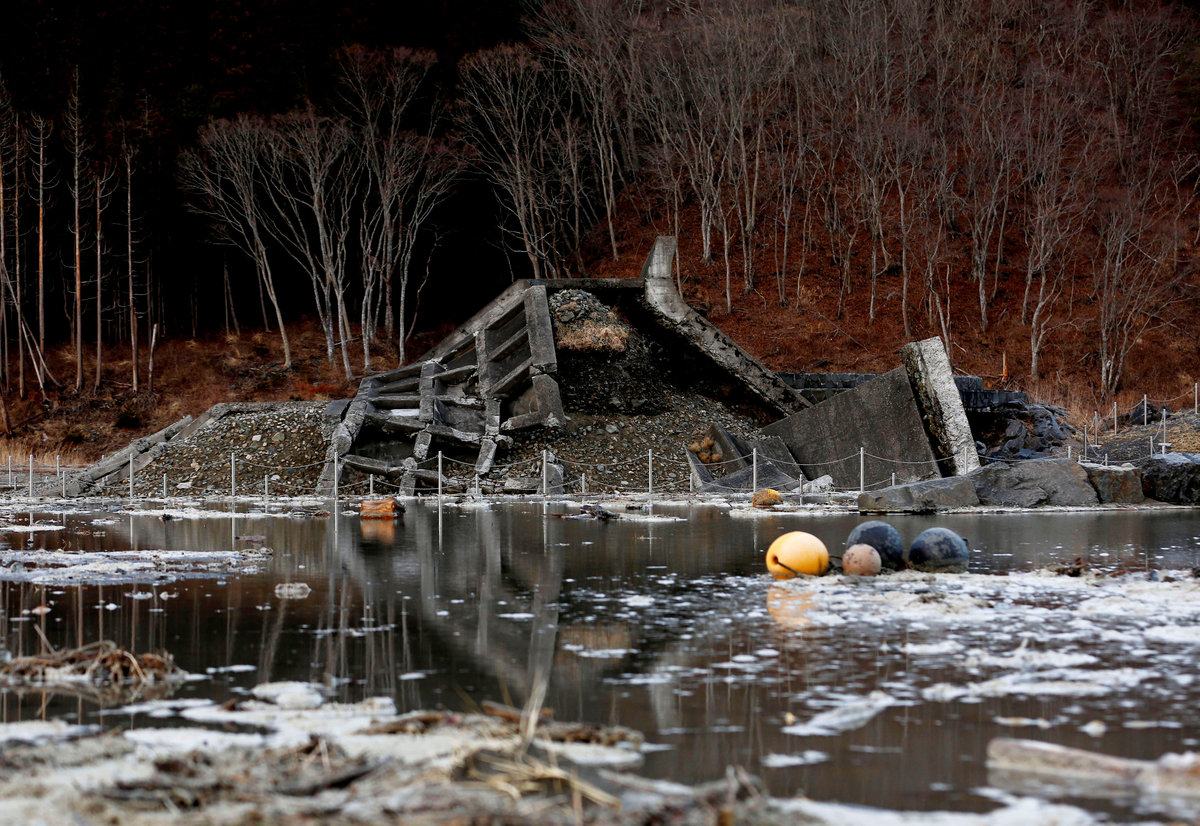
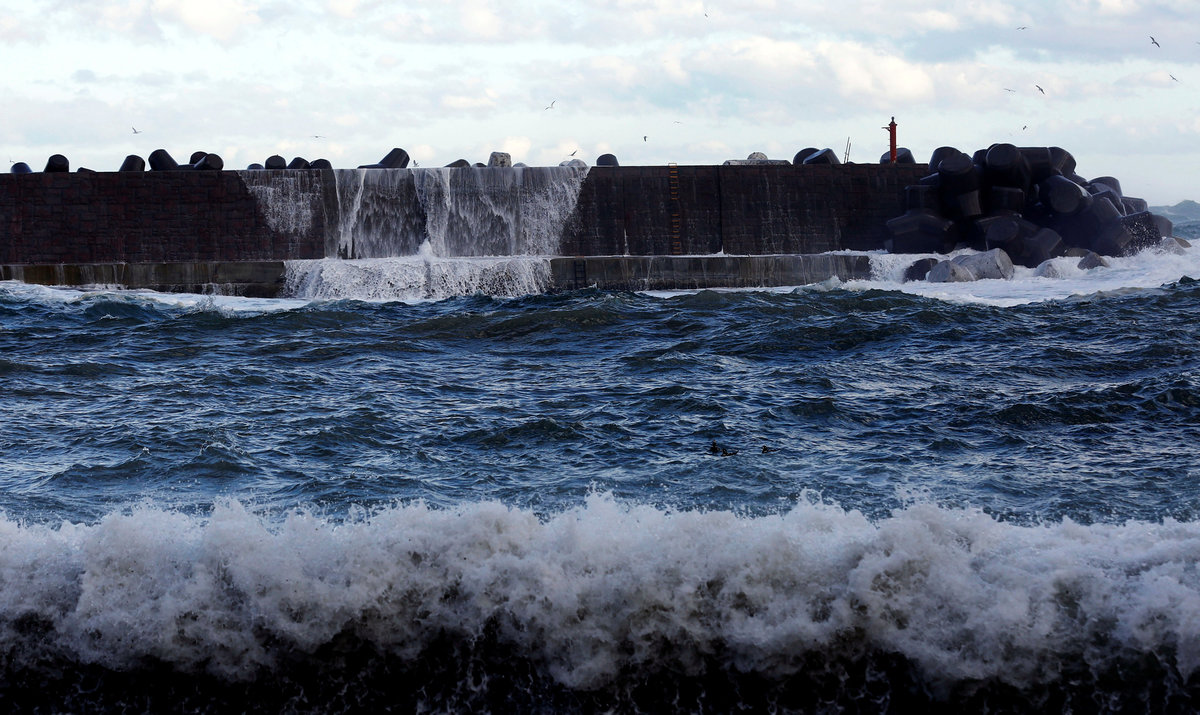
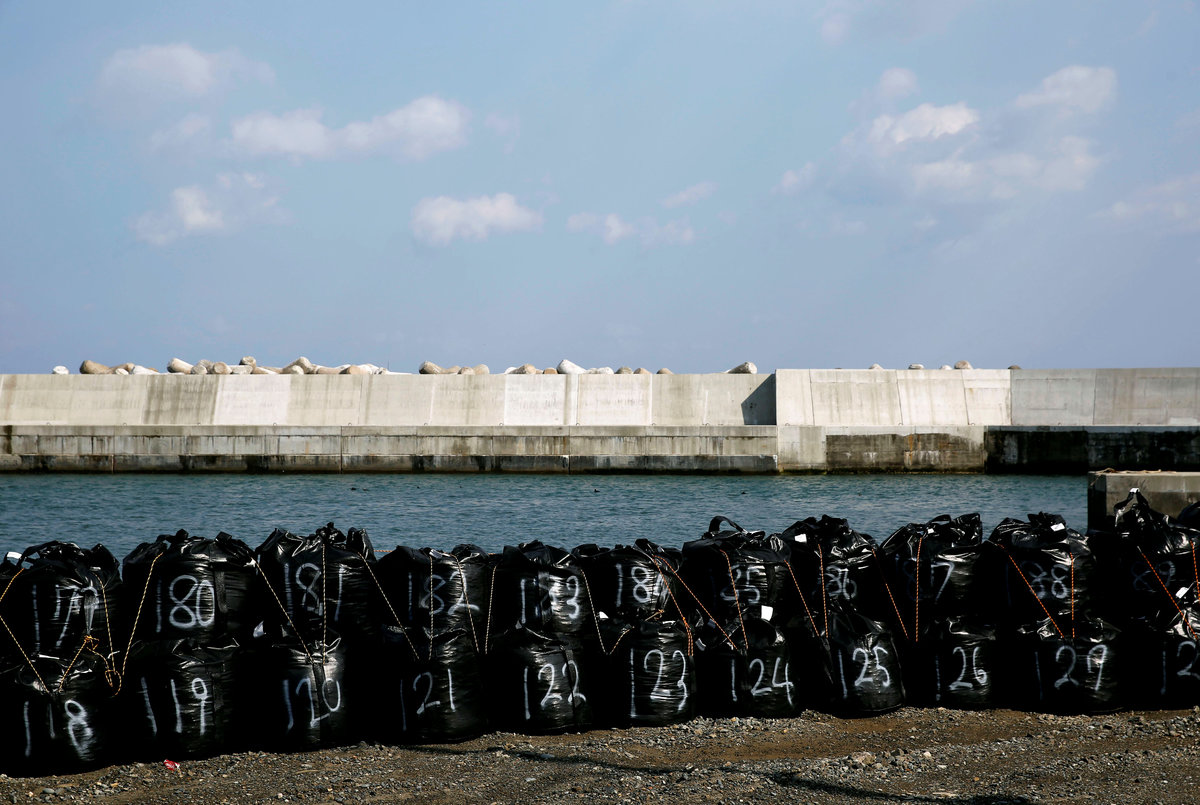
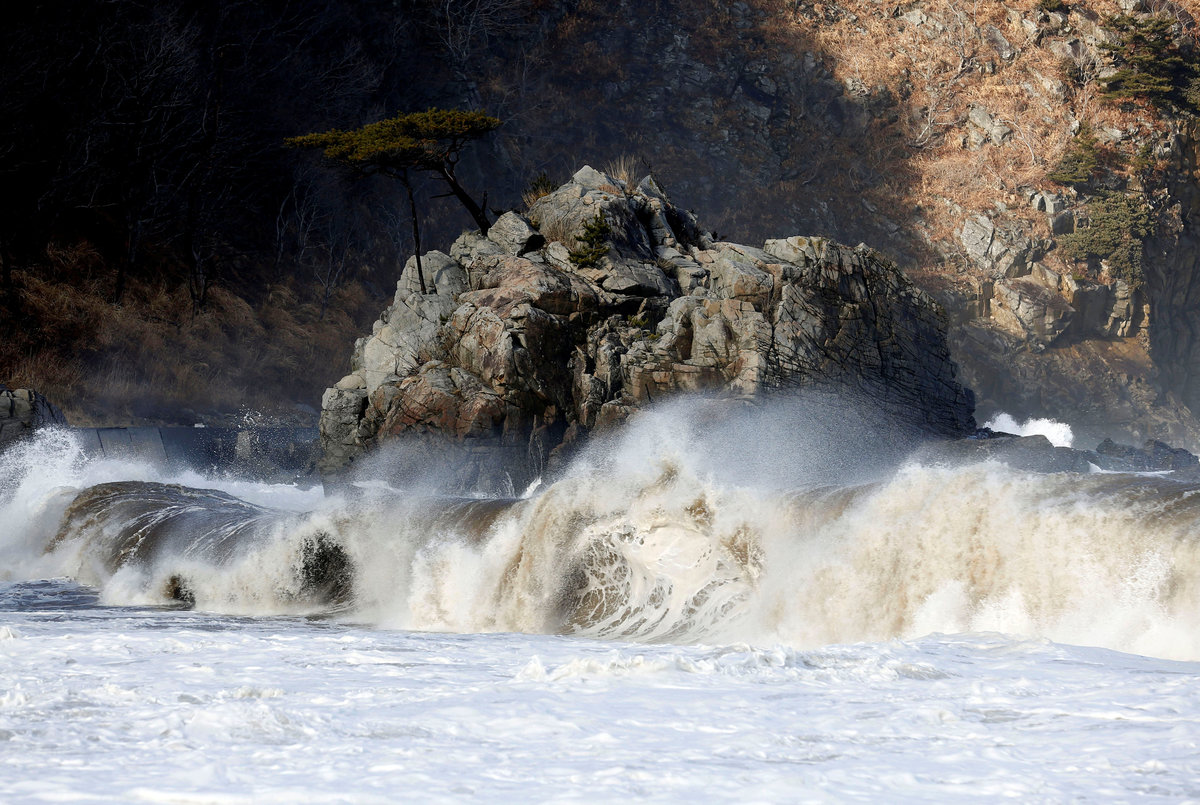
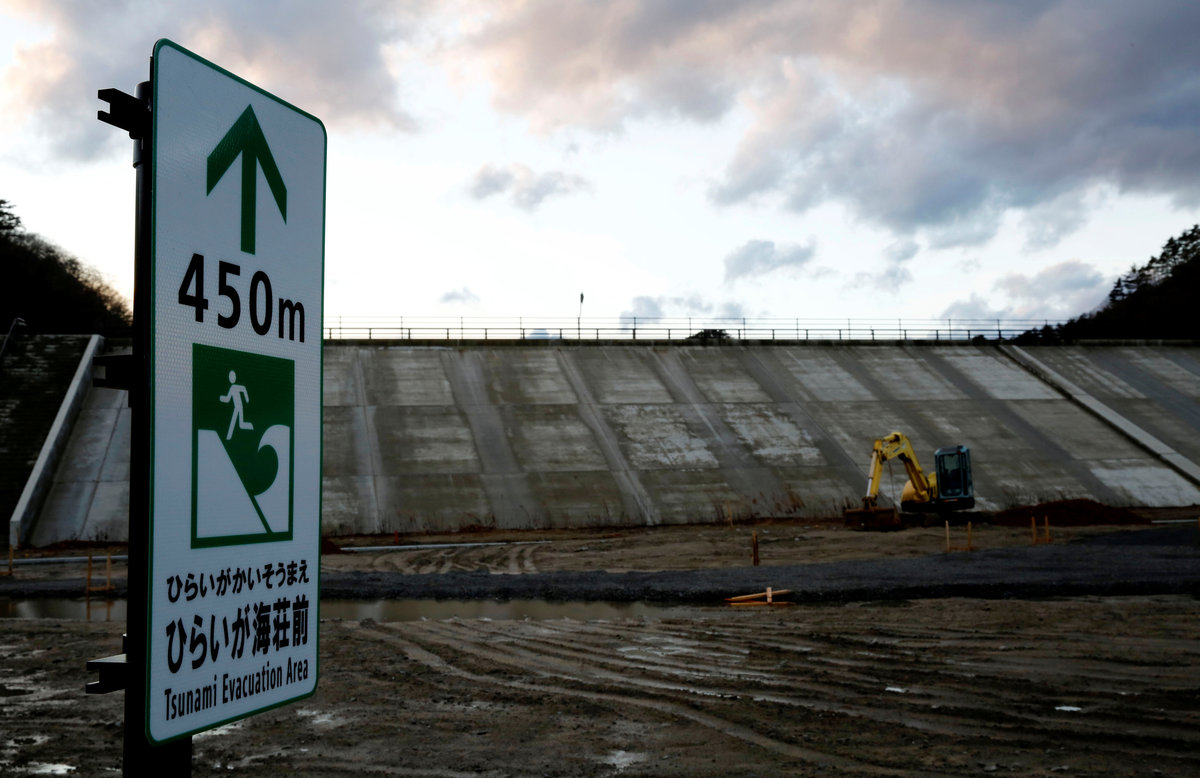
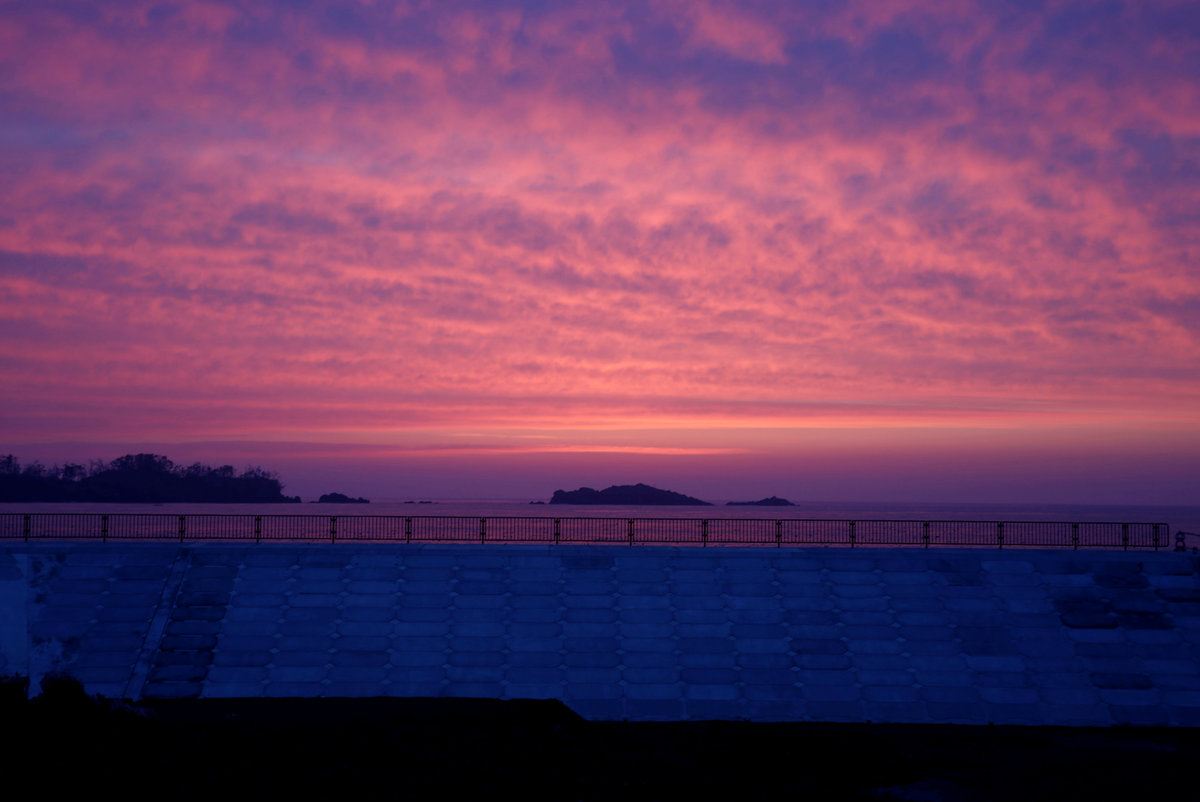
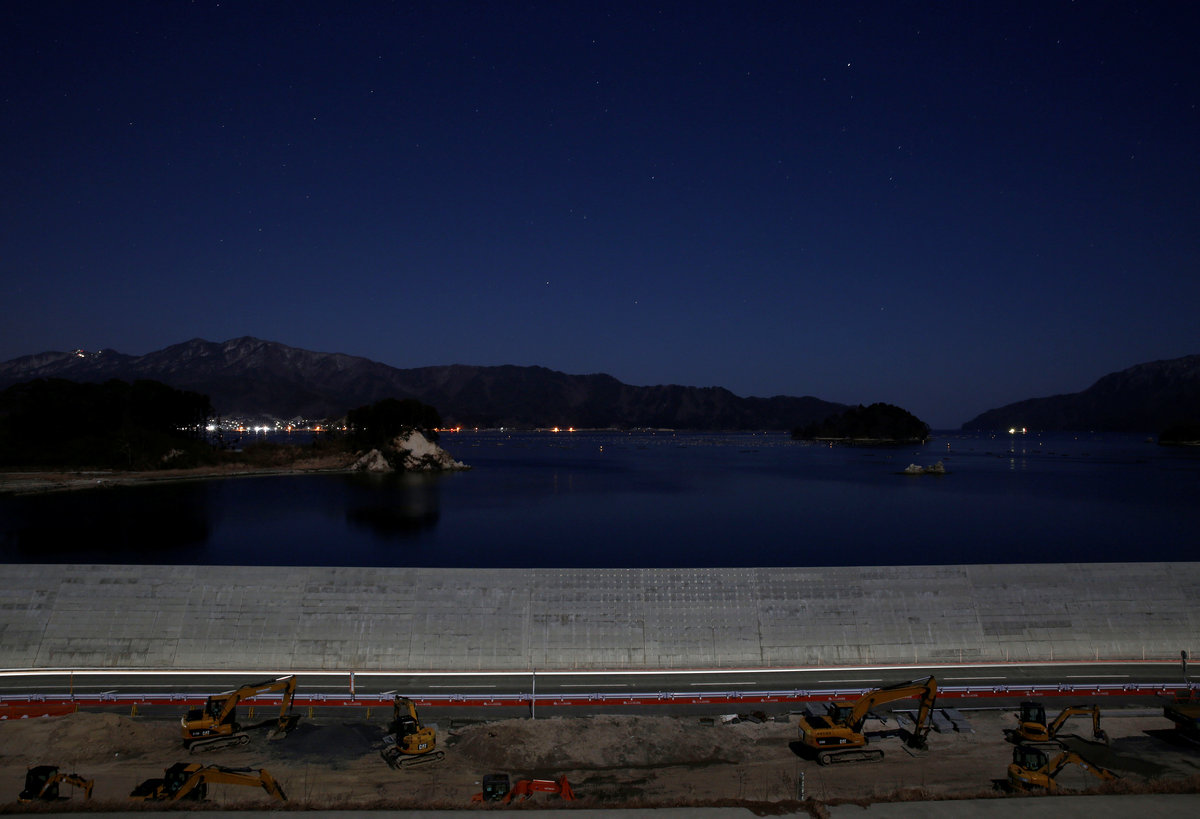
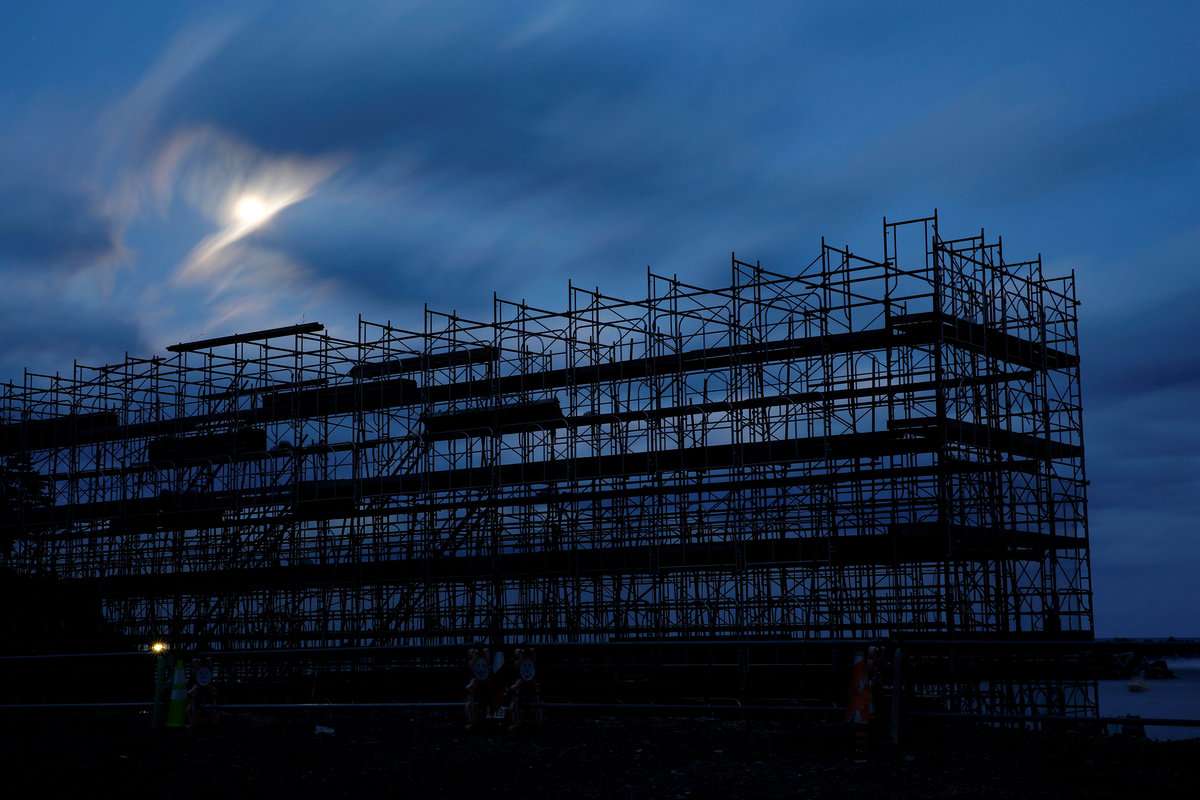
A seawall is illuminated at night in Yamada village, Iwate Prefecture, Japan, March 2, 2018. REUTERS/Kim Kyung-Hoon Vending machines stand in front of a seawall at Hirota Bay in Rikuzentakata, Iwate Prefecture, Japan, March 4, 2018. REUTERS/Kim Kyung-Hoon A boat is parked in front of a seawall at Onappe beach in Miyako, Iwate Prefecture, Japan, March 2, 2018. REUTERS/Kim Kyung-Hoon A man looks through a window of a seawall at a port in Kesennuma, Miyagi Prefecture, Japan, March 4, 2018. REUTERS/Kim Kyung-Hoon A labourer works at a construction site where a seawall is being built in Taro town, Iwate Prefecture, Japan, March 2, 2018. REUTERS/Kim Kyung-Hoon A fisherman watches waves hitting a seawall in Tanohata village, Iwate Prefecture, Japan, March 1, 2018. REUTERS/Kim Kyung-Hoon A man walks along a path on a seawall in Yamada village, Iwate Prefecture, Japan, March 3, 2018. REUTERS/Kim Kyung-Hoon The Aketo seawall which was damaged in the 2011 tsunami is seen in Tanohata village, Iwate Prefecture, Japan, March 1, 2018. REUTERS/Kim Kyung-Hoon A high wave hits a seawall in Tanohata village, Iwate Prefecture, Japan, March 1, 2018. REUTERS/Kim Kyung-Hoon Large bags containing construction materials are placed at a construction site to reinforce and extend an old seawall in Tanohata village, Iwate Prefecture, Japan, March 2, 2018. REUTERS/Kim Kyung-Hoon A wave breaks at Fudaihama beach in Fudai, Iwate Prefecture, Japan, March 1, 2018. REUTERS/Kim Kyung-Hoon A sign notifying a tsunami evacuation area stands in front of a seawall in Tanohata village, Iwate Prefecture, Japan, March 1, 2018. REUTERS/Kim Kyung-Hoonn The sun rises over a seawall at a beach in Kesennuma, Miyagi Prefecture, Japan, March 4, 2018. REUTERS/Kim Kyung-Hoon A seawall is pictured at night in Yamada village, Iwate Prefecture, Japan, March 3, 2018. REUTERS/Kim Kyung-Hoon A seawall under construction is surrounded by scaffolding in Tanohata village, Iwate Prefecture, Japan, March 1, 2018. REUTERS/Kim Kyung-Hoon A woman walks on a road close to a seawall in Ofunato, Iwate Prefecture, Japan, March 3, 2018. REUTERS/Kim Kyung-Hoon Aketo seawall which was damaged in the 2011 tsunami is seen from a newly built seawall in Tanohata village, Iwate Prefecture, Japan, March 1, 2018. REUTERS/Kim Kyung-Hoon
Sign up to read this article
Read news from 100’s of titles, curated specifically for you.