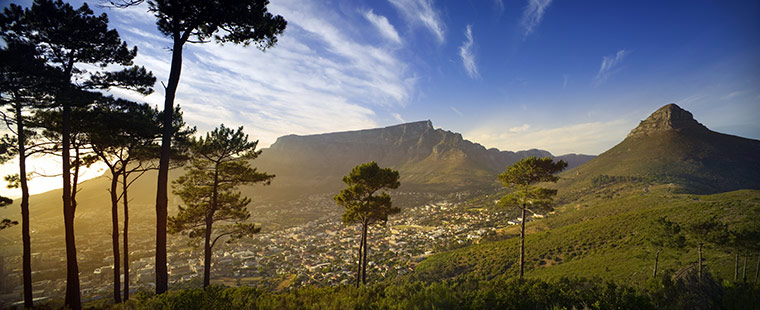
Superlatives overflow when it comes to the Amazon rainforest. Despite being cut down at an alarming rate, it still covers 2.7 million square miles. Growing across nine different countries, it represents over half of the planet's remaining rainforests, making it the largest and most biodiverse tropical rainforest in the world. The forest is fed by the Amazon river, the largest river in the world by volume, which also has the biggest drainage basin on the planet. Like the Great Barrier Reef, a must for the top sevenPhotograph: Theo Allofs/CorbisThe Aussies are justifiably proud of the largest coral reef on earth – the Great Barrier Reef. It can be seen from space and is believed to be the world’s biggest single structure made from living organisms. Composed of some 3,000 individual reefs and 900 islands, it stretches for 1,616 miles and is strung out over 133,000 square miles of the Coral Sea in Queensland, north east Australia. Already a World Heritage site, it generates $1bn a year in tourism revenue. A definite in the top seven Photograph: AlamyThe only natural site on the planet to have a constellation of stars named after it: Mensa (table in Latin). Table Mountain is a South African icon. The flat-topped mountain has withstood six million years of erosion and hosts the richest, yet smallest floral kingdom on earth with over 1,470 plant species. It is the most recognized site in Cape Town and is known as the gateway to Africa, owing to its unique flat-topped peaks that reach 1,086 metres above sea level Photograph: Jon Hicks/Corbis
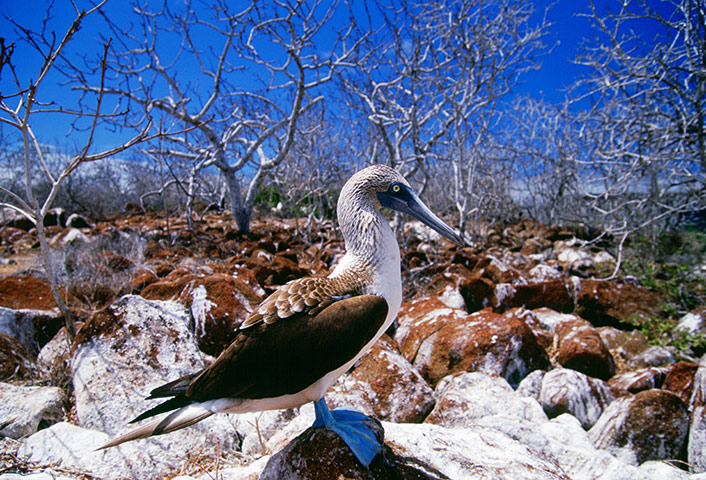
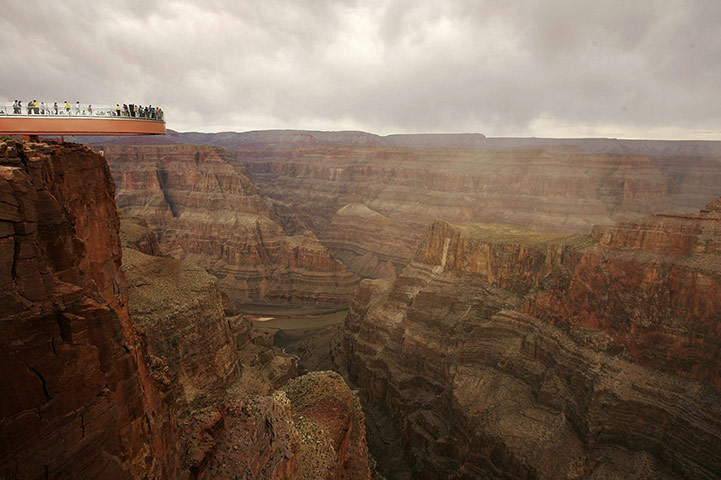
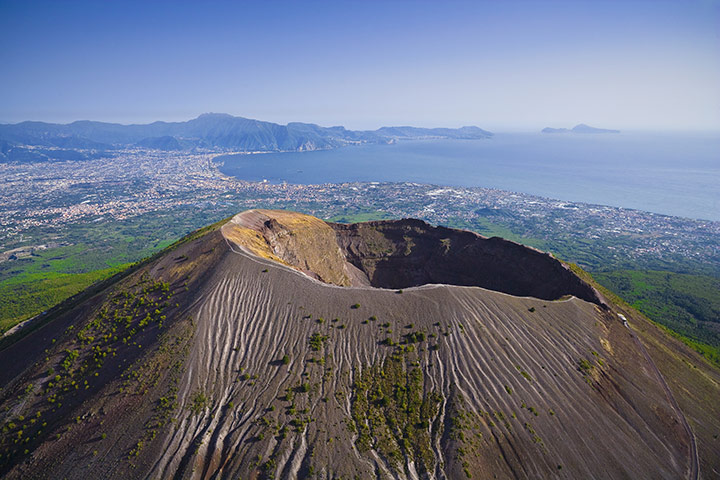
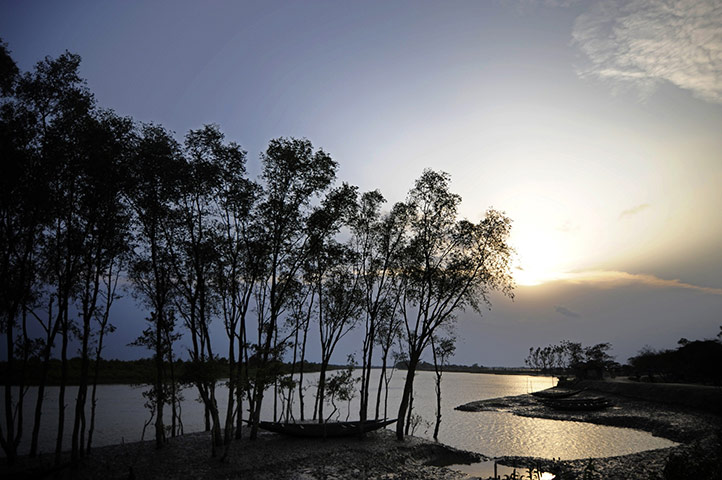
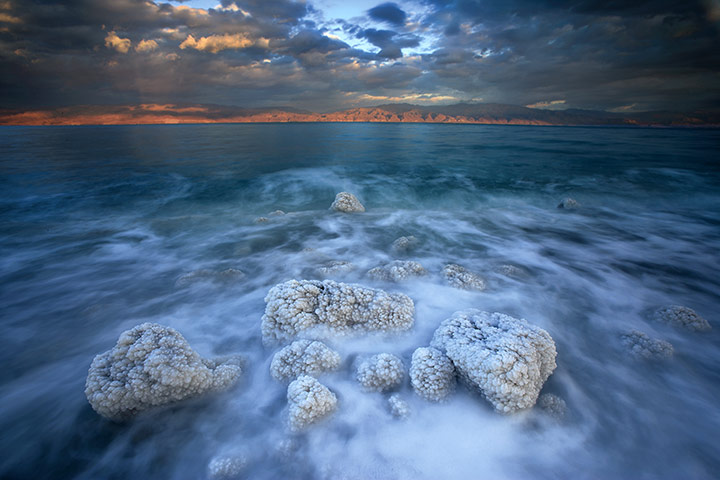
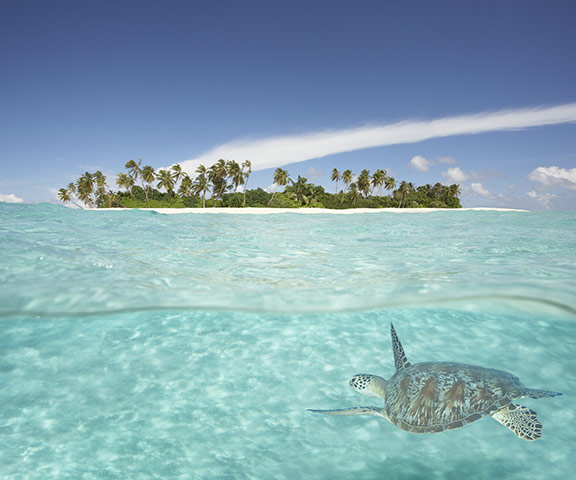
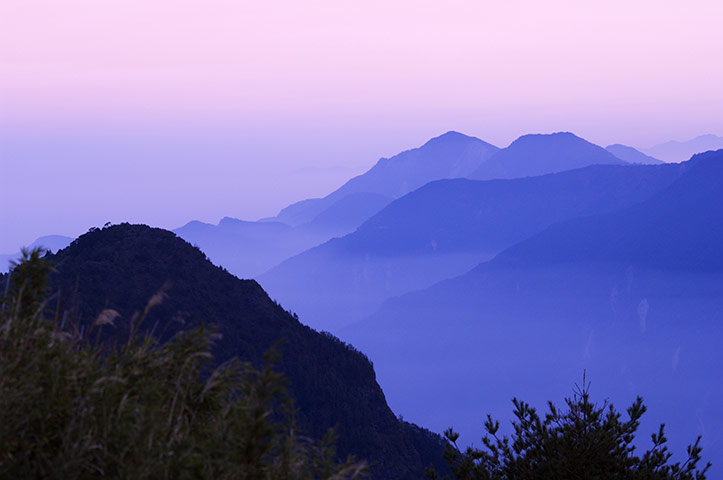
Famed as being the inspiration for Darwin’s theory of evolution by natural selection, the Galapagos Islands are an archipelago of volcanic islands distributed around the equator, 600 miles west of Ecuador in the Pacific Ocean. They are famed for their vast number of endemic species and are already a World Heritage Site. Tourism today is strictly controlled on the islands, having risen from just over 41,000 people visiting in 1991 to over 180,000 today. The islands are apparently a favourite haunt of Andrew Marr (which may or may not be a plus point). Darwin would turn in his grave if the islands didn’t make the top sevenPhotograph: Tim Graham/Getty ImagesThe playground of Theodore “Teddy” Roosevelt, the 26th President of the United States, who liked to hunt there, the Grand Canyon was created by the Colorado River over a period of 6 million years. It is 277 miles long, ranges in width from 3.7 to 18 miles and has a depth of more than 1 mile. The area was first inhabited by Native Americans, who built settlements within the canyon and its many caves. A top ten contender if for no other reason than if the United States does not have a contender, most Americans will ignore the competitionPhotograph: David McNew/Getty ImagesWith a temperament similar to that of Italy’s soon-to-be-former PM Silvio Berlusconi, Mount Vesuvius is a volcano east of Naples. It is the only volcano on the European mainland to have erupted within the last hundred years, but is best known for its eruption in AD 79 that led to the destruction of the Roman cities of Pompeii and Herculaneum. It has erupted many times since and is today regarded as one of the most dangerous volcanoes in the world. Likely to be the only European wonder in the top seven Photograph: Alberto Incrocci/The Image Bank/Getty ImagesThe largest mangrove forest in the world, the Sundarbans, meaning “beautiful forest” in Bengali, has never got the recognition it deserves. A delta at the mouth of the river Ganges, the Sundarbans spread across parts of Bangladesh and West Bengal, India. They feature a complex network of tidal waterways, mudflats and small islands of salt-tolerant mangrove forests. The area supports a wide range of fauna, the most famous of which is the Royal Bengal tiger. Should be in the top ten if for no other reason than to put it on the map Photograph: Munir Uz Zaman/AFP Creative/Getty ImagesThe lowest point on the surface of the Earth, tourists come from around the world to float in the Dead Sea, a lake lying between the countries of Israel and Jordan. At 418 m (1,371 ft) below sea level, it is almost nine times as salty as the ocean, which makes it impossible for most life to exist in it. However, it is not completely dead – some types of bacteria are able to live in the water. A dead cert for the top seven Photograph: Michael Melford/National Geographic/Getty ImagesThe Maldives deserve to be in the top seven because they are among some of the most beautiful but low lying islands in the world. With the sea level rise associated with climate change, they could well not be here in a couple of generation’s time. The Maldives are composed of 1,192 small islands with stunning coral reefs strung out like pearls across the Indian Ocean, 435 miles south-west of Sri Lanka. Two hundred of the islands are inhabited and over 90% of the islands' GDP comes from tourismPhotograph: Zac Macaulay/The Image Bank/Getty ImagesYushan, meaning “Jade Mountain”, is a central mountain range in Taiwan. It is also the name of the highest point of the range, 3,952 m above sea level and is part of Yushan National Park, known for its diverse wildlife and ecology. The environment around Yushan ranges from sub-tropical forests at its base to alpine conditions at its peak. Despite the enmity between Taiwan and China, the Chinese have been encouraging their residents to vote for it, so it could easily place in the top seven Photograph: Christian Kober/AWL Images/Getty Images
Sign up to read this article
Read news from 100’s of titles, curated specifically for you.