This week allegations surfaced that the prime minister, David Cameron, once inserted a private part of his anatomy into the mouth of a dead pig. Among the veritable supernova of pig-based mockery that occurred on Twitter and beyond, many referenced Peppa Pig, Piglet, Miss Piggy and more. So now countless people have associations between beloved childhood characters and the Prime Minister’s private regions, souring many a fond memory.
But you don’t need debauchery of world leaders to soil happy childhood memories, not when you’ve got science. And with that blatant shoehorning of a topical reference into a preconceived article, here are seven popular things aimed at children that are absolutely ruined by the application of scientific reality.
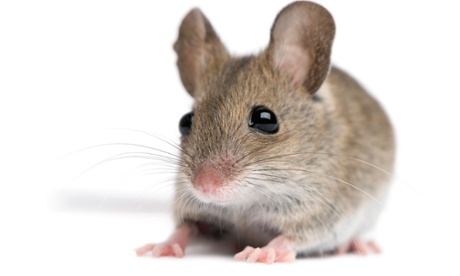
Mice don’t like cheese
From Tom and Jerry to Pinky and the Brain, children are told that all mice love cheese. Chip ‘n Dale’s Rescue Rangers even had Monterey Jack, a large mouse named for, and with a genuine debilitating addiction to, cheese.
Sadly, this is nonsense. Mice don’t like cheese. Why would they? As smart as they can be, mice still see the world at a largely instinctive level. Cheese is entirely man-made. It doesn’t occur in nature. With their limited understanding but powerful noses, mice would perceive cheese as an alien substance that stinks like a chemical factory, not some irresistible foodstuff.
It’s not that mice never eat man-made foods; they’re quite partial to sugary things. But sugar is recognised by many creatures. Cheese? Not so much.
See also: rabbits and carrots.
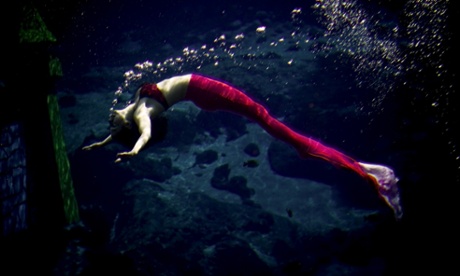
Mermaids almost certainly can’t exist
My cousin used to watch The Little Mermaid all day every day. Children love mermaids. A race of beautiful half-fish people living beneath the sea, while we trudge about in our gravity-restricted gaseous environments. Who wouldn’t like that?
Unfortunately, mermaids (or merfolk, to include the not-so-commonly-referenced males) almost certainly can’t exist. Evolution doesn’t work that way. Mermaids seem perfectly balanced between not just two species but two different animal classes. It’s impossible to envisage the environmental circumstances that would have persisted long enough in an aquatic environment to lead to 100% fish-based locomotion but human skin, limbs, hair, cognition etc.
Perhaps they’re humans that evolved on land but returned to the sea? But the aquatic ape theory has never had any serious evidence to support it. Even if it did, one thing that most sea-faring mammals have to keep them insulated and protected in the freezing ocean is blubber, so even if mermaids did exist, it’s unlikely they’d be so “svelte”.
Also, why breasts? How are you meant to feed babies via secreted milk in a liquid environment? Unless they’re more for buoyancy.
Saying that, sea mammals like whales seem to manage it. Would be interesting to see a seashell bra that could be worn by an adult whale though.
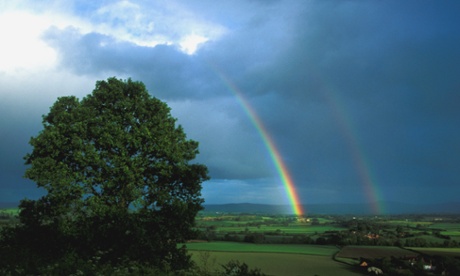
You can never reach the end of the rainbow
What’s at the end of the rainbow? Gold? Treasure? A magical land? Children are presented with numerous answers for this question.
The actual answer is, nothing, because rainbows have no “end”. They’re not physical objects in the truest sense, they’re the result of the properties of light being filtered through airborne water droplets coupled with the perception of the observer. You can no more find the end of a rainbow than you could lasso a unicorn, or weigh time.
Arguably, “the end of the rainbow” could be said to be the 100% acceptance of homosexuality in everyday society, removing the need for symbols. While not what is normally considered “treasure”, this would be immensely valuable.
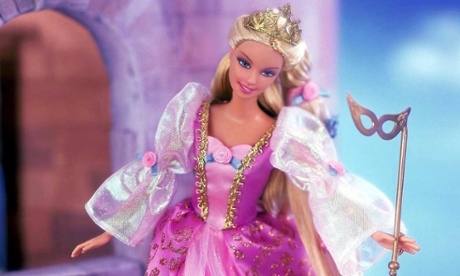
It’s impossible for every young girl to be a princess
If you’ve anything aimed at young girls, odds are it featured princesses at some point. Disney seems to be obsessed with princesses. Barbie includes princesses in impossible species to drive home their brilliance. Being a princess is something all young girls should apparently aspire to.
Scientifically, there’s nothing to say that no young girl couldn’t become a princess. Mathematically though, it’s literally impossible for every young girl, even just in the UK, to become a princess.
To be a princess, you need to a) be born a princess, or b) marry a prince. If you’re not born one, that’s one option is already gone, so you need to marry a prince. Even overlooking the unpleasant “your ultimate goal in life should be to marry a rich privileged man” implications of this, there are currently only 44 monarchies in the world, boasting just 48 princesses. The UK Monarchy covers 16 of those due to the Commonwealth.
As such, there are nowhere near enough princes to go around. If every young girl is compelled to want to marry one, this could lead to some hellish “Hunger Games” style dystopian scenario where they compete to the death to achieve this. This does sounds like a decent plot for a film, but probably not a Disney one.
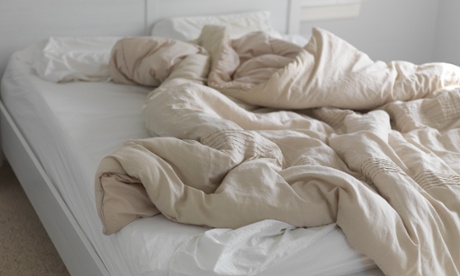
Blankets offer no protection whatsoever
A default child defence against scary things is hiding under the blankets. Or “covers”, if you prefer. However, this offers no protection against danger at all. If anything, it’s makes thing worse by obscuring our useful heightened sensory information when faced with a threat.
A typical bed cover is designed to be impermeable only to body heat via layers of air pockets in feathers or similar light material. Anything with a noticeable physical mass would be untroubled by such a barrier. Even small things like rats and insects could likely find their way through the loose, bunched material. Something big and capable enough to warrant hiding from in the first place, e.g. a big hairy, bear-like monster, will have no problem tearing through it to the soft, quivering mass within.
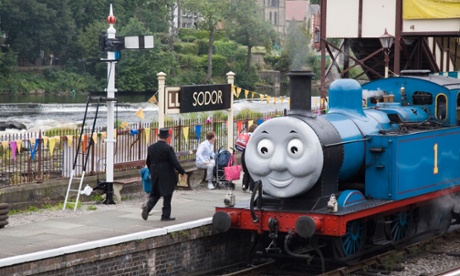
A conscious vehicle would have a hellish existence
Thomas the Tank Engine is one of the world’s most popular children’s characters, inspiring many imitators.
Thomas is a cheerful little engine. This is surprising as the engine’s lives should be quite torturous. Each engine has at least a driver, meaning they have no control over their own bodies. They are in effect paralysed, totally at the mercy of those who operate them, who own them. Even if they did have some modicum of autonomy, they’re engines; they can only go where the rails allow them to travel. And who decides where the rails go? Their human owners.
If they were inanimate this wouldn’t be an issue, but they are totally aware of their situation. They get to experience the psychological problems of paralysis on top of the immobility. Despite all this, Thomas and his friends are still made to work every day. A race of fully conscious but incapacitated beings, forced to work to earn their keep. It’s enough to make Iain Duncan Smith feel a warm happy glow.
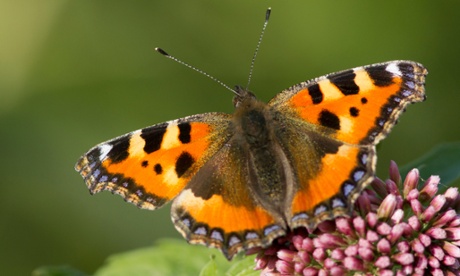
Caterpillars die so butterflies can live
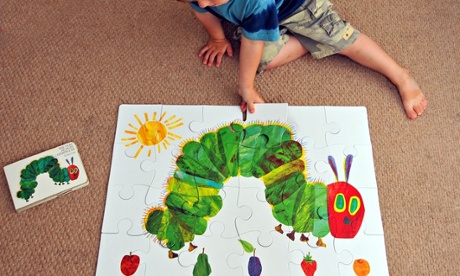
The caterpillar-turning-into-a-butterfly reference is rife in children’s stories and media. What could be more heart-warming than seeing a dowdy caterpillar transform into a beautiful colourful butterfly and take off into the sky? There’s a metaphor for us all there about patience and working to reach your goals.
That is, as long as you’re willing to die. Every children’s portrayal of metamorphosis suggests the caterpillar undergoes something akin to reconstructive surgery, emerging from the cocoon with some useful new appendages but still the same being. This is wrong. With very few exceptions, the whole of the caterpillar literally dissolves, so a few specialised cells known as imaginal disks can feed off the resultant slop and grow into butterflies.
It’s not like a caterpillar getting a cool upgrade, it’s more like a Xenomorph bursting out of a human’s chest, killing them in the process. And this is acceptable for children, is it?
[EDIT: The line about whale’s feeding their young was added at 12:41pm. Dean Burnett apologises for the oversight and blames lack of sleep, ironically caused by his baby daughter’s erratic feeding schedule]
Dean Burnett’s daughter was born last week, so he has been somewhat overwhelmed with children’s products and it’s clearly getting a bit much. He’s on Twitter, @garwboy