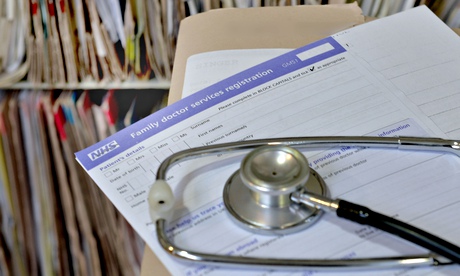
Working as a GP is like being a celebrity or a war zone; you’re never out of the news. Today’s front-page story is about a surgery in Devon that produced a leaflet to signpost patients to different local services, rather than making an appointment with one of its doctors. Here are seven reasons why they might have done this:
To be helpful
There are a lot of sources of help now, and it can be confusing to know exactly what is on offer. The NHS Choices website directs people to appropriate services, with a handy list of local options. People may not realise they can self-refer for physiotherapy or counselling services, or to find the best place to go with a bad cut or sprained ankle.
There’s no time to chat now
You may think that you’d rather pop into your GP, talk through the problem and then be directed if appropriate. But GPs have a lot of demands to juggle, and, sadly, chatting to patients has had to go.
They are busy being inspected
Since Dr Harold Shipman killed at least 15 patients, and possibly up to 150, doctors have been inspected, appraised and assessed more than ever. Of course, as the shocking case of Myles Bradbury – the haematologist sentenced this week for sexually abusing young patients – shows, indescribably dreadful misconduct can still take place. Greater inspection and transparency is generally welcomed by patients and professionals alike, despite the extra pressure it puts on services.
The Care Quality Commission is charged with inspecting all GP surgeries, starting with those who have the lowest score in an intelligent monitoring system that looks at data. The Devon practice in the news today has reportedly done very well. It is in a low-risk band and had a good inspection. That’s a lot of hoops it has jumped through; it takes time as well as care to score so well.
It’s hard to know what’s an appropriate problem
You might think that instead of sending patients a signposting leaflet, GPs should challenge people who keep using their services inappropriately. But it’s hard to know what constitutes as inappropriate attendance. People often come to my surgery with relationship problems, work-related stress, teenage angst, unhappiness at school: all manner of problems that affect their wellbeing, rather than a designated illness.
It’s scary to challenge patients.
Which GPs dare to cause offence by suggesting that the path to true happiness may not be found within their surgery? With the new Family and Friends test being rolled out now, GP websites will have to invite patients to answer this question: “How likely are you to recommend our service to friends and family if they needed similar care or treatment?”
This is in addition to the TripAdvisor-style opportunity to say whatever you like about your surgery on NHS choices – not to mention the patient satisfaction survey of a random sample of the public, with results fed to the Care Quality Commission and released in the public domain.
Raised expectations
If I could do one thing to free up GP time, I’d stop other agencies passing their work on to us: schools that can’t cope with unruly kids who tell the parents to go to the GP to get them assessed for ADHD; businesses whose poor employment practices allow workplace bullying to thrive; and my biggest bugbear of all – private doctors who suggest drugs or treatments that are not usually available on the NHS because they’re not evidence-based or cost-effective.
The BMA guidelines state: “If the medication is specialised in nature and is not something GPs would generally prescribe, it is for the individual GP to decide whether to accept clinical responsibility for the prescribing decision recommended by another doctor.” It is very time-consuming to have a good discussion with an expectant patient about utilitarianism in healthcare versus the rights of the individual. But which masochistic GP is just going to say no, only to read the angry response online.
More to do
People live longer, have more complex diseases and spend less time in hospital than ever before. GPs coordinate their care in the community – it’s a lot of work, and that’s fine. But it would help to be left to get on with the core job. And if a leaflet helps, then why not?