Targets relating to food, agriculture, natural resources and rural development are prominent among new Sustainable Development Goals (SDGs) adopted by world leaders at a special summit in New York on 25 September 2015.
A total of 17 SDGs feature in the report, Transforming Our World: The 2030 Agenda for Sustainable Development, and will succeed the eight millennium development goals that reach their target date at the end of 2015.
Here are seven points describing FAO’s focus to end poverty and hunger by 2030, supporting countries in the more than two-year process of deciding a post-2015 development agenda.
Leave no-one behind
The Sustainable Development Goals offer a vision of a fairer, more prosperous, peaceful and sustainable world in which no one is left behind.
Fruit of the planet
In food – the way it is grown, produced, consumed, traded, transported, stored and marketed – lies the fundamental connection between people and the planet, and the path to inclusive and sustainable economic growth.
Ending hunger and poverty top of the agenda
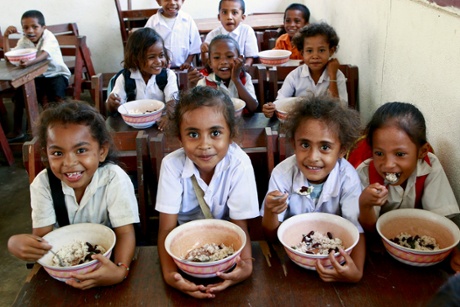
Without rapid progress in reducing and eliminating hunger and malnutrition by 2030, the full range of sustainable development goals cannot be achieved. At the same time, reaching the other SDGs will make easier the task of ending hunger and extreme poverty. We can advance faster if we work together.
Rural battlefield
The battle to end hunger and poverty must be principally fought in rural areas, which is where almost 80% of the world’s hungry and poor live. To do this, we need to show a strong political will while also investing in the critical agents of change – smallholders, family farmers, rural women, fisher folk, indigenous communities and other vulnerable or marginalized people.
Social protection part of the plan
It is possible to eradicate hunger by 2030. This requires a combination of pro-poor investments in sustainable rural development and social protection measures to lift people out of chronic undernourishment and poverty.
Less waste in a land of plenty
There are more people to feed with less water, farmland and biodiversity. We need to transform our current input-heavy food systems to make them more sustainable – including reducing food waste and loss - through better management and improved techniques in agriculture, livestock, fisheries and forestry. Agriculture also has a major role to play in combating desertification and other negative impacts of climate change.
We are the zero hunger generation
FAO with its expertise and resources is well-positioned to support countries in achieving the sustainable development goals of which at least 14 out of the 17 are related to FAO’s work. Together we cannot afford to miss the opportunity of becoming the generation zero hunger.
The SDGs are now expected to become the central reference for each country’s development objectives for the next 15 years.
FAO, whose work supports governments and development partners to design policies, programmes and legal frameworks that promote food security and nutrition, will now take the lead in assisting countries monitor and implement the sustainable development goals.
Content on this page is paid for and provided by FAO, a sponsor of the Guardian Global Development Professionals Network.