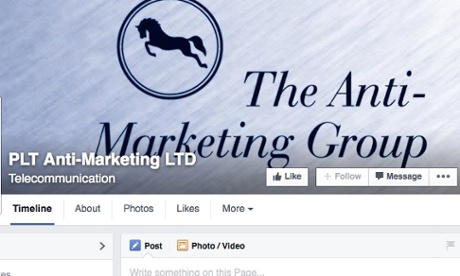
The government has been caught in a legal wrangle as it seeks to close down a firm that charges for offering a service blocking cold-calling and junk mail, using services that cost nothing to sign up to.
PLT Anti-Marketing charges £4 a month to keep the junk mail and unwanted telephone calls at bay – but the same service is provided free by official organisations.
In April 2013, the Department for Business, Innovation and Skills (Bis) presented a winding up petition to close down the business in the public interest. However, despite six court hearings the issue still hasn’t been resolved.
Now a court of appeal judge has questioned whether PLT’s practice is unlawful after all, suggesting regulations do not require a trader to inform a consumer about the availability of cheaper alternative services. Lord Justice Briggs quashed a judge’s earlier finding that PLT breached consumer regulations but called for a full trial.
When customers sign up with PLT, it registers their names with the telephone preference service (TPS) and the mail preference service (MPS), for a monthly charge. But these are services that can both be signed up to free of charge.
The services put subscribers on a list, telling cold callers and direct mailers not to contact them.
PLT offers its customers a complaint service to deal with any companies persisting with calls or mailings – but so do TPS and MPS.
Bis’s winding up petition says: “PLT trades in breach of Regulation 6 of the [consumer protection from unfair trading regulations 2008 (CPUTR)] by failing to inform members of the public prior to entering into a contract with those individuals and requiring payment that those individuals can obtain a service similar to the service offered by the company free of charge through registration with the TPS and MPS.”
Bis started investigating PLT in October 2012, but one judge noted that its practices had been a “live issue” since at least March 2010.
To avoid being wound up, PLT gave a court undertaking in May 2013 that it would not continue with its business without telling potential customers (which it cold-calls itself) that the free service was available.
In a hearing at the Manchester district registry in October 2013, Judge Hodge QC said PLT’s practice was in breach of the regulations, which say there should be no “misleading omissions” harming consumers’ economic interests when firms sell them services.
He said: “I accept, the company’s reluctance to tell customers that the two preference services can be obtained for free can only be explained on the basis that the company fears that to do so would have a detrimental effect upon its business.”
A full trial has been held up while PLT tries to have the 2013 undertaking lifted and a modified version put in place. PLT wants to have its sales team say that it uses TPS and MPS but still not be required to tell potential customers that they are free services.
In the court of appeal judgment issued this month, the judge refused to allow that.
He said: “In the secretary of state’s view, a business which seeks to charge customers for obtaining … that which the customer could obtain free of charge is a form of scam which ought, if possible, to be prevented in the public interest.”
But he said there was no regulation requiring a company to tell customers how much of a “mark-up” it made or where a cheaper service could be found.
He called for the matter to go to a full trial, saying the issue of whether failure to give customers the information was in breach of regulation 6 needed the intense forensic analysis only achievable at trial.
The Department for Business said: “The company declined the opportunity of an early trial and chose instead to pursue a preliminary issue arising from an allegation in the petition [lifting the undertaking].
“The secretary of state is now in the process of agreeing a legal timetable to resume the hearing.”
PLT’s solicitors have not responded to a request for comment.