Since 2013 there have been 65 attacks on journalists in Serbia and the people responsible for 11 of those incidents — amounting to about 17% of the cases — have been prosecuted.
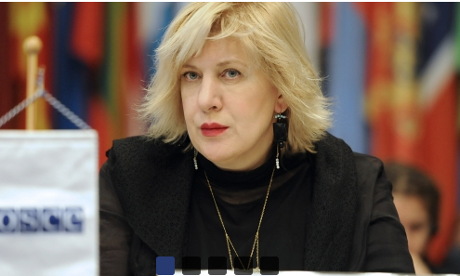
Believe it or not, writes Dunja Mijatović, the media freedom representative for the Vienna-based Organisation for Security and Co-operation in Europe (OSCE), these numbers are positive.
Pointing out that, in global terms, fewer than 10% of the crimes committed against journalists result in prosecution, she argues:
“While the cavalier attitude by law enforcement and authorities to go after criminals gave rise to the phrase ‘impunity from prosecution,’ many of us wonder if the term ‘immunity’ might be more apt.”
Against the background of that reality she therefore welcomed the 2014 initiative by the Serbian authorities to establish a commission to support investigations into the deaths of Serbian journalists dating back to 1994.
This included the killing of Slavko Ćuruvija, the owner of the newspaper Dnevni Telegraf and the magazine Evropljanin, who was gunned down in front of his home in Belgrade in 1999. Following the reopening of the case last year four former state security officials are now on trial for his murder.
Mijatović was writing ahead of the annual “international day to end impunity for crimes against journalists” on Monday (2 November), a United Nations initiative from 2013 that she regards as “a landmark.” She continues:
“Setting aside a day to cajole authorities to take the crimes against media seriously can only go so far. That is why the modest successes of the commission in Serbia provide a glimmer of hope that justice can be served.
But in order for societies to provide that safe working environment envisioned by the UN, a systematic array of steps must be undertaken at the local and national level. None of these steps are easy and their ability to succeed is questionable.
To begin with, local officials must be given the financial resources to conduct thorough investigations of all crimes committed.”
She understands the difficulties involved in several of the 57 countries that comprise the OSCE, especially in those societies where media are sceptical about the integrity of the judicial hierarchy.
“Creating a society where good journalism can flourish starts with making sure journalists can do their jobs and live to talk about it,” she concludes. “And that means making sure that those who would run roughshod over journalists pay for their crimes.”
Source: Index on Censorship