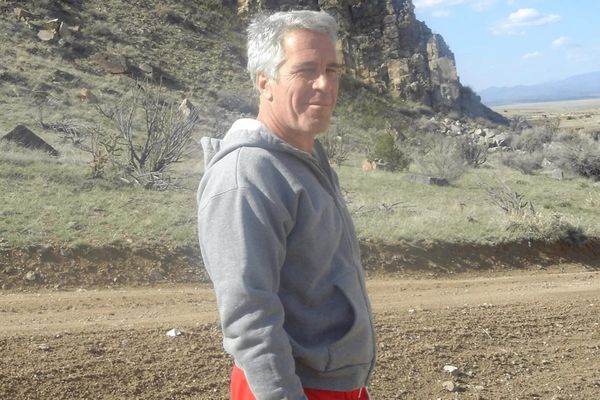
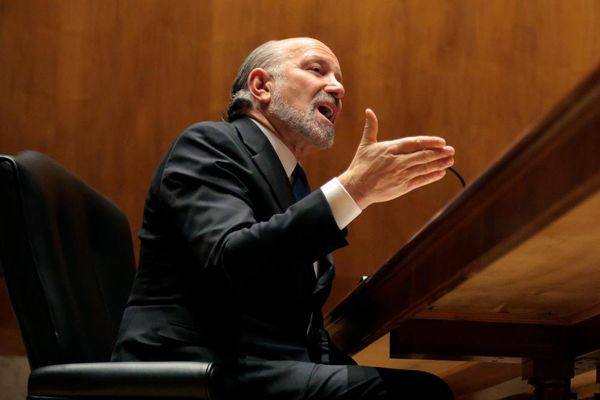
Ray Lewis with some of his students. Photograph: Graham Turner
In March 2005, while head of the then Commission for Racial Equality, Trevor Phillips mooted the view that if black boys were to have a chance of dramatically improving performance in school one solution might be to teach some separately. It kicked up a political storm.
The general secretary of the Secondary Heads Association said singling out black boys was "counter-productive". The National Association of Schoolmasters and Union of Women Teachers also rejected it and former chief inspector of schools Chris Woodhead said he wasn't sure it was the answer.
There was scepticism from prominent figures in the black community, too, including black Labour peer Baroness Rosalind Howells and Simon Woolley of Operation Black Vote, who talked of more deep-rooted, complex causes of black underachievement. Concerns were raised by some people that rather than fostering better race relations, such ideas were tantamount to promoting segregation. Phillips argued that there was a need to think differently and that segregation was not the proposed outcome.
While less well-known, and more community activist than political big-hitter, there are reflections of Phillips' view in Ray Lewis' Eastside Young Leaders Academy in Newham, east London. The after-school early intervention programme admits only black boys (and then only the most disaffected). Its modus operandi is to elevate the boys to a higher educational standard by working with them both on a pastoral and academic level - addressing each child "holistically" as Lewis told me.
The academy has a strict discipline regime requiring boys to behave, knuckle-down and work, or risk being thrown out. It is not a school, but a voluntary organisation so it doesn't bring with it all of the possible complications of educating black boys separately in a mainstream school.
But, as with Phillips, Lewis finds himself in the firing line for marking the boys out for special treatment. Lewis's argument is that black boys are "three laps behind in a four lap race" and that change, even if it is controversial, must start somewhere.
So are programmes like Lewis' a pragmatic answer for the short-term? And if they are, what does it say about racial integration in Britain?