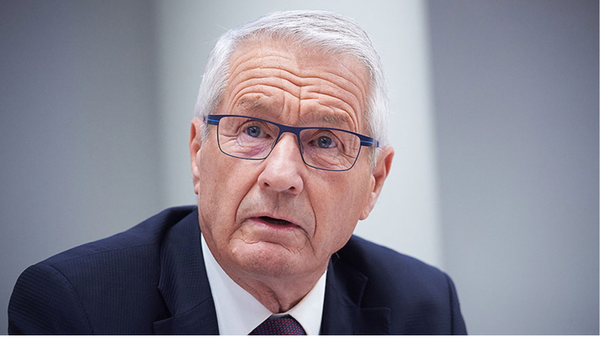
The head of Australia’s Department of Immigration and Border Protection, Michael Pezzullo, on Tuesday released a lengthy statement “separating fact from fiction” about the offshore detention and processing network he oversees.
His reason for doing so was the reputation of his department and its officers.
Pezzullo often takes issue with what is said by those who disagree with immigration policy, as well as with the language used by those who report on it. Nothing in his statement, however, constitutes “fiction” as opposed to an opinion or analysis differing from his own.
Because the department refuses to engage with the media – and through them the public – information comes from unofficial sources, which are no less trustworthy and oftentimes are more trusty than government statements.
The public’s wish for transparency and Pezzullo’s wish for 100% accuracy could both be fulfilled if media were allowed into detention and processing centres to report. Pezzullo may prefer the media to simply stop writing about the topic at all, but that’s simply not going to happen.
Much of the reaction to his letter has been on an inadvisable placement of the word “allegedly” in a sentence referring to public indifference in Nazi Germany, but a number of other points made by Pezzullo also warrant addressing.
1 “Consistent with the law of the land, and under direction of the government of the day, the Department of Immigration and Border Protection operates a policy of keeping children in detention only as a last resort, and releasing those children that might be in detention as soon as reasonably practicable,” Pezzullo claimed.
In fact Australia detains children as a first resort. We are the only country in the world to do so. When/if a child is among a group of people seeking asylum by boat they, along with their family and fellow passengers, are put in an Australian-run immigration detention centre or sent to detention offshore.
Families may gain community detention and be released, but the first action taken is to place them in detention, and it has been for both this government and the preceding Labor administration which oversaw a peak of more than 1,600 children detained.
Despite Australian law stipulating detention as a last resort for children, the AHRC’s Forgotten Children report found that “by requiring the mandatory detention of all non-citizen children in Australia without a valid visa, the law, as it currently stands, results in ‘exactly the opposite’ of what is required”.
Critics of the system and health professionals have long said detention of children should not be a “resort” at all
2. He also claimed “persistent suggestions that detention facilities are places of ‘torture’ are highly offensive, unwarranted and plainly wrong – and yet they continue to be made in some quarters”.
The claim that detention and the conditions within amounts to torture is one posited by a number of medical professionals, including the former director of mental health services at International Health and Medical Services, Dr Peter Young.
“If we take the definition of torture to be the deliberate harming of people in order to coerce them into a desired outcome, I think it does fulfil that definition,” he told the Guardian in 2014.
Young’s views are shared by Professor David Isaacs, a consultant paediatrician who worked on Nauru – also for IHMS, the company contracted to run health services for the immigration department – in December 2014.
A year ago the United Nations special rapporteur on torture found Australia is systematically violating the international Convention Against Torture by holding children in immigration detention.
3. “In the same vein, any contention that prolonged immigration detention represents ‘reckless indifference and calculated cruelty’ in order to deter future boat arrivals, do not pass even the most basic fact check,” Pezzullo said. “The number of children in detention would not be falling if that were the case.”
However the former immigration minister Scott Morrison told a Senate inquiry in 2014 that while detaining children was not a specific deterrence, it was a “consequence” of a suite of border protection policies which do provide a deterrence.
Charges of indifference and cruelty within immigration detention, as a deterrent or otherwise, are myriad. Several inquiries, investigations, and media reports have detailed incidents - alleged and confirmed - which include asylum seekers beaten to death, placed in solitary confinement, cable-tied to furniture, coerced into sexual activity, sexually assaulted, ridiculed, or put in humiliating circumstances.
In response to one of the reports on rampant sexual abuse, then prime minister Tony Abbott said: “things happen”.
A 2014 study published in the Medical Journal of Australia found 80% of doctors surveyed believed detention of children to be abusive.
4. According to Pezzullo: “Significant progress has been made over the past year to move children and their families from detention into the community. As I write, there are now 58 children who arrived by boat in held detention, down from a peak of almost 2,000 back in 2013.”
This is entirely accurate. There are children still currently held in detention.
5. He also claimed that: “Recognition of an individual’s mental health needs is particularly pertinent because many individuals in detention arrive with pre-existing mental health issues and may have experienced traumatic events in their country of origin or on their attempted journey to Australia.”
Yes, it is likely a large number of people seeking asylum have pre-existing mental health and trauma issues. But detention is making it worse, according to numerous doctors including the current chief medical officer and surgeon general for the Australian Border Force, Dr John Brayley.
People in detention suffer mental illnesses at nearly four times the rate of the general Australian population, and their mental health deteriorates sharply the longer they are held in detention. Children under 18 had, by far, the highest rates of mental illness presentations among detainees.
6. And finally: “I must also address ongoing and consistent claims that those expressing opinions on immigration detention are ‘risking jail by speaking out’. While often repeated, this claim is also wrong and unsupported by any facts. The secrecy and disclosure provisions in Part 6 of the Australian Border Force (ABF) Act are not unique.”
The department has said this before, and was accused of misunderstanding the implications of its own legislation.
The secrecy and disclosure provisions in the Border Force Act impose a two year jail sentence on a current or former “entrusted person” – an officer, employee or contractor for, or secondee to, the department, who makes a record of or discloses “protected information.”
There are exceptions, none of which include disclosure to the media, and the government has claimed there are protections under whistleblower legislation, although there are major caveats to this according to human rights lawyer George Newhouse.
As Pezzullo writes, it does not prevent medical professionals administering health care, or reporting something internally.
What it does block is public advocacy, something which a large number of current and former entrusted persons have at some point felt was the only recourse left to them to effect change in the system.