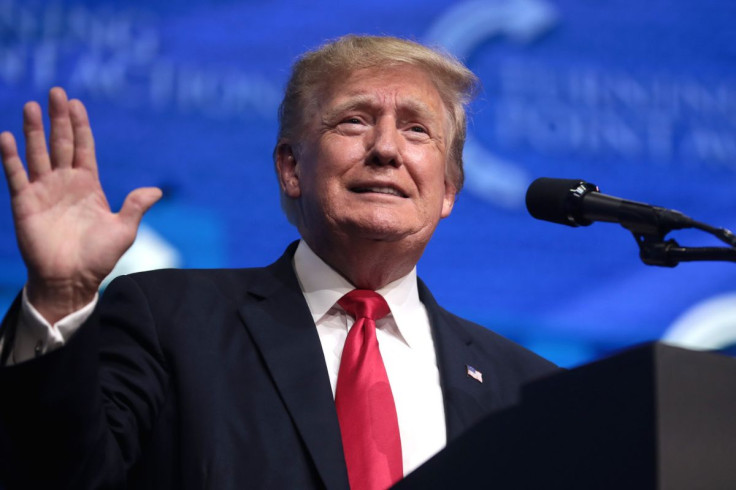
Donald Trump's White House habits are back under the microscope after Maggie Haberman used a podcast appearance to expand on claims from Regime Change, her new book with Jonathan Swan, including allegations about missing silverware, late-night snacking and a separate bedroom arrangement at the White House.
The remarks, which centred on what staff allegedly saw inside the residence during Trump's return to power, add another layer to a book that is already making the rounds in Washington for its unusually domestic detail.
Beds And Silverware In The White House
The news came after Haberman spoke on The Bulwark podcast and was pressed on passages describing the president's living quarters, with host Tim Miller calling the picture of wrappers and ice cream tubs 'disgusting.'
Haberman corrected one detail, saying a reference to Starbucks wrappers was a typo and should have been Starburst, then said staff believed Trump was almost competing with Melania Trump over who had the better bedroom.
According to the book excerpt and a podcast discussion, Trump and the first lady did not share the same bedroom, with Melania in the primary room and Trump in the adjacent space. Haberman said he was moving items from the central hall into his bedroom, while staff reportedly watched silverware more closely after some was said to be disappearing into the trash. The picture is messy in the ordinary, human sense, which may be why it has landed so hard.
What The White House Staff Saw
The claims first surfaced through Regime Change: Inside the Imperial Presidency of Donald Trump, which is written by Haberman and Jonathan Swan and has already proved catnip for people who obsess over the mechanics of Trump-world.
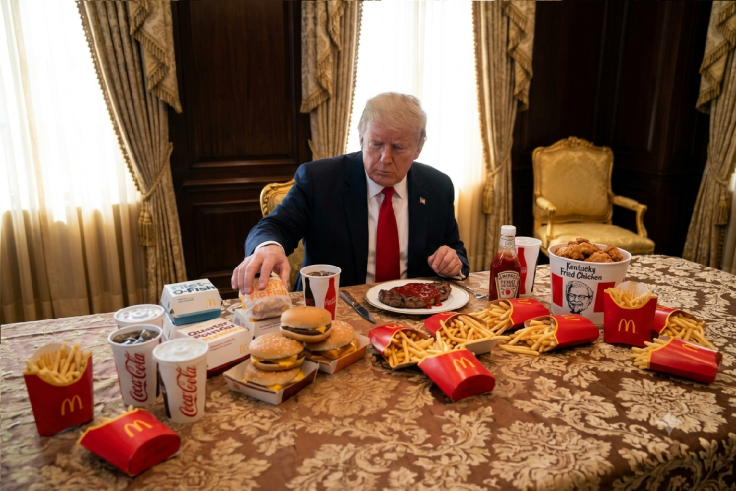
In the book excerpt, the authors describe Trump as a late-night snacker who left chip bags, wrappers and ice cream cartons lying around, while staff allegedly found that White House sterling silver utensils were sometimes thrown away as well.
The same reporting says Trump had an unusual preference for carpet in the bathroom, a detail that sounds faintly mad until you read the staff concern about damp carpet near the shower and the fear of mould underneath. That is the sort of domestic oddity that turns a political story into something more intimate, and a bit grim.
Haberman's account is not framed as gossip for its own sake, but as a window into how the residence was being used and how staff were forced to adapt around it.
The separate-bedroom detail is also notable because it underscores just how personalised this presidency appears to be. Haberman said White House staff had to photograph replacement items for Melania Trump's approval when objects were moved around, and that Trump seemed determined to have the better room.
Trump's Habits And The Bigger Picture
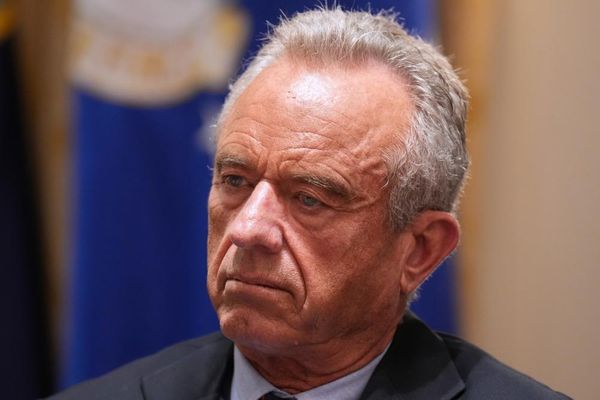
A podcast conversation also touched on Trump's eating habits, after current US health secretary Robert F Kennedy Jr said in a separate interview that Trump 'eats really bad food' and drinks Diet Coke constantly. Kennedy said Trump prefers food from big corporations while travelling because he trusts it and does not want to get sick, a claim that fits with Trump's long-standing fast-food reputation.
In October last year, Republican National Committee chair Joe Gruters described Trump's campaign-day meal as a pile-up of McDonald's staples, saying he had hot fries, a Filet-O-Fish, a Quarter Pounder and a Big Mac. That sort of consumption has become part of the Trump mythos, equal parts absurd and on-brand, and now it is being folded into a wider portrait of a president whose private habits appear to be as hard to control as his public ones.
What makes the latest round of claims stick is not just the gross-out factor. It is the sense, in Haberman's telling, that staff in the White House were not dealing with a carefully managed presidency so much as a personality with appetites, routines and fixations that spilled into every room. That is the real story here, the one beneath the wrappers and the silverware. And it is not especially pretty.