WASHINGTON _ Familiar partisan battle lines spilled out during the first day of Amy Coney Barrett's Supreme Court nomination hearing before the Senate Judiciary Committee Monday, with an aura of inevitability hanging over what both parties expect is her ultimate confirmation to the high court.
Republicans argued for Barrett's qualifications _ the American Bar Association rated her "well qualified" for the late Justice Ruth Bader Ginsburg's seat _ and tied Democratic opposition to animus against her Catholic faith. Democrats criticized the committee for holding the hearing at all before the election and the implications of her confirmation for health care, abortion and other issues.
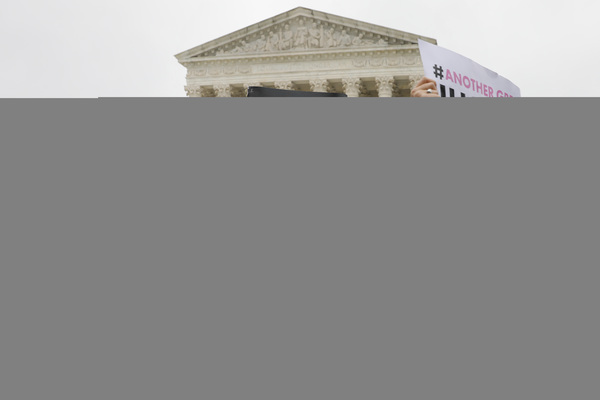
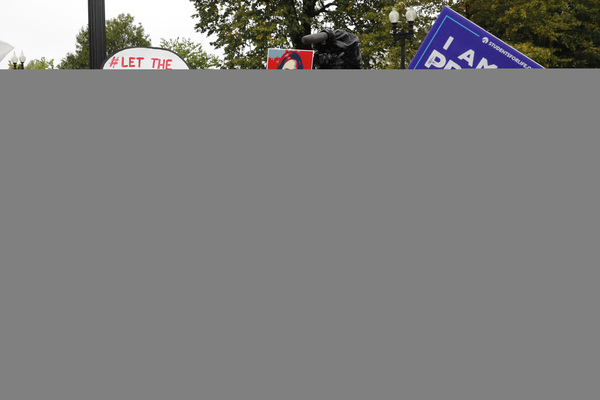
Outside the hearing room, which was closed to the public because of the COVID-19 pandemic, scores of protesters _ with 21 arrested by Capitol Police, according to a spokesperson _ withstood persistent drizzle to make their positions heard.
Protesters sat outside of a key entrance to the Dirksen Senate Office Building. "No Covid Test, No Hearing," read one sign. Other protesters, wearing head-to-toe paper jumpsuits and yellow gloves, held signs demanding "Trump/Pence Out Now." And at least three protesters wore rainbow-colored vests emblazoned with "clinic escort," volunteers who escort patients at clinics past anti-abortion access protesters and into the building for care.

Supporters of Barrett were also out in force, with pink "Women for Amy" and "Confirm Amy" signs, outnumbering the anti-Barrett contingent at more than one doorway where demonstrators were gathered.
Given the politics surrounding Barrett's nomination, which would give conservatives a 6-3 majority on the court, Chairman Lindsey Graham, R-S.C., acknowledged the battle will be contentious. But he appeared confident his panel had the votes to move her nomination to the floor.
"This is probably not about persuading each other," Graham said. "Unless something really dramatic happens, all Republicans will vote yes and all Democrats will vote no."
Graham, who is facing a tough reelection bid, and other Republican leaders have put Barrett on the path for a Senate vote before the Nov. 3 election. Republicans hold the chamber by three seats, and will likely require no Democratic votes to confirm her.
Democrats like Vermont Sen. Patrick J. Leahy argued Barrett's confirmation violates a standard Republicans set by ignoring the nomination of Merrick Garland to the Supreme Court in 2016. Barrett's confirmation, Leahy said, may decide the future of the 2010 health care law known as the Affordable Care Act, which is set for Supreme Court argument the week after the election.
Democrats are "scared that the clock will be turned back to a time when women had no right to control their own bodies, and when it was acceptable to discriminate against women in the workplace," Leahy added.
Sen. Richard J. Durbin, D-Ill., and others highlighted President Donald Trump's stated wish to have a full Supreme Court in case the justices may weigh in on the election results. Durbin also pointed to Barrett's criticism of the previous Supreme Court decision that upheld the Affordable Care Act.
"You have been nominated by a president who shows contempt for the Constitution, but does not hesitate to tell his loyal followers that you are being sent to the bench to do his political chores: Abolish the ACA, rule in his favor on any election contest, and even more," Durbin said. "You cannot feel good about a president cheapening this historic moment."

Republicans tied Democratic criticism of Barrett to Justice Brett Kavanaugh's 2018 confirmation hearings, and highlighted the criticism of her religious views. Sen. John Cornyn, R-Texas, argued Democrats doubt Barrett's ability to uphold the law.
"You stand accused of intending to violate your oath before you even take it," said Cornyn, who is facing a well-funded challenger in his own reelection bid. "Further, our Democratic colleagues want you to guarantee a result in a case as a quid pro quo for your confirmation. It's outrageous."
Later Monday, other senators in competitive reelection races, including Republicans Thom Tillis of North Carolina and Joni Ernst of Iowa, will make their opening remarks, as will Sen. Kamala Harris of California, the Democratic vice presidential nominee.
The panel will begin questioning Barrett, who sat silently during the opening remarks, on Tuesday. She was joined in the hearing room by her husband and seven children, who were escorted out of the hearing room about 90 minutes into the proceedings.
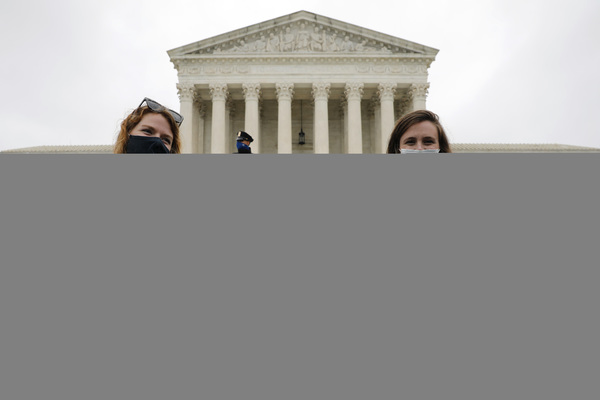
White House Chief of Staff Mark Meadows and White House Counsel Pat Cipollone were seated to the left of the family.
Utah Republican Sen. Mike Lee, who was diagnosed with COVID-19 less than two weeks ago, attended the hearing in person and gave his opening statement without wearing a mask.
Lee has not confirmed that he has tested negative, but was "cleared" by the Capitol's attending physician to attend. Lee tweeted out the letter from Dr. Brian Monahan, dated Oct. 12, that asserts the Utah Republican met the CDC's criteria of more than 10 days since symptoms subsided and no fever in 24 hours. Lee left the hearing room shortly after his statements.
Graham, along with Iowa Republicans Charles E. Grassley and Ernst, removed their masks upon arrival at their seats. Other lawmakers kept their masks on, but removed them to give their statements.
California Sen. Dianne Feinstein, the committee's top Democrat, put her mask on as she approached the hearing room and media stakeout area. The California Democrat usually dons a mask as she approaches a concentration of people around Capitol Hill, but traverses the hallways and tunnels without a mask with her staff.