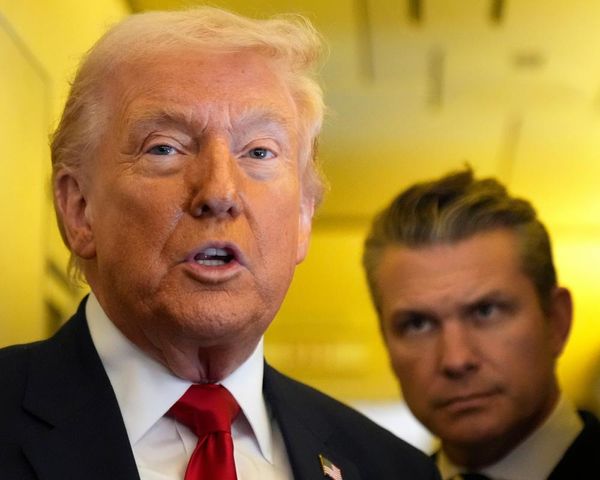
WASHINGTON _ The Senate cleared a monthlong spending bill Thursday, sending it to President Donald Trump's desk hours before government funding was set to expire at midnight.
The vote was 74-20.
The continuing resolution is the second temporary spending bill Congress has passed since fiscal 2020 began on Oct. 1. Once Trump signs it _ as his aides say he will _ the stopgap measure will fund the government through Dec. 20, giving appropriators more time to hash out numerous divides over policy riders and programmatic spending levels.
House Appropriations Chairwoman Nita M. Lowey, D-N.Y., said Thursday morning that she does not expect an agreement before members leave town for the one-week Thanksgiving break. "But what's most important, I think, is that ... we are working hard to find a high to finalize the process," she said.
Over the recess, Lowey said, there will likely be a combination of staff discussions and lawmaker phone calls. "I'm always available," she said.
Senate Appropriations Chairman Richard C. Shelby, R-Ala., was guardedly optimistic about the talks.
"Our numbers have gotten closer and closer. But sometimes we are ready to close the curtain and make things work and the demands go up on the other side," he said. "They seem to change the agenda from time to time."
It wasn't immediately clear what Shelby meant. A House Democratic aide declined to comment.
Shelby did seem to accept the idea that subcommittee allocations for the dozen fiscal 2020 bills can be finalized before reaching agreement on how much money to give Trump for the border wall, the issue that sparked the longest government shutdown in history late last year.
"Border wall is going to have to be resolved before we get some type of legislation," he said. "Now, border wall is not directly connected, but indirectly, to the allocations."
Senate Minority Leader Charles E. Schumer said Thursday during floor remarks that the year-end negotiations could go down one of two paths. The first path, which ends in a bipartisan agreement, doesn't include Trump's involvement. The second, where Trump would "stomp his feet" and "make impossible demands" would likely end in another government shutdown, the New York Democrat said.
Temporary spending bills are routinely needed to buy additional time to wrap up the year's spending bills. Lawmakers have used at least two every year since 1996 _ the last time Congress passed all of its appropriations bills on time, according to the Congressional Research Service. Stopgap measures lasted for a full year during fiscal years 2007, 2011 and 2013.
Appropriators are hoping to avoid a series of temporary spending bills, but haven't ruled out additional bills lasting into early spring or even next September.