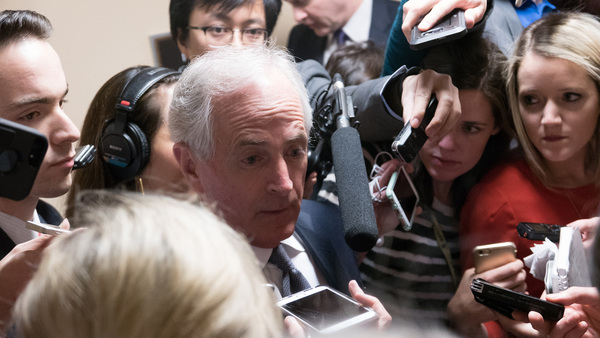
WASHINGTON _ Confusion took over the Capitol on Tuesday as rumors swirled that the Senate Sergeant at Arms and Rules Committee were restricting media access to members on Congress and staff around the Capitol complex.
Any new policy could stem from existing chamber rules, but enforcement of such measures would be a drastic change from the manner in which press has done its job in the Senate.
While hallways in the basement of the Capitol building are deemed public spaces, accessible by tourists and media alike, new limitations could require reporters to obtain specific consent from senators and the Rules Committee itself before interviewing them, stifling the ability of media to speak to members.
The still unreleased policy could serve to enforce a standing Senate rule.
"Videotaping and stake-outs inside the Capitol and the Congressional Office Buildings require permission and are prohibited in some areas," a rules manual for the chamber obtained by Roll Call but not publicly available reads. "Senate Office Building corridors for interviews with Members _ approval of the Member and the Senate Rules Committee through the Senate Gallery required."
The move would come at the behest of the Senate Rules Committee, chaired by Sen. Richard C. Shelby of Alabama, and the chamber's Sergeant at Arms.
Shelby, in a statement, said his panel has "made no changes to the existing rules governing press coverage on the Senate side of the Capitol complex."
"The Committee has been working with the various galleries to ensure compliance with existing rules in an effort to help provide a safe environment for Members of Congress, the press corps, staff, and constituents as they travel from Senate offices to the Capitol. Once again, no additional restrictions have been put in place by the Rules Committee," he said.
A spokesman for the panel did not respond to questions about a potential new enforcement policy. Several aides who would not speak for attribution said the statement from the Rules Committee likely meant that Shelby was leaning on the standing rule in saying there were no new restrictions being put forth.
Many of the decisions made by the Senate Rules Committee occur in private and it has not met publicly since February.
Sen. Amy Klobuchar of Minnesota, the top Democrat on the panel, told reporters she was not consulted by Shelby about any new restrictions on the press.
"We have heard nothing about it and suddenly this new policy was put in place that doesn't reflect any discussion that we've had," she said on Tuesday. "I think it's just a huge mistake ... and I call on them to allow reporters to do their job and proceed as always."
Klobuchar later tweeted that she has spoken to Shelby and that no changes to press access would be made without her knowledge.
Any new enforcement criteria would come amidst concern over the growing number of reporters in the Capitol. Directors of the four Senate press galleries informed news outlets in a letter last month that the building has "reached its capacity for reporters."
"(T)he press following senators have become large and aggressive. We are concerned someone may get hurt," the directors wrote.
Media attention on Congress has surged since President Donald Trump took office. Republicans in Congress are plotting a massive overhaul of the U.S. health care system in private, during closed-door meetings. Several GOP members are even unsure exactly what specific policy is under consideration.
The Senate is also taking the lead on the probe into possible collusion between the Trump administration and Russia during the 2016 elections.
The possibility of new enforcement measures received immediate criticism from several Democratic members, including Sen. Christopher S. Murphy of Connecticut, the ranking member of the Senate panel in charge of funding for the legislative branch.
"Maybe not the right moment to lower the secrecy veil on Congress. To whoever is trying to protect Senators _ we can fend for ourselves," he wrote in a tweet. Murphy's panel had already scheduled a hearing on funding for the Sergeant at Arms and Capitol Police on Wednesday morning.
Some Republicans also pushed back against the possibility that press access may be limited.
"Y'all are kind of a pain in the ass, but I don't mind you hanging around," Sen. Lindsey Graham, R-S.C., said. Sen. Ben Sasse, R-Neb., tweeted that any restrictions were "a bad idea."
The move comes just days after Senate Majority Leader Mitch McConnell discussed the importance of the First Amendment and announced he would launch a series of floor speeches this week on the issue. The Kentucky Republican's interest in the issue has historically been in the context of campaign finance reform.
A McConnell spokesman did not respond to request for comment.