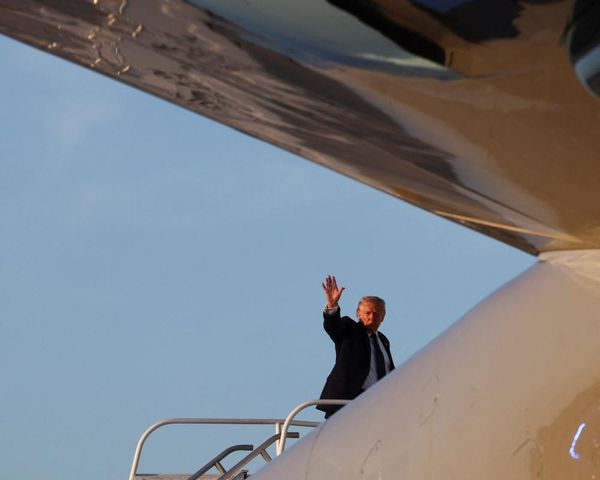
WASHINGTON _ Rex Tillerson, the Exxon Mobil CEO selected by President Donald Trump to be secretary of state, won approval Monday from a Senate committee, all but guaranteeing his confirmation to the job.
The vote of the Senate Foreign Relations Committee was 11-10, cast along party lines. The nomination now moves to the full Senate.
Several senators, Republican and Democratic, expressed opposition to Tillerson's nomination ahead of Monday's vote. State Department officials said senators submitted more than 1,000 additional questions for Tillerson to answer after his hearing, suggesting that many matters left unsettled.
But, in the end, he received support that turned the tide.
Sen. Marco Rubio, R-Fla., earlier Monday said he would vote for Tillerson's confirmation . His was some of the toughest questioning during Tillerson's Jan. 11 hearing before the committee. Rubio pushed the nominee his ties to Russia and friendly relationship with Russian President Vladimir Putin.
Rubio and others also complained that Tillerson seemed reluctant to criticize countries whose governments are widely documented to be abusers of human rights, such as the Philippines and Saudi Arabia.
But Rubio said Monday that despite "troubling" answers from Tillerson, he decided to allow "significant deference" to Trump in naming his national security team.
On Sunday, Republican Sens. John McCain and Lindsey Graham, who initially resisted the Tillerson selection, said they would support Tillerson, a career Exxon executive. Although they are not members of the Senate Foreign Relations Committee, they are influential in the party and can help steer the vote on the Senate floor.
Among the opponents to Tillerson was Sen. Ben Cardin, D-Md., ranking Democrat on the committee. Cardin said Monday that he could not vote for Tillerson because he seemed to prioritize "narrow business interests" over broader U.S. goals and values.
Tillerson was unwilling to characterize atrocities as war crimes and was soft on sanctions against Russia, Cardin said. The sanctions were imposed over Russia's 2014 invasion of Ukraine.
"Strangely, he was quick to caution about easing sanctions on Cuba because it would benefit a repressive regime, but seemed indifferent to doing business with Russia knowing that that business helped finance their ongoing violations of international norms," Cardin said.
Tillerson has takes the job of America's top diplomat with no diplomatic or political experience. He has differed with Trump on several policies.