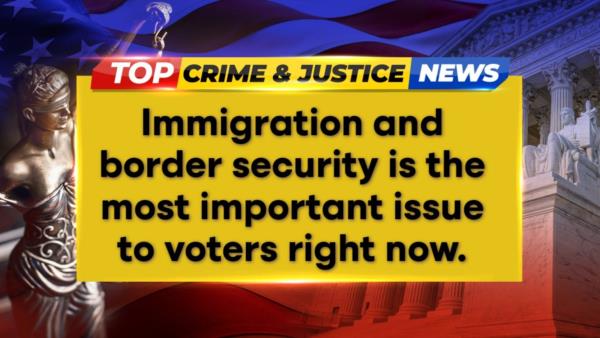
According to recent polling, immigration and border security have emerged as the most important issue for voters. However, there seems to be a significant disparity between what elected officials are saying about the issue and what they are actually doing. The proposed bipartisan legislation aimed at addressing the immigration problem is now in jeopardy as Senate Republican leaders debate whether to shelve it.
The legislation, which is said to be the most restrictive set of border measures in decades, has already faced opposition from House and Senate Republicans. Despite some Republicans publicly expressing the importance of border security, their actions indicate a different agenda. For instance, Congresswoman Elise Stefanik, a Republican member of the leadership, spoke at a press conference in support of impeaching the Department of Homeland Security (DHS) Secretary Alejandro Mayorkas, rather than pushing for the passage of the Senate legislation.
It is worth noting that fixing or changing immigration laws requires congressional negotiation and the passing of legislation. However, House Republicans seem to be rejecting the bipartisan compromise purely for political reasons. This decision has also prompted Senate Republicans to consider abandoning the deal.
The compromised legislation, according to Speaker Mike Johnson, supposedly includes a provision to shut down the border after a certain number of daily illegal crossings. Johnson expressed his disbelief at this provision, stating that illegal immigration is against the law and shouldn't be tolerated. However, Senator Lankford, a conservative Republican involved in crafting the legislation, clarified that the aim is to achieve zero illegal crossings per day, not 5,000 as wrongly suggested by Speaker Johnson.
While Senate compromise measures include concessions to Republicans, former President Trump has openly voiced his opposition, citing his desire to avoid any election year accomplishments for President Biden. This stance has drawn criticism from some Republican senators, who believe it is more important to address the border issue than to play politics.
Amid these debates, House Republicans are now debating whether to ditch the compromise entirely and focus on passing a standalone bill providing aid to Ukraine and Israel. The fate of the bipartisan legislation remains uncertain, with significant challenges looming over its prospects of becoming law. Republican opposition, combined with the belief that President Biden already possesses the authority to address the border issue, further complicates the passage of any legislation.
In addition to the immigration debate, discussions surrounding the impeachment of DHS Secretary Mayorkas have also heated up. Republicans argue that Mayorkas has mishandled the situation at the Southern border and lost the trust of the American people. However, Democrats accuse Republicans of using impeachment as a political tactic rather than offering a genuine solution to the border crisis. Regardless, the impeachment articles are expected to pass out of committee and move to the House floor, although their prospects in the Senate appear slim.
As negotiations continue and various political agendas clash, the fate of effective immigration policy remains uncertain, leaving the issue of border security unresolved. The discrepancy between rhetoric and action among elected officials continues to fuel frustration among voters who expect real solutions to be implemented.