A yearslong feud between U.S.-based carriers and airlines from the Persian Gulf has found its way into the highly politicized debate over the tax plan.
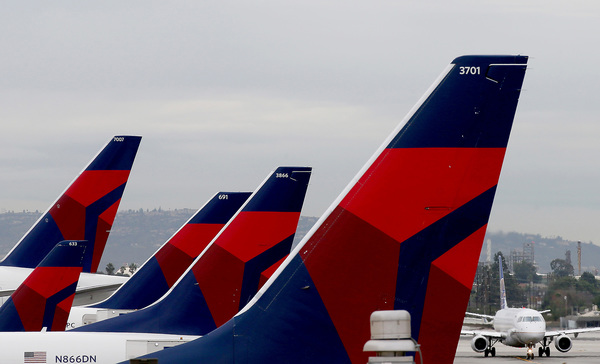
Deep in the U.S. Senate's 515-page tax bill is a passage that imposes a new tax on some foreign carriers. The language was introduced by a senator from Georgia, the home state of Delta Air Lines, which has been calling for limits on rival carriers from the Middle East.
Sen. Johnny Isakson, R-Ga., said the provision he introduced would "protect Georgia airline employees by ending a tax exemption for airlines based in countries that deny fair market access for U.S.-based airlines."
The provision does not name the three Gulf carriers _ Etihad, Emirates and Qatar airlines _ that Delta and other U.S. carriers have long accused of competing unfairly in the U.S. by accepting subsidies from their oil-rich government owners. Still, Isakson's staff said the change is intended to target those carriers.
The Gulf carriers deny the accusations that they are heavily subsidized.
In a statement, Isakson said his provision would raise $200 million from the airlines, which would help pay for tax breaks for U.S. taxpayers.
The senator has complained in the past that it is difficult for U.S. carriers to fly routes into the Gulf region because they can't compete with heavily subsidized airlines based in the Middle East.
"Foreign airlines should not receive preferential tax treatment if their countries choose not to open their markets to U.S. companies," he said.
Delta, which is based in Atlanta, declined to comment on the tax provision. A coalition of U.S. airlines that has for years called on Washington to impose limits on the Persian Gulf carriers also declined to comment.
But an international trade group for airlines _ the International Air Transport Association _ opposes Isakson's provision.
"If enacted, the Isakson provision would upend decades of precedent _ which the U.S. has long supported _ on the taxation of international aviation," said Perry Flint, spokesman for the trade group.
Under current international agreements, most foreign carriers pay no taxes on gross income they earn when they fly into the U.S. In exchange, U.S. carriers get the same treatment when they fly into most foreign airports. Airlines that fly abroad still pay landing fees and other charges for the right to land in foreign airports.
The provision introduced by Isakson would break that agreement by imposing a corporate tax rate on foreign carriers whose home country doesn't have a tax treaty with the U.S. and isn't served by an American carrier at least twice a week.
Flint said the change in law could affect other carriers besides the Gulf airlines.
"Foreign governments _ even those not directly affected by the proposed language _ could be tempted to follow the U.S. example and impose reciprocal taxes," he said.
A coalition of airlines that oppose restrictions on the Gulf carriers spoke out against Isakson's proposal.
"This special-interest ploy was designed to hurt the Gulf carriers but would actually impact airlines from as many as 14 countries and territories, such as Jordan, Ethiopia and Malaysia," said Andrea Christianson, a spokeswoman for a coalition that includes Atlas Air Worldwide, FedEx, Hawaiian Airlines and JetBlue. "In addition, the provision opens the door to retaliatory taxes that would harm U.S. airlines, particularly U.S. cargo carriers."
The feud between the Gulf carriers and the biggest U.S. airlines _ Delta, United and American _ was sparked several years ago when the Middle Eastern carriers began to add dozens of new routes to the U.S., using new planes with luxury seats and gourmet food.
The U.S. airlines appealed to the Obama administration and later the Trump administration, saying the Gulf carriers have an unfair advantage because they are subsidized by their oil-rich government owners, United Arab Emirates and the nation of Qatar.
The Obama administration declined to impose restrictions on the Gulf carriers, and the Trump administration has yet to take an official position on the dispute.
Even Hollywood celebrities such as Nicole Kidman, Jennifer Anniston and Jennifer Lopez have gotten pulled into the feud. They were criticized by the U.S. airlines or their unions after they accepted work from the Persian Gulf carriers.