Chris Bowen this week set out his plans for winning the fight against the rise of protectionism. It’s a fight in which those in favour of free trade have been shown over the past year – whether in the Brexit vote or the inability to counter Donald Trump – to have been completely inept. Among the best aspect of Bowen’s plan of attack is that he has realised one of the reasons for this ineptness has been an over reliance on data and facts.
The government’s position on trade essentially operates from the belief that the benefits of free trade are obvious, and thus it is also obvious that more free trade – in whatever form – is better. Such a position has led to the government pursuing free trade agreements with eagerness and delight.
The problem however is that the data that demonstrates the benefits of free trade is actually pretty complex, and the data that demonstrates the benefits of free trade agreements is actually pretty skint.
Little wonder that people might think it’s all a load of hogwash.
Two weeks ago, the treasurer, Scott Morrison, noted the resistance to free trade and suggested that the government “must face up to their concerns and address them”.
And he addressed them by saying that “there is more than three trillion worth of foreign investment in Australia today” and that exports “delivered around $363bn to our economy and accounted for around 19% of our GDP and around 1.3% of annual growth”.
I wrote an honours thesis on foreign direct investment, and even I was rolling my eyes.
And now, the shadow treasurer, Chris Bowen, has set out his argument for free trade in a speech titled, “The Case for Openness”. He too quoted some of the data that pointed to the benefits of free trade, but crucially he argued that they alone were not enough.
He suggested that those in favour of free trade needed to win “the evidence war, the passion war and the fairness and inclusivity war”. It was a crucial acknowledgment that the voice from above, reminding us of the glory days of the reform of the 1980s, is not going to cut it.
I love facts as much as anyone, but the problem with the benefits of free trade is that you mostly are talking about cheaper imports.
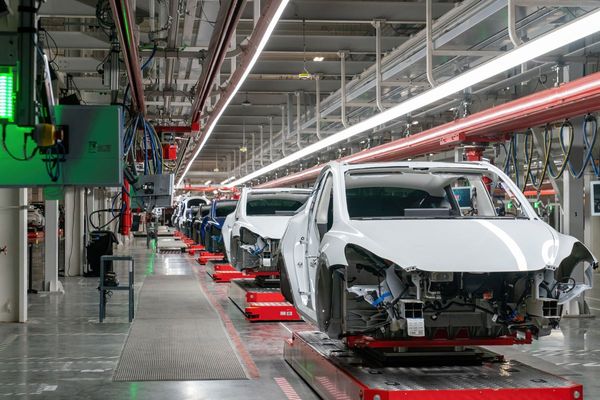
As Bowen noted in his speech, the price of computers, TVs and stereos has declined by 90% over the last 25 years. That sounds great, but when you get to other facts, like for example that we pay less for cars than we did in the early 1990s, it doesn’t take too much thinking to realise the impact of this on the local car industry and its workers.
That doesn’t mean free trade is bad but it does highlight how there are winners and losers – and the data focuses mostly on the winners.
Bowen also noted that trade is not the only reason for declining work in such industries as large-scale manufacturing, but that automation is also playing a large and increasing role – something which greater trade protectionism will do nothing to halt.
But this mix of trade, automation, declining employment, and a rise in the lower-paid service sectors, also causes people to believe that free trade only benefits the few, and also leads to inequality.
This is not necessarily the case.
A study this week out of the USA argues that trade is not what causes inequality, but rather, tax and welfare policies are to blame.
The impact of such a finding is implicit in Bowen’s argument that “the more people feel they benefit from our economy, the more they will embrace the system which allows it to grow.”
It means you can’t unlink welfare and tax policy from trade policy.
Arguing for more free trade while also pledging a crackdown on welfare and bemoaning the “taxed-nots”, as Morrison did, is just self-defeating.
But the path Bowen has chosen, while admirable, remains a rocky one. The difficulty is evident in his speech. He spent much more time talking of the “evidence war” than he did the “passion, fairness and inclusivity wars”.
Similarly he offered little concrete solutions other than the anodyne suggestions of “more investment in relevant education, training and industry plans”.
It’s why the ALP should reverse its election commitment to cut the $4.40/week energy supplement for those on Newstart.
Since the global financial crisis, the drive towards protectionism has gathered pace, but it is wrong to believe it is just a fight about trade. As Bowen argues, it is also about inequality and inclusiveness.
Quoting data and graphs alone will not further the cause, but neither will pursuing welfare and tax policies that foster inequality, all the while suggesting that yet another free trade agreement will somehow make everything better for all.