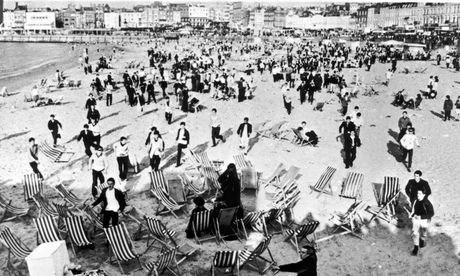
The most authoritative definition of mod came from Pete Meaden, an early manager of the Who, who was quoted on the sleeve-notes to Quadrophenia. According to Meaden it wasn’t about the cut of one’s side-vents, the pursuit of the most obscure American soul imports or beating up rockers on a bank holiday weekend. Being a mod was the business of “clean living under difficult circumstances”.
Cathy, the teenage mod-ette at the heart of Sheila Norton’s novel, knows all about clean living and straitened conditions. She’s a working-class girl from Romford whose single mother is so committed to austerity that they do not have a television and she has to endure the embarrassment of being the only girl in her class unable to see the Beatles on Six-Five Special. Fortunately her older brother Derek possesses a record player, even though his friends are all rockers and therefore beyond the pale; with the exception of Jimmy, whose greasy quiff Cathy can overlook because it overhangs eyes like Paul McCartney’s,”deep and brown and soulful”.
Still, that was then and Norton has chosen to begin the narrative 40 years later. Cathy is now a struggling freelance writer in her 50s who is suddenly gifted a magazine commission to write a piece about the clashes between mods and rockers at Clacton-on-Sea in May 1964. “You could call it serendipity”, she writes, “or you could call it a dilemma”. Or you could call it a wasted opportunity, because even though Cathy is supposed to have been there, her account of this defining moment in British youth is never more than cursory and circumstantial.
The bank-holiday riots were significant not because the average Daily Express reader was suddenly alerted to the sinister new youth cult that, like all the sinister new youth cults to follow, was not going to tear up the fabric of society as initially feared. Rather, it was the point at which an elite style movement, for which acceptance or derision could be determined by the width of a lapel, shed its connection with its roots; succumbing to an influx of hoi polloi in Fred Perry shirts and becoming a tabloid-flamed, parka-clad caricature of itself.
The mod movement became inundated with band-wagon jumpers like Cathy, in other words, whose devotion to the Beatles and her brother’s greasy friends suggests she was only pretty half-hearted about being a mod in the first place. Nor is musical analysis her strongest point: “Now I’ve started thinking about it again the memories are so vivid. It’s like yesterday. Yesterday, the lyrics of the Beatles song, about troubles being so far away.” It’s not the most insightful piece of lyrical exegesis, though useful to have the clarification in case one were mistakenly to confuse Yesterday with the one about being a walrus or the number of holes in Blackburn, Lancashire.
Norton’s website reveals that she has written over a dozen novels and 100 short stories “published mostly in women’s magazines”. Such industry gives a general flavour of the book – it’s competently done, though there’s a sense that material which might have been sufficient for a magazine story has been eked out to 90,000 words. The diligent plotting and carefully planned denouement is the novel’s strongest suit, though it’s hard to overlook the lumpiness of the prose. Cathy is delighted to take possession of “a Dansette record player even more with-it than Derek’s one”. Setting aside the ungainly placement of the pronoun at the end of a sentence, few terms other than “with-it” more blatantly suggest that the speaker is entirely without it.
All of this would be tolerable enough were it not for the slightly self-congratulatory air with which the story is presented. Cathy’s friends and family are all extremely quick to praise her literary aspirations; though her admission that “writing down how I felt about the battles between the mods and the rockers was very therapeutic”, is unlikely to overturn the popular prejudice against self-published fiction. That opinion ought to be balanced against that of Cathy’s friend Linda, however, who reads an early draft and insists: “You should get this published! It’s brilliant.” In this case, the effusion prompts a telling show of modesty: “Thanks for the compliment. But nobody’s going to publish the witterings of a 16-year-old girl.”