

Quick Summary
Scientists have created a living textile made from fungus that can repair damage, clean itself and biodegrade in just 41 days.
The experimental material is made using Cordyceps militaris and has already been turned into a working dress, although it’s still a long way from becoming something you could buy in a shop.
A scientific discovery has created clothing that is able to heal. The breakthrough comes from researchers in China, who have developed a textile that keeps the fungal cells alive rather than killing them during manufacturing.
Most existing mycelium-based materials use dead fungal matter, but this new approach allows the material to retain some of the properties of a living organism.
The fabric is made from pellets of Cordyceps militaris, a fungus better known as caterpillar fungus, which are processed into flexible sheets using glycerol. The resulting material has a leather-like texture and can be shaped into different forms, including the prototype dress.
The clever bit comes when the material is damaged. Researchers can add fresh fungal pellets and a small amount of water to a tear, providing the living mycelium with the conditions it needs to grow across the damaged area. As the fungus grows, its tiny filaments bridge the gap and regenerate the missing surface.
That means a damaged garment could, in principle, repair itself rather than needing to be stitched, patched or thrown away.
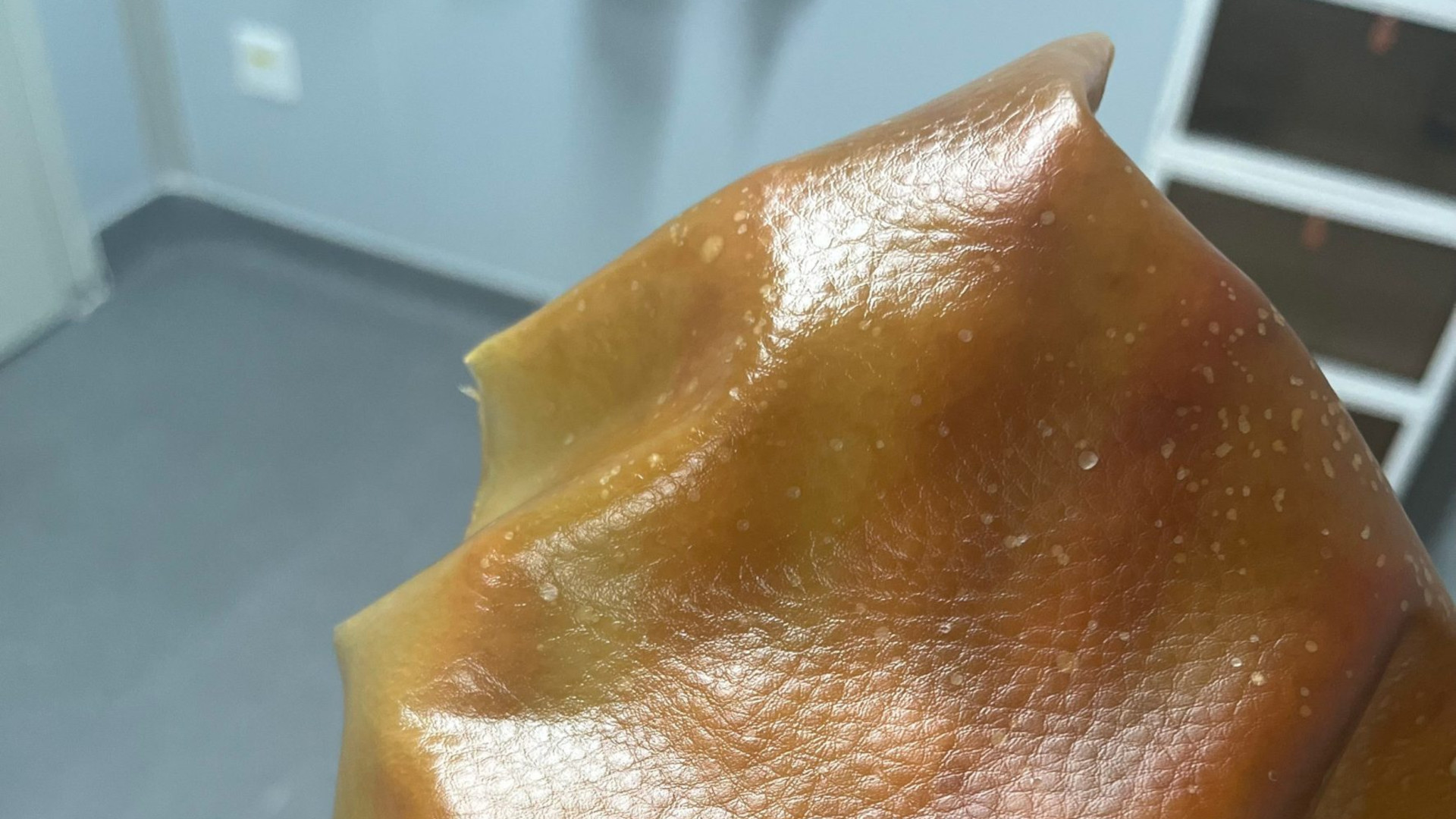
The researchers also found ways to give the living fabric extra capabilities by combining it with other microorganisms.
Engineered yeast can produce natural pigments, allowing the material to change colour without relying on conventional textile dyes. A separate fungus, Aspergillus niger, can also be grown across the surface to create a melanin-rich layer that helps absorb UV radiation.
The surface of the fungal fabric can also become water-repellent thanks to the structure of its aerial mycelium. In testing, water droplets rolled away without leaving residue, giving the material a degree of self-cleaning ability.
There is one fairly significant catch: the material is almost too biodegradable. Soil-burial tests showed it can break down almost completely in around 41 days.
That could be a major advantage for disposable or circular fashion, but it also highlights why this is still a laboratory demonstration rather than the next generation of everyday clothing.
The researchers have shown that living fungi can be turned into a functional textile with properties conventional fabrics simply can't offer. The next challenge is making it durable enough to survive real-world wear while keeping the fungus alive and functional.