
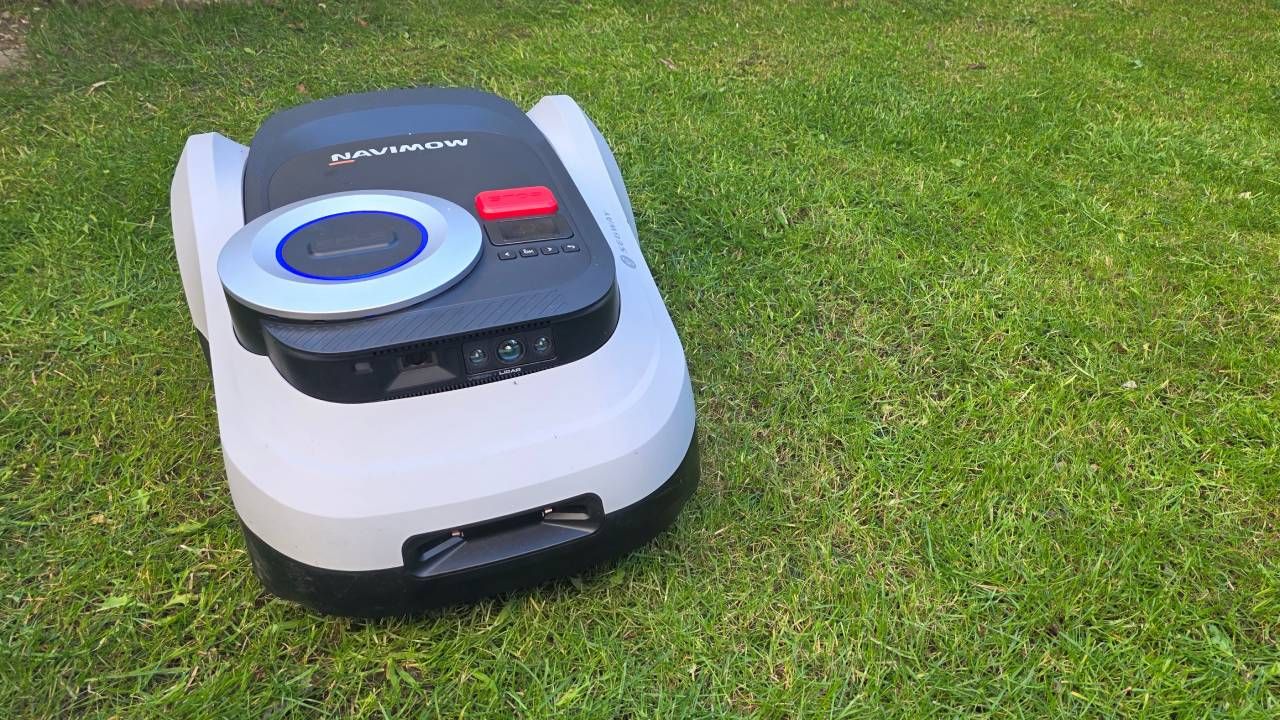
Robot lawn mowers are by no means a new thing, but they still feel rather novel. Perhaps that’s because they’re hard to justify unless you’re blessed with a huge sprawling lawn. Plus, they're not the easiest devices to get up and running, and the setup process alone can be enough to put people off - with boundary wires to bury, RTK antennas to position, and connectivity to sort.
The tech has gradually been getting better, though, and 2026 feels like the year LiDAR navigation has properly arrived in this category, making everything just that bit easier.
One brand gaining ground in this niche robotic mowing space is Segway, with its Navimow range. The firm’s new i2 LiDAR series is its latest push to make robot mowers more accessible, straightforward to set up and easier to live with. Instead of relying on wires or satellite signals, it uses a solid-state LiDAR sensor paired with a 140-degree RGB camera to map and navigate your garden autonomously, even under tree cover and in low light.
The Navimow i208 LiDAR sits as the entry point in the LiDAR range, rated for lawns up to 800 square metres. It packs a 5.1 Ah battery, a six-blade cutting disc, off-road wheels rated for slopes up to 45%, and IP66 weatherproofing. I've been testing it across several weeks on my modest back garden to see whether it lives up to the hype. Here's what I found.
Segway Navimow i208 LiDAR review: price and availability
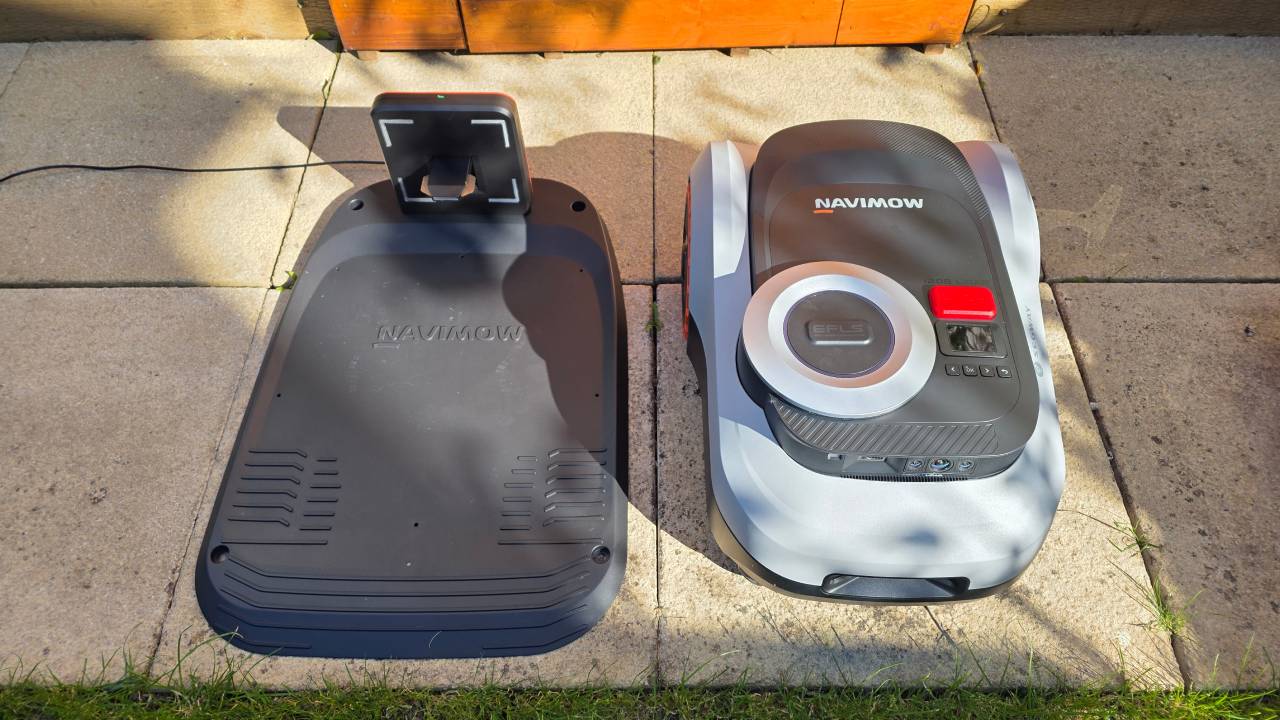
The Segway Navimow i208 LiDAR is available to buy now in the UK priced at £999 on Navimow's official site, reduced from an RRP of £1,099. At the time of writing, that price also includes a free Garage M weatherproof docking cover (worth £179), which is a nice bonus given that the garage isn't included as standard.
There are larger lawn variants available too - the i215 LiDAR (up to 1,500sqm), which costs £1,199, and the i220 LiDAR (up to 2,000sqm) coming in at £1,399.
Comparing those price points to competing LiDAR-equipped robot mower models, like the Mammotion LUBA 3 and Roborock X1 LiDAR, the Navimow sits at a similar level, while the AWD version of Navimow's own i2 range (which uses satellite rather than LiDAR navigation) starts from around £700 if you catch it in a sale.
It's not cheap by any means, but for a wire-free, antenna-free robot mower with this level of tech, you’re getting some good bang for your buck.
Segway Navimow i208 LiDAR review: design and build
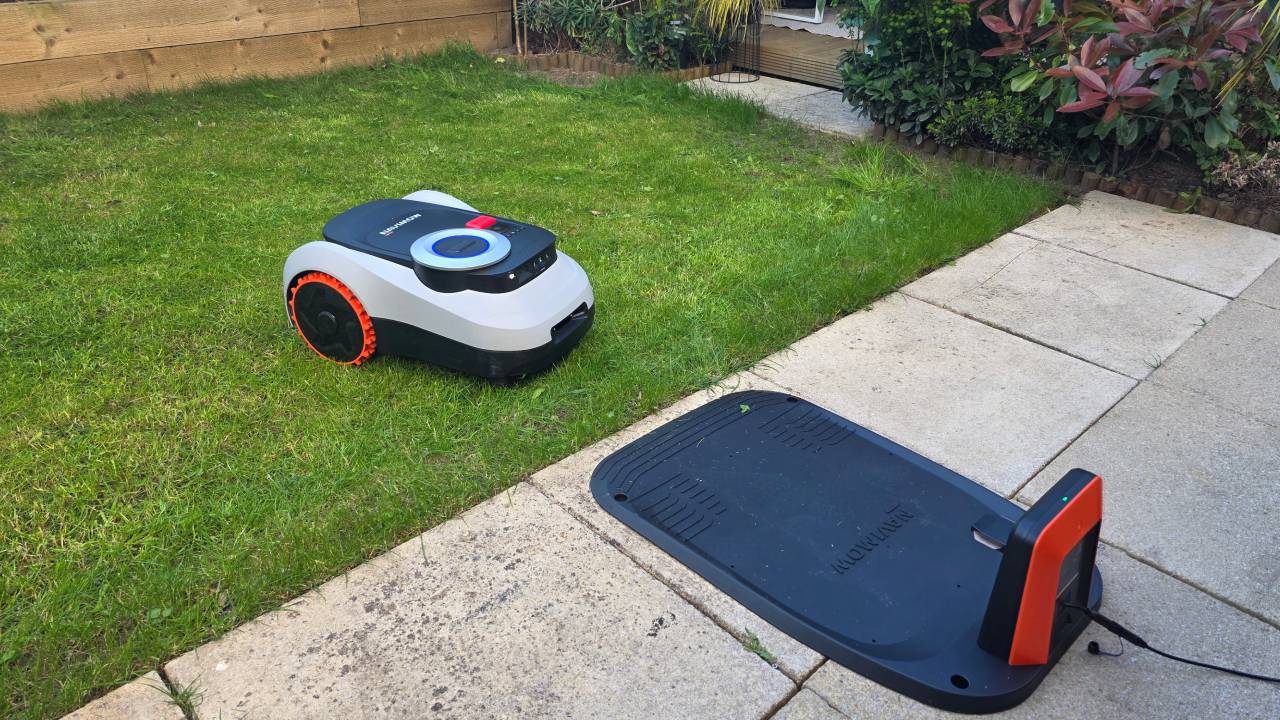
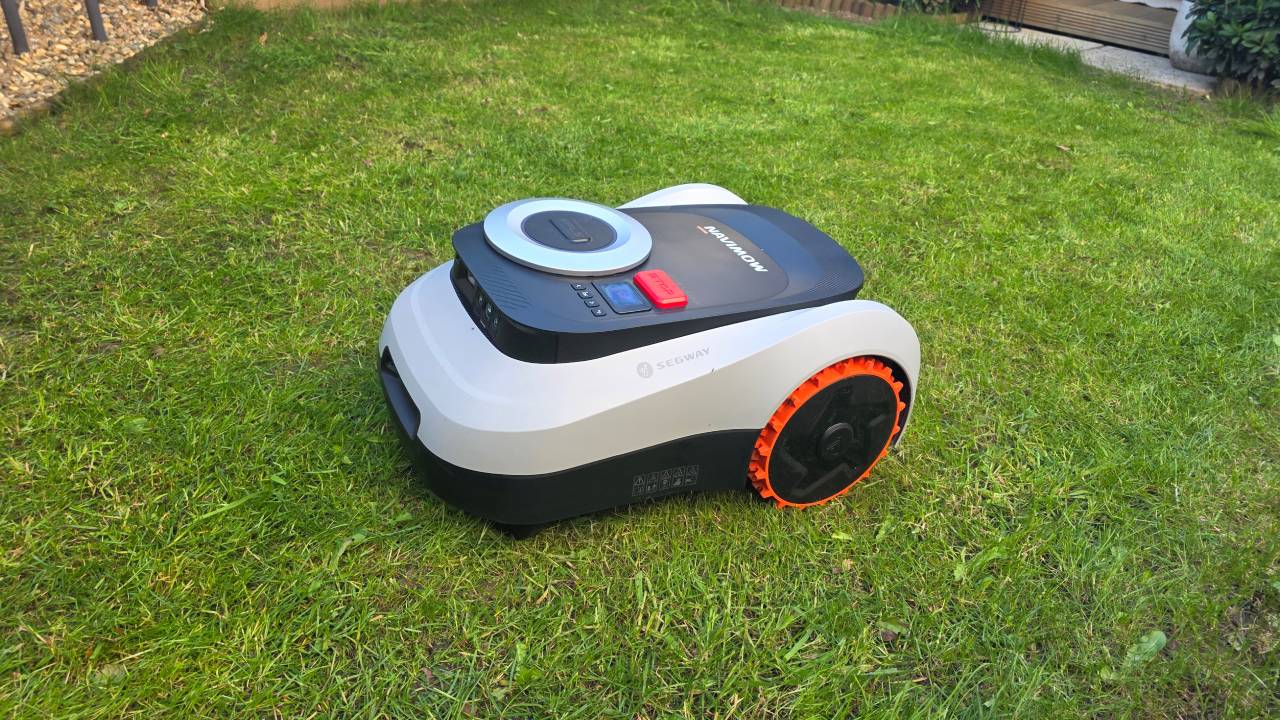
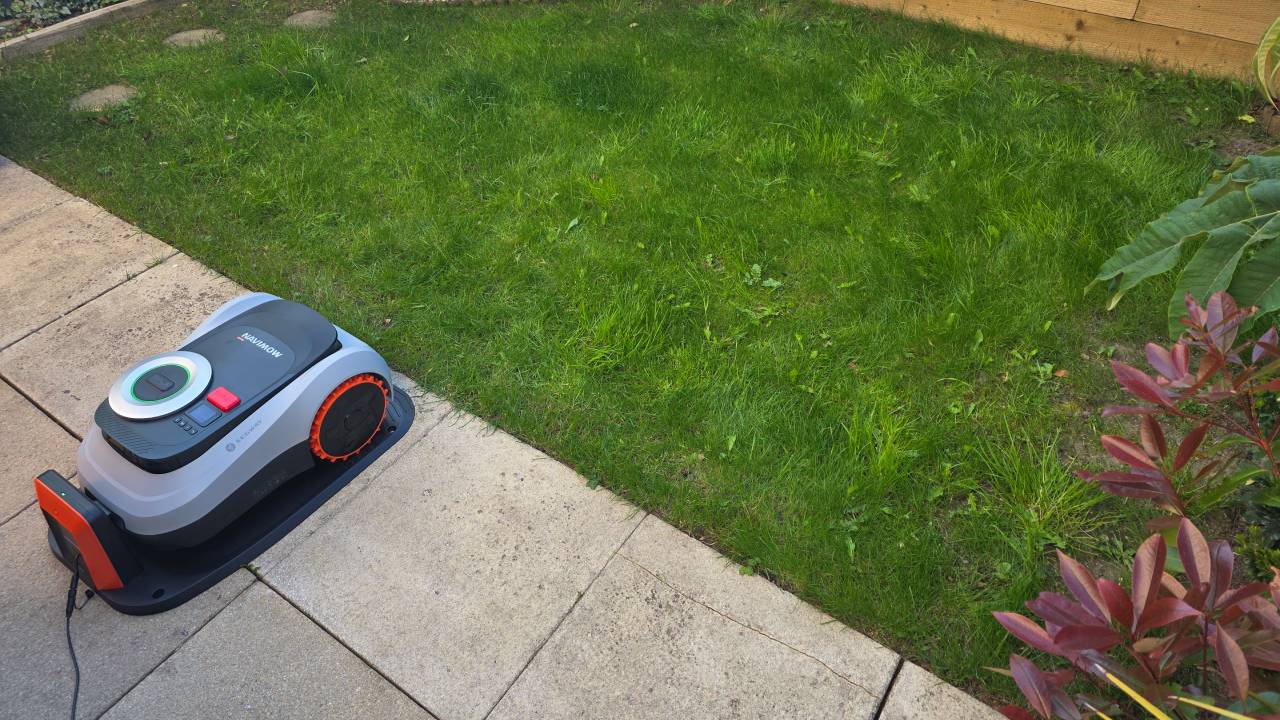
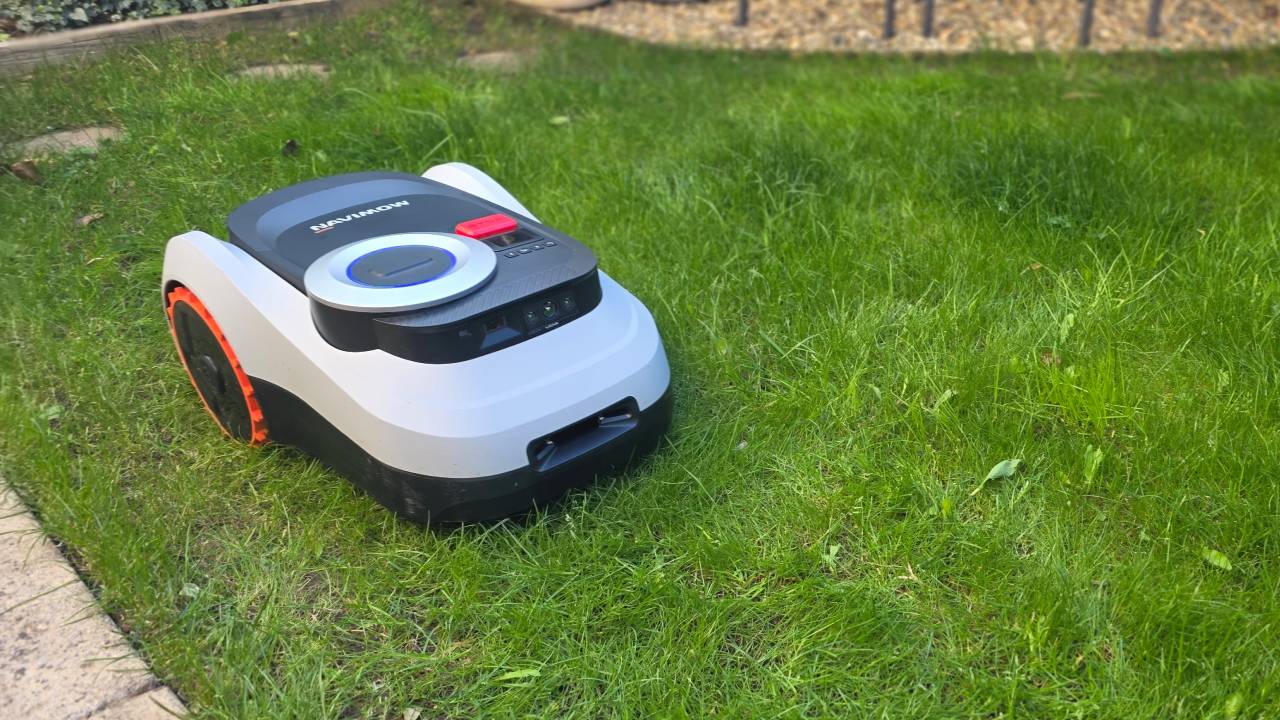
The Navimow i208 LiDAR is a good-looking bit of kit. It has a sleek, low-profile design with clean lines and a subtle grey-and-orange colour scheme that feels modern without being too flashy. Everything about it feels premium, from the solid plastic shell to the rubberised off-road wheels, and the 2.4-inch colour LCD screen on top is sharp, clear and easy to read at a glance. It definitely looks expensive, and so it should for just short of a grand.
Build quality is also excellent. At 14.7kg, it's got enough heft to feel substantial without being a nightmare to move around, and the carrying handle is subtle but useful, and the charging station is compact and straightforward. Plus, the Garage M (if you get the bundle) gives it some extra weather protection when docked.
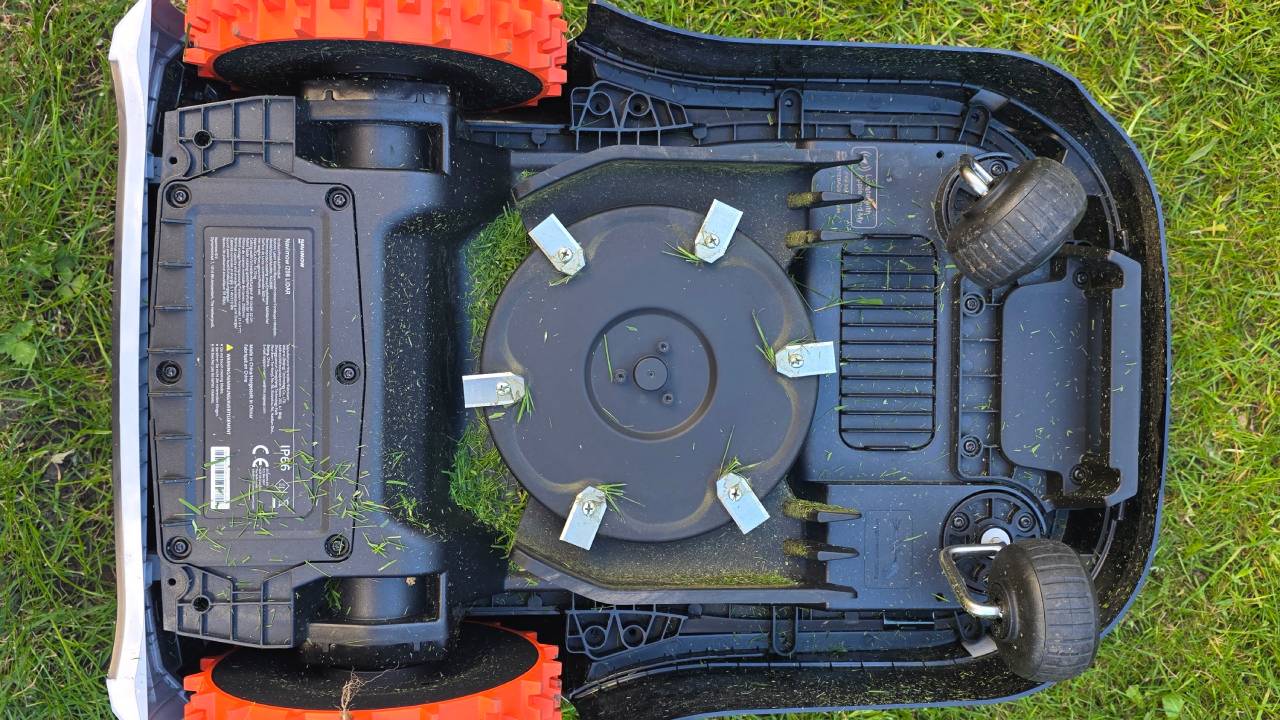
Turn it upside down and you’ll find a six-blade cutting disc that boasts an adjustable cutting height from 20mm to 70mm (that you can set via the app or on the mower itself). The off-road wheels are chunky and grip well, and - reassuringly - the whole thing looks and feels like it's been designed to last.
If there's a design criticism, it's that it's a reasonably large unit. At 635mm long and 445mm wide, you'll want to make sure you've got somewhere sensible to park the thing, as it’s going to sit in your garden for the best part of the year.
Segway Navimow i208 LiDAR review: performance and features
Let's start with setup, because it's the one hurdle that makes a lot of people put a robot mower back in the box before they've given it a fair chance. I’ve reviewed robot mowers in the past and always found the initial setup the biggest pain in the grass.
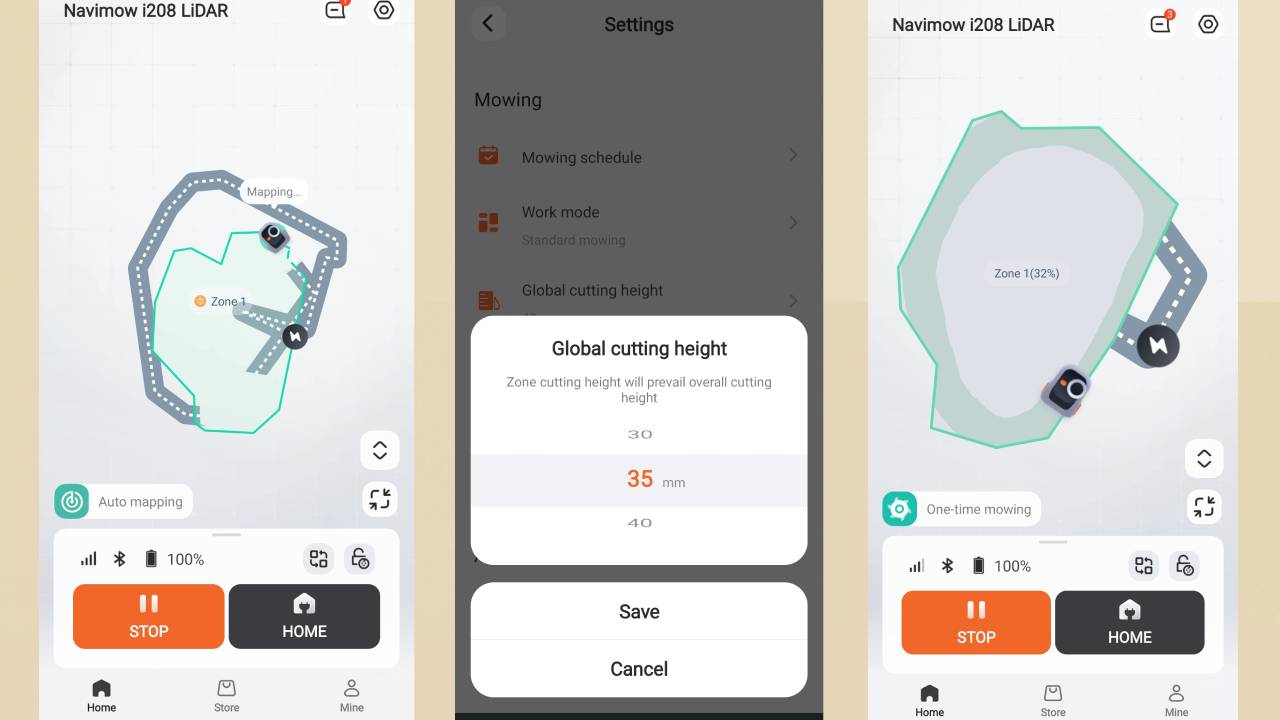
Thankfully, the Navimow isn’t as bad as I’ve experienced before but it doesn’t get off scot-free. The brand markets the i2 LiDAR as a "drop and mow" device, and while the app setup is relatively easy (Bluetooth, Wi-Fi, firmware updates, all done in a few minutes), for me, the mapping step was more involved than that tagline suggests.
Maybe I’m an especially impatient person, but when setting up the device myself, I was pretty frustrated at how I had to manually drive the mower around the entire perimeter of my garden with the app so it could learn the boundary.
This surprised me, as Segway's own marketing says the Navimow boasts a 'drop and mow' function where it can auto-map the perimeter of your garden without you having to manually walk it around. For whatever reason, this didn't work for me, despite trying the auto-mapping option multiple times. I've since seen other reviewers online get it working without issue, so it may well depend on your garden layout, grass length, or just luck on the day. But it's worth knowing that it might not work for everyone, since it didn't for me.
Nevertheless, on my relatively small 7x4m lawn, this manual mapping didn't take too long (around 10 minutes including a bit of trial and error). It's not difficult, just a bit tedious, and I couldn't help wondering why the LiDAR and cameras weren't able to figure this out on their own.
For larger, more complex gardens with multiple zones, I can imagine this step taking considerably longer and requiring a whole lot of patience and determination to get right.
Once it's mapped, though, the Navimow really comes into its own. The LiDAR and vision system works brilliantly. It doesn't bounce around randomly like cheaper robot mowers. Instead, it mows in neat, methodical parallel lines, first doing a few laps around the perimeter before filling in the middle. After a couple of sessions, my lawn genuinely looked tidier and more evenly cut than it does when I do it manually with a push mower.
Navigation is impressive overall. The almost-cute mower toddles around handling trees, garden furniture, planters and fences without hesitation, being sure to slow down and adjust its path smoothly when it detects an obstacle. The VisionFence system claims to recognise over 200 object types with 1cm precision, and in practice I found it barely put a wheel wrong. I did find that quite small objects like stray cables could still trip it up, so it’s still worth a quick scan of the lawn before a scheduled mow.
The noise, or rather the lack of it, is one of the mower’s standout features, in my opinion. At 59 dB, the Navimow is genuinely whisper-quiet. I could hear it from my desk as a low, gentle buzz, but nothing like the grinding roar of a petrol mower or even a cordless electric one. You could comfortably run it in the evening with windows open and barely notice.
Cutting precision is good once you've dialled in the right height settings, but you’ll have to play around with this a little, I found. For example, the default 70mm setting barely seemed to touch my grass, and I had to drop it down to around 30mm before seeing a noticeable difference. Once set, though, the results are clean and even.
As for the Navimow app, this is well laid out and gives you solid control over schedules, cutting height, zones (up to 20), and even custom mowing patterns. It doesn't overcomplicate things, but there's enough depth for anyone who wants to tinker.
As with any appliance or gadget, the Navimow i208 does come with a few niggles, such as how well it handles the edges. The mower does a decent job of getting close to boundaries, but it still leaves a strip along the very edges that you'll need to hit with a strimmer. That's true of most robot mowers but it's worth knowing if you're imagining a completely hands-off experience.
Another thing worth raising is that it doesn't collect grass clippings. The cuttings are mulched and left on the lawn, which is fine for lawn health but means you won't get that freshly-mown tidy look unless the mower is running regularly enough to keep clipping size tiny.
As for battery life, the i208 is rated at around 110 minutes per charge, covering roughly 265 square metres before it needs to dock. For my small garden, that was more than enough per session. It returns to the dock automatically when the battery gets low and resumes where it left off once charged, which takes just under two hours.
Segway Navimow i208 LiDAR review: verdict
The Segway Navimow i208 LiDAR is one of the most impressive robot mowers I've tested. The LiDAR and vision navigation is excellent, the build quality feels premium, and the near-silent operation makes it a joy to have running in the background. Once it's set up and scheduled, it really does just get on with the job, and the results speak for themselves.
The initial mapping can be more of a faff than the marketing implies (depending on whether the auto-mapping feature plays ball for you), edges still need manual attention, and the lack of grass collection means you're committing to regular mowing schedules to keep things tidy. There's also the question of whether a robot mower makes sense at all for smaller gardens. My lawn takes five minutes with a cordless Ryobi, and spending £999 to automate that feels like solving a problem I don't really have.
But for anyone with a medium-to-large garden who genuinely wants to stop thinking about mowing, the Navimow i208 LiDAR is a seriously capable, well-designed machine that makes the whole process feel effortless. If that's worth the money to you, it delivers.
Update, 14 May 2026: This review has been updated to clarify that the Navimow i208 LiDAR does include an auto-mapping feature that can detect your garden's perimeter without manually walking it around. This feature didn't work during my testing, but I've since seen other reviewers use it successfully in their testing. The review has been amended to reflect this.