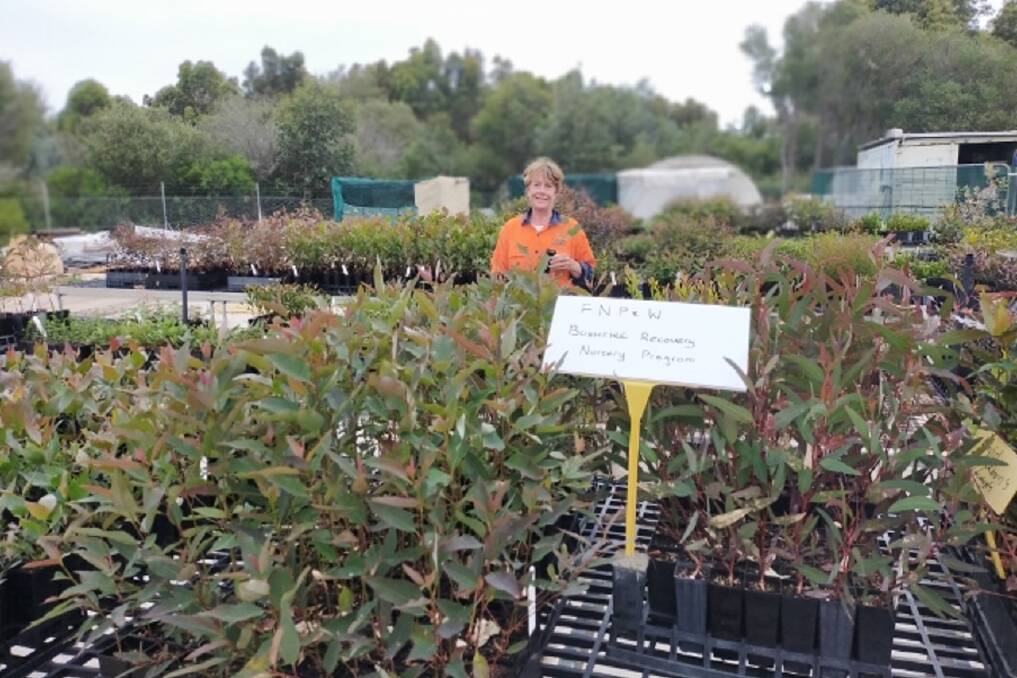
Thousands of free native trees are available through a bushfire recovery program in the Hunter that aims to help restore the landscape and give nature a boost.
Trees in Newcastle will grow 30,000 trees over three years under the program, which the Foundation for National Parks and Wildlife funded.
The project has loose criteria, so any landholder in local government areas affected by the 2019-20 Black Summer fires are eligible to apply for the free trees for bulk plantings.
Eligible areas in the Hunter include Lake Macquarie, Cessnock, Dungog, Singleton, Muswellbrook and Upper Hunter.
The trees are to compensate for the loss of the canopy in national parks in the region, but they can be planted on land that wasn't affected by fire.
Trees in Newcastle nursery manager Jocelyn Barker said the non-profit organisation had grown about 8000 trees under the program this year.
Many landowners, landcarers and farmers will benefit, with more than 20,000 trees still to be grown.
The bushfire program comprises 35 tree species, including eucalypts, she-oaks, angophoras, wattles and lilly pillies.
These trees will help support threatened species such as the regent honeyeater, glossy black cockatoo, powerful owl and koalas.
As well as the bushfire recovery program, Trees in Newcastle supplies native trees for a range of uses in the Hunter.
"We're a community nursery with one staff member and about 10 core volunteers," Ms Barker said.
Volunteer Phil Buckner said the organisation had received a lot of community support and it was a good place for volunteers to try to make a difference in the battle against climate change.
Ms Barker said the foundation's funding covered infrastructure at the nursery's base at Belmont Wetlands State Park, "so we could expand to grow this amount of plants".
"It's been vital. We've had a greenhouse, igloo and irrigation put in. It's also helped with our solar panels. We had no water and power out here. We had to start from scratch."
Ms Barker said the mission was for the "community to see this as their native plant nursery".
The organisation has close to 50,000 plants growing at its base at the moment.
These plants are often bought by environmental consultants and people doing restoration work.
The nursery's work also supports birdlife, bees, insects and other pollinators.
"We're getting a lot of inquiries from people who want bushes heavy in nectar that are good for bees," Ms Barker said.