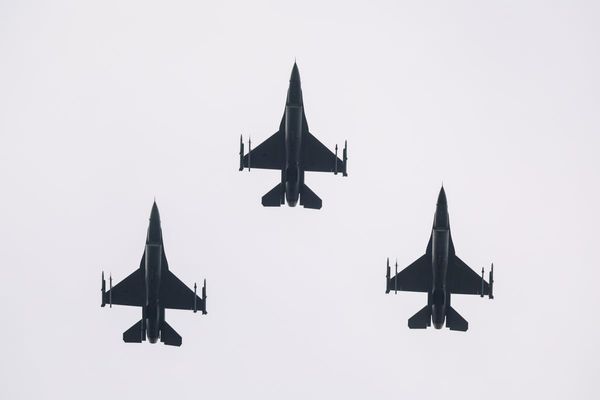
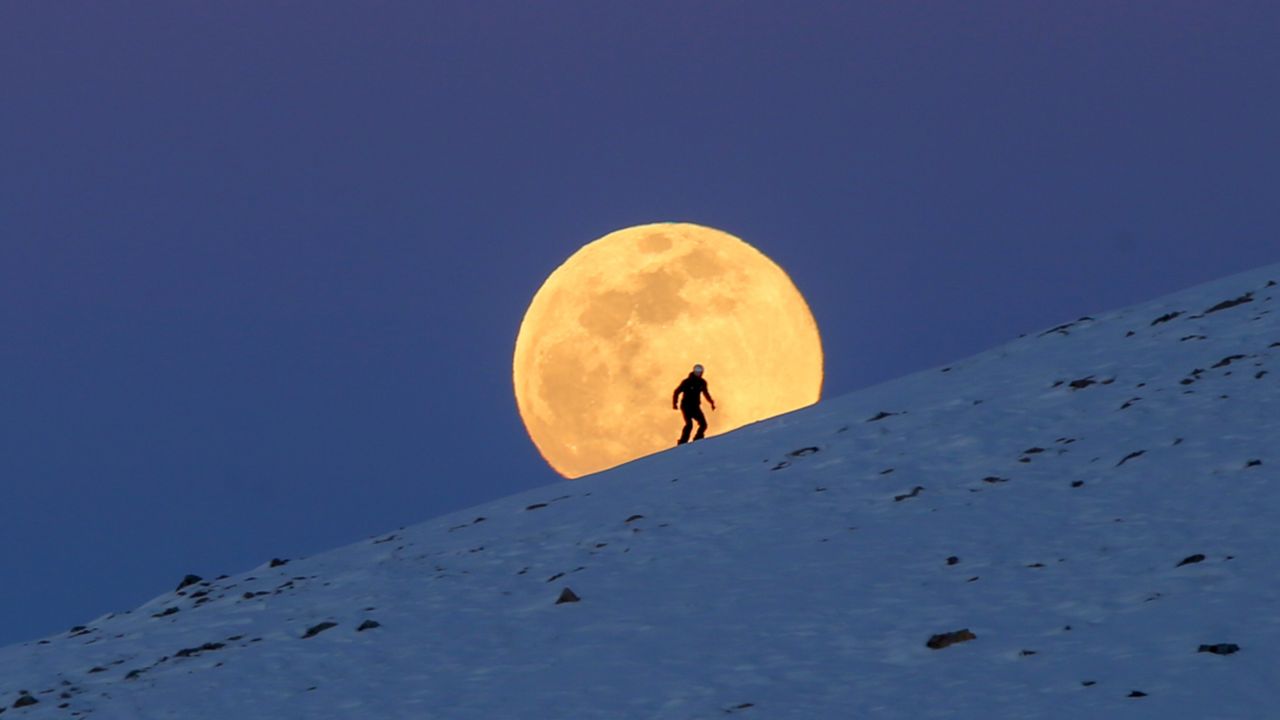
Editor's note: The February full moon put on a spectacular show when it rose to flood the night sky with cold moonlight on Feb. 1! Check out our picks of the most jaw-dropping views of the "Snow Moon" from around the world in our February full moon photo roundup.
Look to the east at sunset tonight to see the full "Snow Moon" rise among the stars of the constellation Cancer, the Crab, as the gas giant Jupiter shines close at hand in the winter sky.
February's full moon reaches 100% illumination at exactly 5:09 p.m. EST (1009 GMT) on Feb. 1, when it will appear opposite the sun in Earth's sky, fully illuminated by its light from our perspective. Local moonrise and moonset times depend on your location.
This month's full moon is known as the Snow Moon, in reference to the heavy snowfall that is common around this time of year. It is also commonly known as the "Bear Moon" to reflect the period when cubs are born and the "Hunger Moon" to evoke the lack of food in the lean winter month, according to the Old Farmer's Almanac.
When and where
The lunar disk will appear fully lit as it looms over the eastern horizon at sunset on Feb. 1 for stargazers in the U.S. To find out the exact moonrise and moonset times from your location you can use TimeandDate's helpful calculator.
You may notice the Snow Moon adopt a yellow-orange hue while close to the horizon, before taking on its usual silvery glow as it soars higher overhead into the January night sky. The effect occurs due to the process known as Rayleigh Scattering, wherein Earth's atmosphere deflects blue wavelengths of moonlight while allowing the longer red wavelengths to travel through relatively undisturbed.
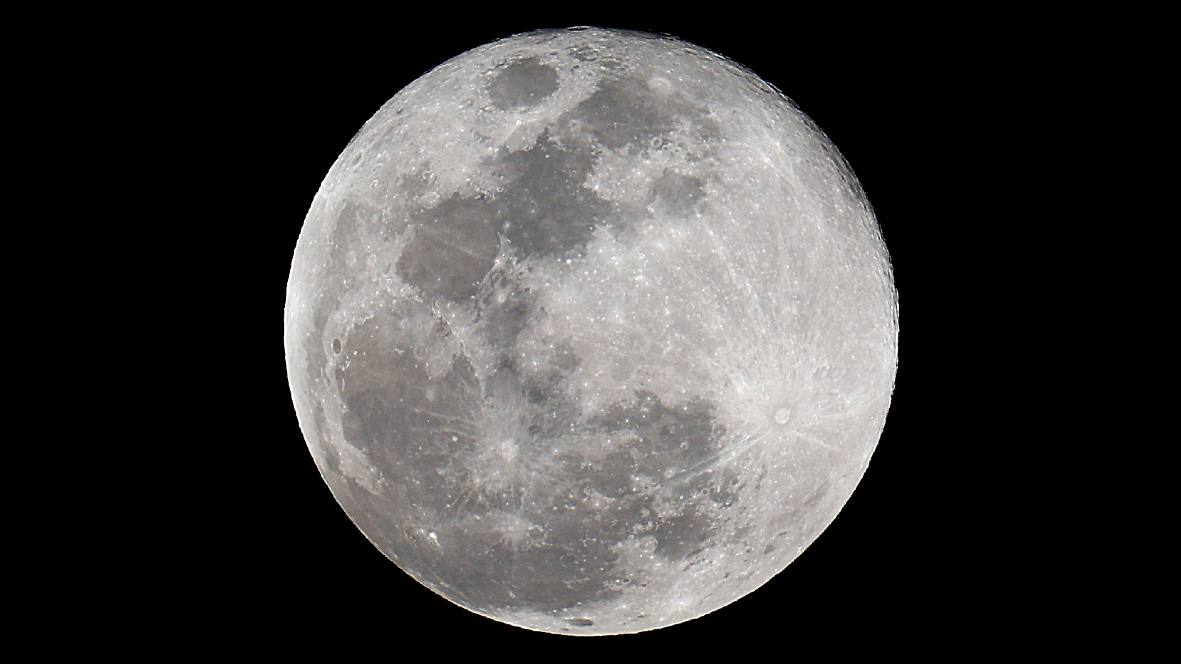
Each month's full moon is a perfect opportunity to explore the aftermath of cataclysmic asteroid impacts on the lunar surface by observing surface features called "ejecta rays". As the sun lines up opposite the moon, it illuminates streaks of reflective material that was dredged up and cast out far across the lunar surface during crater-forming events.
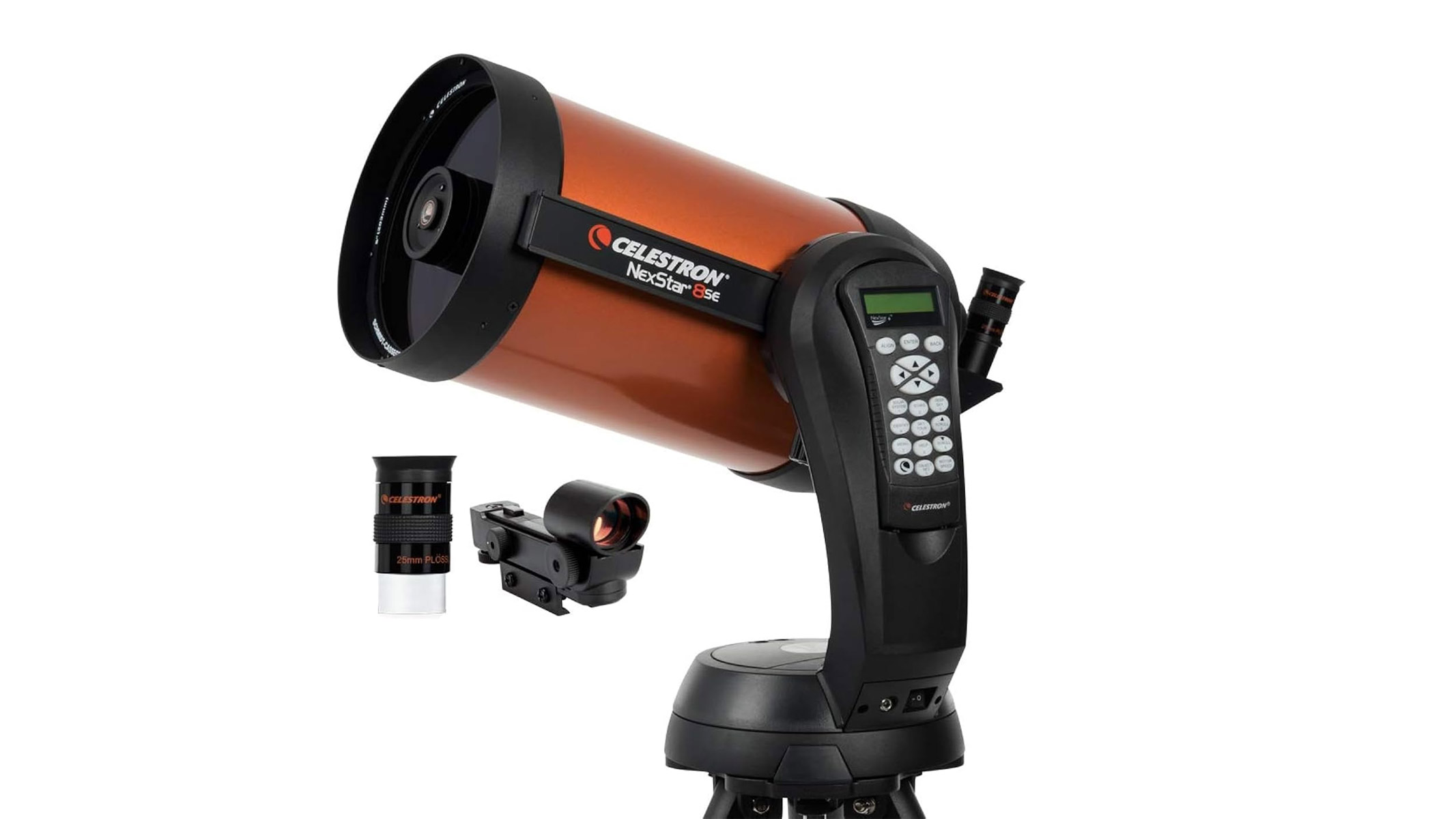
We reckon the Celestron NexStar 8SE is the best motorized telescope out there as it's great for astrophotography, deep-space observing and it offers stunning detailed imagery. It is a little pricey but for what you get, it's good value. For a more detailed look, you can check out our Celestron NexStar 8SE review.
The most impressive of these bright streaks can be traced back to the 53-mile-wide (85-kilometer-wide) Tycho crater, which can be found marking the region close to the south lunar pole. Every large crater on the moon once boasted similar ejecta rays of its own, which have since had their reflective properties dulled by prolonged exposure to the sun's light.
The craters themselves are best viewed during the weeks surrounding a full moon phase, as they rest close to the line separating night from day on the lunar surface known as the "terminator", when sections of their rims and interiors will be thrown into shadow by the angle of the sun and moon.
Jupiter will be visible as a steady point of light to the moon's upper right on the night of Feb. 1, with Castor and Pollux — the brightest stars of the constellation Gemini — shining to its left. The familiar stars of the constellation Orion can be found slightly to the right in the southeastern sky around this time, with Sirius, the brightest star in the night sky, glowing directly beneath.
Editor's Note: If you would like to share your astrophotography with Space.com's readers, then please send your photo(s), comments, and your name and location to spacephotos@space.com.