With the countdown to the July 23 opening of the Tokyo Olympics at three months, organizers consider measures to deal with a pandemic with no end in sight. This is the second of the series, in which The Yomiuri Shimbun explores the evolving situation as this major event approaches.
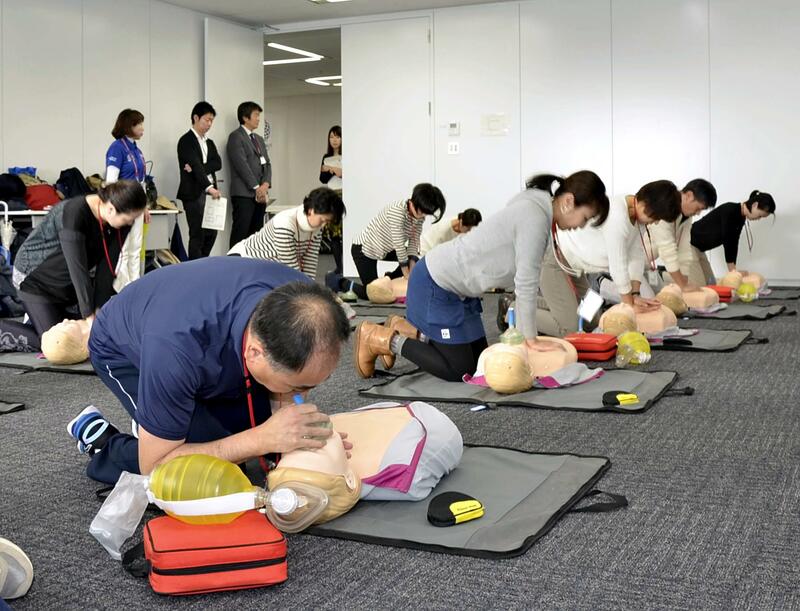
Seiko Hashimoto, president of the Tokyo Organizing Committee of the Olympic and Paralympic Games, is facing a challenge on securing medical services that will be provided at the Games amid the novel coronavirus pandemic.
"The most important thing is to not interfere with regional medical services," said Hashimoto at a press conference on April 16. "We are now discussing how we can secure doctors and nurses."
The government and the organizing committee estimate that a maximum of 2,800 doctors and 3,800 nurses and public health nurses will be required for the Games if each person works five days. Many of the doctors who will work at the venues are in charge of emergency medical services at university hospitals, which serve as bases for regional medical care.
Before the Games were decided to be postponed, the organizing committee planned to set up about 130 rooms to treat injuries and to help those who suffered from heatstroke at the Games. The rooms would be divided into those for athletes and those for spectators. Both groups would be provided with doctors, nurses and ambulances.
Through university hospitals and other institutions, orthopedic surgeons and doctors of internal medicine were asked to work in these rooms. The doctors who worked at the 2012 London Games and the 2016 Rio de Janeiro Games were not paid, so following the precedents, the same would have been done at the Tokyo Games.
However, a lot had changed because of the pandemic. While the medical system in each region has been under pressure because of the novel coronavirus, more doctors than initially planned will be needed for the Games to handle such operations as a special outpatient department at the general clinic at the athletes' village to examine athletes suspected of being infected with the coronavirus.
The government and the organizing committee changed their policy and have decided to pay 50,000 yen per day to each doctor and 20,000 yen per day to each nurse or public health nurse. The payments will be covered by the government's budget for emergency measures against the coronavirus.
Limiting the number of spectators at the venues can reduce the number of doctors required. Nevertheless, there are concerns over such problems as fewer people being vaccinated during the Olympics and Paralympics because of medical professionals being needed at the Games.
This summer is also expected to be very hot.
Last year, the La Nina phenomenon was observed, in which the surface temperature of the ocean along the west coast of South America is cooler than usual. The phenomenon is likely to cause abnormal weather conditions. During a similar climate pattern caused by the phenomenon in 2018, the rainy season ended earlier than usual in the Kanto region and Tokyo experienced higher than normal temperatures in July and August.
"It was relatively cool in July last year when the Games were supposed to start," said Kazuo Asada, 45, of Weathernews Inc. "As of now, I can say this summer will be hotter than usual."
When the weather is warmer, there are likely to be more heatstroke cases. Symptoms of heatstroke are similar to COVID-19 symptoms, including having a higher body temperature. Diagnosing whether a patient is suffering from heatstroke or has the coronavirus takes time, and doctors and nurses need to take thorough measures to prevent the spread of the virus when treating patients. As a result, frontline medical professionals will face a lot of difficulties.
Satoru Arai, 67, a director of the Tokyo Medical Association, said: "We want to cooperate with the Games for the safety of the athletes, but it is not easy to dispatch doctors as needed. The total number of people at the venues should be determined based on the number of medical professionals that can be secured."
Read more from The Japan News at https://japannews.yomiuri.co.jp/